






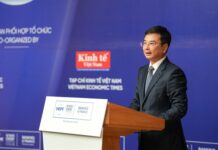










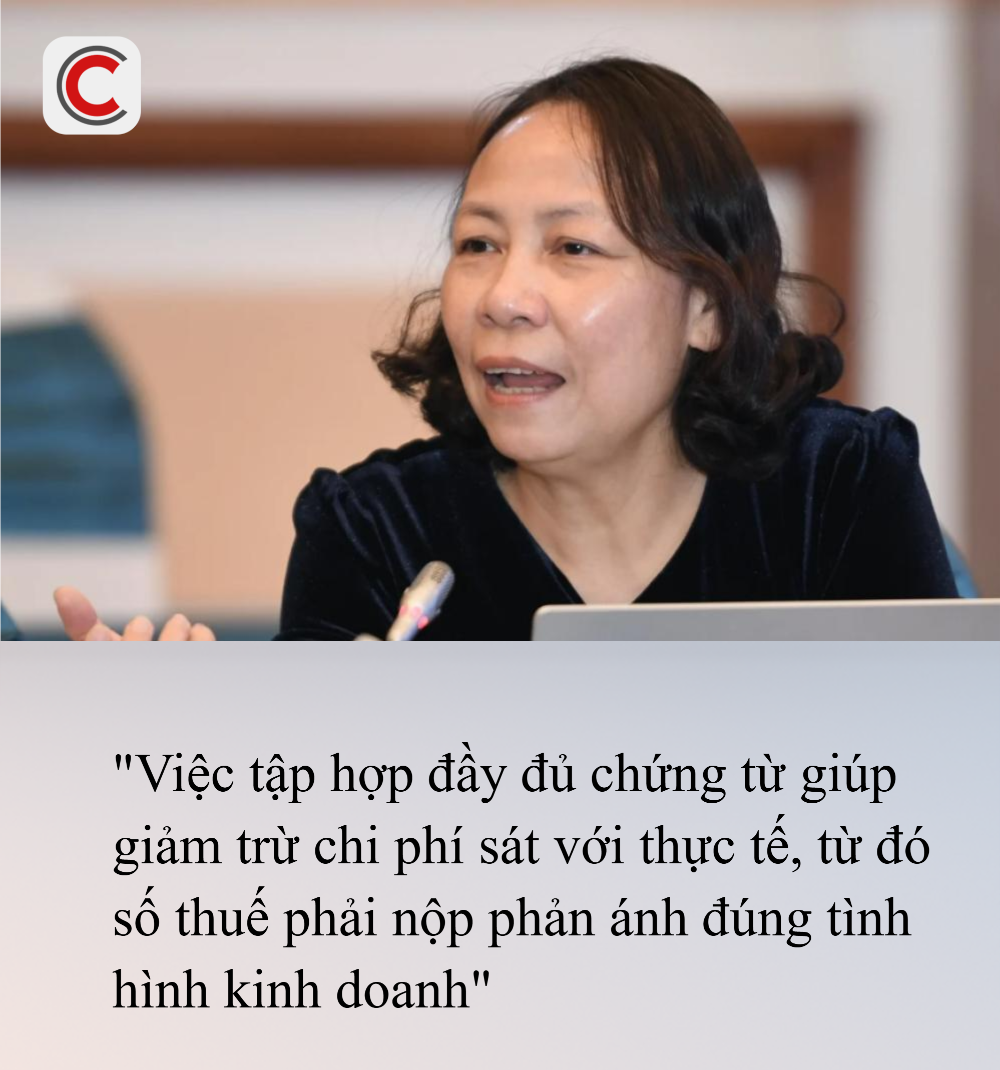
Ms. Le Thi Duyen Hai, Deputy Secretary-General of the Vietnam Tax Consultancy Association
Speaking at the recent seminar “Resolving Challenges in Transitioning from Lump-Sum Tax to Tax Declaration” for business households organized by TheLEADER, Ms. Le Thi Duyen Hai, Deputy Secretary-General of the Vietnam Tax Consultancy Association, noted that with only two weeks left until the new tax mechanism takes effect, there is still much work for tax authorities to guide and notify, and business households need to proactively prepare.
According to her, first, business households should actively review their actual revenue in 2025 to determine if they fall below or above VND 500 million. This is the most critical threshold. The next important threshold is whether revenue is below or above VND 3 billion. These two thresholds determine the household group and tax regime applicable in 2026.
If revenue is below VND 500 million, tax authorities will notify that the household is temporarily exempt from quarterly tax declarations, invoice usage, bookkeeping, and payment of value-added tax or personal income tax in 2026. If revenue exceeds VND 500 million by year-end, the household will declare actual revenue and pay the arising tax by January 31, 2027.
“This is the household’s right to declare actual revenue, so it is almost certain that no late payment fees or penalties will arise,” Ms. Hai stated.
For households likely to exceed the threshold in 2026, the expert outlined two scenarios. The first scenario is that declaration is only required by January 31, 2027. The second scenario is if the threshold is exceeded within the first six months, the declaration deadline will be June 30 or July 30, 2026, similar to the handling of newly established businesses as per the draft decree.
“Regardless of the scenario, households below the VND 500 million threshold at the start of 2026 have preparation time. Upon exceeding the threshold, households will declare based on actual revenue without immediate declaration requirements or late payment calculations from the exceeding point. In the first six months, households have sufficient time to gather documents and consolidate revenue before fulfilling tax obligations. This reassures households transitioning from lump-sum to declaration, and those below the threshold entering taxable status need not worry about penalties or late fees,” she emphasized.
For the group with revenue from VND 3 billion and above, if actual 2026 revenue is expected to exceed VND 3 billion, the only method for calculating personal income tax is revenue minus expenses. The expert advises households to prepare documents related to purchased goods and production expenses like rent and labor from now.
“Complete documentation ensures accurate expense deductions, reflecting true business performance in taxable income,” the expert analyzed.

According to Ms. Hai, the biggest concern for many households in this group is determining eligible expenses for tax calculation. Lacking habits in obtaining input invoices and systematically managing expense documents poses significant risks when applying the revenue-minus-expenses tax method.
If unable to gather expenses, households in the second group (revenue above VND 500 million to below VND 3 billion) can still apply the ratio-on-revenue method. This simple method, similar to the current one, allows households time to develop document management habits during the transition.
Once revenue exceeds VND 3 billion, households lose the option to use the ratio-on-revenue method. Above this threshold, personal income tax must be calculated using revenue minus expenses, requiring full expense accounting and documentation.
Thus, for households currently below VND 3 billion but unprepared with input documents, Ms. Hai advises continuing with the ratio-on-revenue method. However, in 2026, as business scale grows, households should gradually establish habits and discipline in obtaining invoices and storing input expenses. This ensures a smooth transition to the third or fourth group (tax calculation via revenue minus expenses) when exceeding VND 3 billion in 2027.
“A household’s 2026 group determines tax procedures and should be prepared early to comply with regulations while optimizing tax liabilities,” she emphasized.
Tax Expert: Unless Registered as a Business, Income from Wages and Salaries (Excluding Agriculture, Forestry, and Street Vending) Will Be Taxed at a Maximum Progressive Rate of 35%
Experts advise that households engaging in business activities, if they have only registered for tax obligations but not for business registration, will be subject to different tax rates.
Tax Expert: In a Household, If the Husband Produces Beans and the Wife Sells Them at the Market, Each is Considered a Separate Business Entity

Experts suggest that among the over 5 million business households, nearly half are operated by individuals, leading to variations in tax calculation methods.
Tax Expert: Selling 10 Chickens Daily and 30 Bowls of Pho Daily Reaches Annual Revenue of 500 Million VND

The Deputy Secretary-General of the Vietnam Tax Consultants Association suggests that while thresholds of 500 million or 1 billion VND may seem substantial for businesses in remote areas, they are relatively insignificant for those in major cities. Additionally, these thresholds are influenced by the profit margins specific to each industry.
Tax Expert: No Tax Hikes for Registered Businesses—Maintain 1% Sales Revenue and 4.5% Service Rates, but Accurate Reporting is Mandatory

Experts suggest that transitioning from lump-sum tax to self-assessment enhances transparency and reduces risks, rather than burdening small businesses.
Tax Expert: Livestream Sellers Earning $3 Million in 17-Hour Streams but Declaring Only $40,000-$130,000 Annually—Full Revenue Disclosure Mandated

Experts emphasize that mandating the full disclosure of revenue is essential to ensure transparency and fairness in taxation.