












On the afternoon of December 17, the World Bank (WB), in collaboration with the Can Tho Institute of Social and Economic Studies and the Vietnam Chamber of Commerce and Industry’s Mekong Delta branch, hosted a conference to release the report titled To Stay or Migrate: Life in Vietnam’s Mekong Delta.

Ms. Mariam J. Sherman, World Bank Country Director for Vietnam, Cambodia, and Laos, delivering her speech. Photo: NHẪN NAM |
Nearly 1.7 Million People Have Migrated from the Mekong Delta
Addressing the conference, Ms. Mariam J. Sherman, World Bank Country Director for Vietnam, Cambodia, and Laos, highlighted that the Mekong Delta is home to nearly 18 million people, producing over 50% of the nation’s rice, more than two-thirds of its aquaculture output, and a significant portion of its fruits and vegetables for domestic consumption and export.
For decades, the region has been a cornerstone of Vietnam’s success in poverty reduction and food security. However, the report underscores that the Mekong Delta is now at a critical juncture.
Historically, the region’s poverty rate had steadily declined, but recent shocks—including droughts, saltwater intrusion, and the COVID-19 pandemic—have made these gains increasingly fragile.
Simultaneously, the region’s economic structure is shifting. While agriculture remains essential, it is no longer the primary driver of growth. Climate change further complicates the situation, directly impacting agriculture, aquaculture, infrastructure, and livelihoods.
“The report reveals that without adaptation, climate shocks could significantly increase poverty rates by 2050, even if economic growth remains robust,” Ms. Sherman emphasized.
According to the WB report, over the past decade, nearly 1.7 million people have left the Mekong Delta, partly due to increasingly challenging conditions in agriculture and aquaculture.
The region’s proximity to major employment hubs like Ho Chi Minh City and neighboring provinces has also intensified migration. The 2024 Mekong Delta Livelihood Survey found that approximately 14% of households have at least one member who has migrated, primarily in search of employment.
Migration is particularly prevalent among low-income households, which often have more members working away from home and rely heavily on remittances. For farming households, migration serves as a means to offset income losses caused by droughts, floods, or saltwater intrusion.

Mr. Nguyen Anh Tuan, Deputy Head of the Central Policy and Strategy Department, delivering his speech. Photo: NHẪN NAM |
Three Key Directions for the Mekong Delta
According to Mr. Nguyen Anh Tuan, Deputy Head of the Central Policy and Strategy Department, the issue for the Mekong Delta is not whether people should “stay or migrate,” but how to ensure they can “live better,” regardless of their choice.
Mr. Tuan emphasized that the Mekong Delta must focus on three key directions moving forward. First, continue to refine the institutional framework for coordinating the region’s development, ensuring it aligns with the new administrative and economic scale while fostering effective collaboration between central and local authorities.
Second, vigorously promote the transformation of the Mekong Delta’s growth model toward a green, high-value, and sustainable approach. Agriculture will remain foundational but should be viewed as part of a broader socio-economic ecosystem, integrated with processing, logistics, markets, science, technology, and environmental protection.
Additionally, diversify the region’s growth drivers by developing processing industries, supporting industries, renewable energy, marine economies, and sectors like services, logistics, eco-tourism, and urban economies that align with the region’s natural conditions and comparative advantages.
Reducing reliance on traditional agriculture will expand employment opportunities, increase incomes, and enhance the region’s resilience to climate and market shocks.
Third, place human capital investment at the heart of the Mekong Delta’s adaptation and development strategy, in line with the 14th National Party Congress’s Political Report, which identifies high-quality human resource development and labor productivity as key drivers of rapid and sustainable growth.
 Mr. Truong Canh Tuyen (second from left) sharing insights at the conference. Photo: NHẪN NAM |
Mr. Truong Canh Tuyen, Chairman of the Can Tho People’s Committee, noted that the report helps the city assess challenges and refine its integrated planning for the future.
Over the next 10 to 20 years, he envisions the region achieving growth alongside quality development, anchored in a green economy, circular economy, digital economy, and innovation. This includes rapid, sustainable, and climate-resilient development.
Both government leaders and residents must shift from passive response to proactive adaptation, leveraging the Mekong Delta’s natural conditions, ecosystems, and riverine culture as foundations and advantages for development.
“We also hope that within 20 years, the people of Can Tho City and the Mekong Delta will enjoy improved living standards, both materially and spiritually. The Mekong Delta will become a desirable place to live, with attractive cities and countryside, prompting people to reconsider whether to stay or migrate.
Not only will those who left return, but people from across Vietnam and the world will be drawn to the Mekong Delta and Can Tho City in the future. We are very optimistic,” shared the Chairman of Can Tho City.
|
Five Priority Policy Areas for Mekong Delta Development The WB report identifies five priority policy areas for the Mekong Delta’s development amid future uncertainties. • Invest in education and skill development to expand opportunities for all, especially youth. • Modernize and transform agriculture toward reduced labor dependency, increased resilience, and higher profitability. • Invest in local infrastructure to attract businesses, enhance connectivity, and lower transaction costs for farmers. • Promote safe, voluntary migration as an adaptation strategy for those seeking opportunities outside the Mekong Delta. • Build adaptive social safety nets to support those affected by shocks, particularly those unable or unwilling to migrate. |
NHẪN NAM
– 19:10 17/12/2025
High-Speed Expressway Connecting Can Tho and Ca Mau Set to Open on December 19th

The Can Tho – Ca Mau Expressway, a highly anticipated project, is set to open for technical inspection on December 19th, fulfilling the aspirations of millions in the Southwest region of Vietnam.
Concerns Rise Over Can Tho Becoming a ‘Nominally Central Hub’

Can Tho faces significant climate risks and water security challenges. Without developing a distinct economic identity, it risks becoming a “nominal hub” overshadowed by Ho Chi Minh City’s dominant appeal. The urgent need for greening, digitalization, and industrial upgrading demands swift action—delay could cede opportunities to more innovative provinces.
Durian Off-Season Prices Continue to Drop, Causing Farmer Concerns
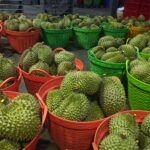
Durian prices have plummeted today, nearing peak-season levels despite off-season production costs being three times higher.
Mekong Delta’s Agro-Aquatic Prices: Hòa Lộc Mangoes Sold Out, Farmers Left with None to Sell
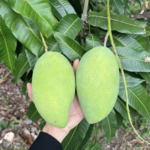
Mango prices in Hòa Lộc have surged at the farm gate, yet many farmers in the Mekong Delta are struggling to supply due to their focus on the Tet harvest.
How is the Province, Hometown of Billionaire Pham Nhat Vuong, Progressing with Vingroup’s Upcoming Launch of 4 Projects Worth Over 127 Trillion VND?

In 2025, the province’s GRDP growth is projected to reach an impressive 8.78%, securing its position as the leader in the North Central Coast region.