



















The Vietnam Economic Forum 2025, Outlook 2026, took place on December 16, 2025, at the Government Office (1 Hoang Hoa Tham, Ba Dinh, Hanoi), under the theme “Rapid, Sustainable, and Green Transformation of Vietnam’s Economy in the Digital Era.”
Co-chaired by the Central Policy and Strategy Board and the Government, the event featured a high-level plenary session and two specialized sessions. It focused on evaluating macroeconomic management in 2025, identifying opportunities and challenges for 2026–2030, and proposing solutions to drive double-digit growth alongside green and digital transformation.
CMC participated as a representative of the technology business sector, showcasing AI-driven solutions for urban governance, security, transportation, and grassroots digital transformation at the forum’s exhibition area.
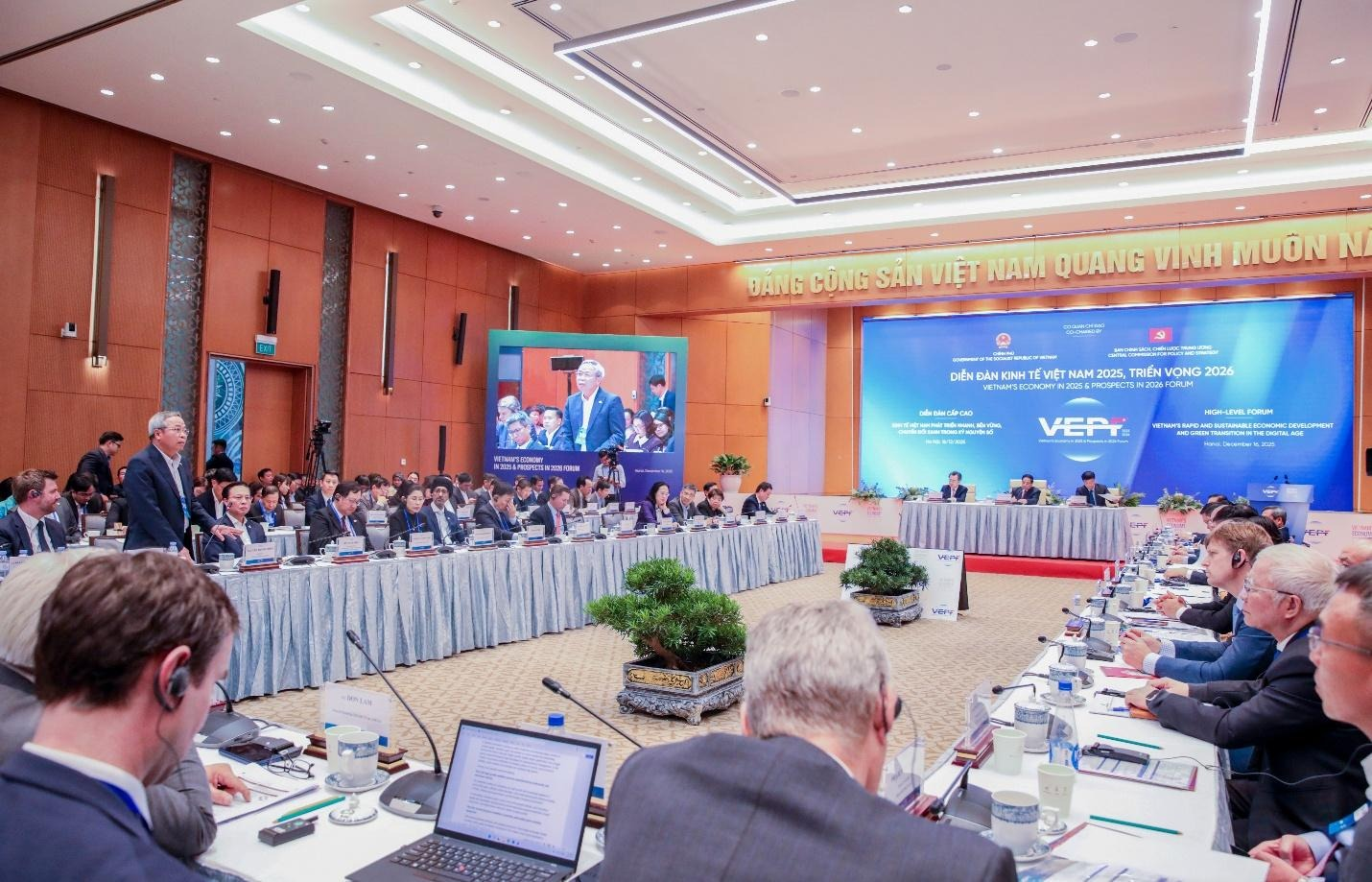
Overview of the Vietnam Economic Forum 2025: “Rapid, Sustainable, and Green Transformation of Vietnam’s Economy in the Digital Era”
Chairman Nguyen Trung Chinh’s Three Proposals: Paving the Way for Private Sector Innovation Leadership
Addressing the forum, Mr. Nguyen Trung Chinh, Chairman of CMC Technology Group, emphasized Vietnam’s need to uphold its “dual transformation” model—merging digital and green transitions—as a long-term growth engine. He also stressed leveraging the private sector’s leadership role, as outlined in key resolutions on science, technology, innovation, and private sector development.
Chairman Chinh presented three key proposals:
Proposal 1: National Digital Infrastructure—Empower Private Enterprises
CMC urged the Government to entrust private companies with developing national digital infrastructure (data centers, cloud services, AI, shared platforms), rather than relying solely on state-owned enterprises. This shift would reduce public investment pressure, enhance competitiveness, and attract high-quality capital.
Proposal 2: Competitive Data Policies for a Digital & AI Hub
Citing regional digital economy policy surveys, CMC called for institutional reforms to attract global tech giants. Chairman Chinh suggested:
Benchmarking Data Policies: Compare Vietnam’s digital policies with regional leaders like Singapore and Malaysia to identify gaps.
Establishing a Competitive Data Governance Framework: Align with ASEAN standards while introducing advantages to position Vietnam as a regional Digital & AI Hub.
Proposal 3: Ecosystem & Workforce—Fostering the “Triple Helix” Model
The third proposal focused on innovation ecosystems and digital talent. CMC advocated for Vietnam to adopt a “Triple Helix” model (Government-Academia-Industry) to foster innovation. Recommendations included:
Designating large-scale science and technology hubs in key areas.
Allocating science and technology spaces in Hanoi, Ho Chi Minh City, and Da Nang to university-industry partnerships like CMC Uni, to accelerate R&D, training, and technology commercialization.
CMC’s AI Camera Solution Impresses at the Forum
At the forum’s exhibition, CMC demonstrated its AI Camera security solution, showcasing live footage from a pilot project in a Hanoi ward. The system detects traffic accidents, fights, illegal parking, and fires, instantly alerting authorities to maintain public safety.
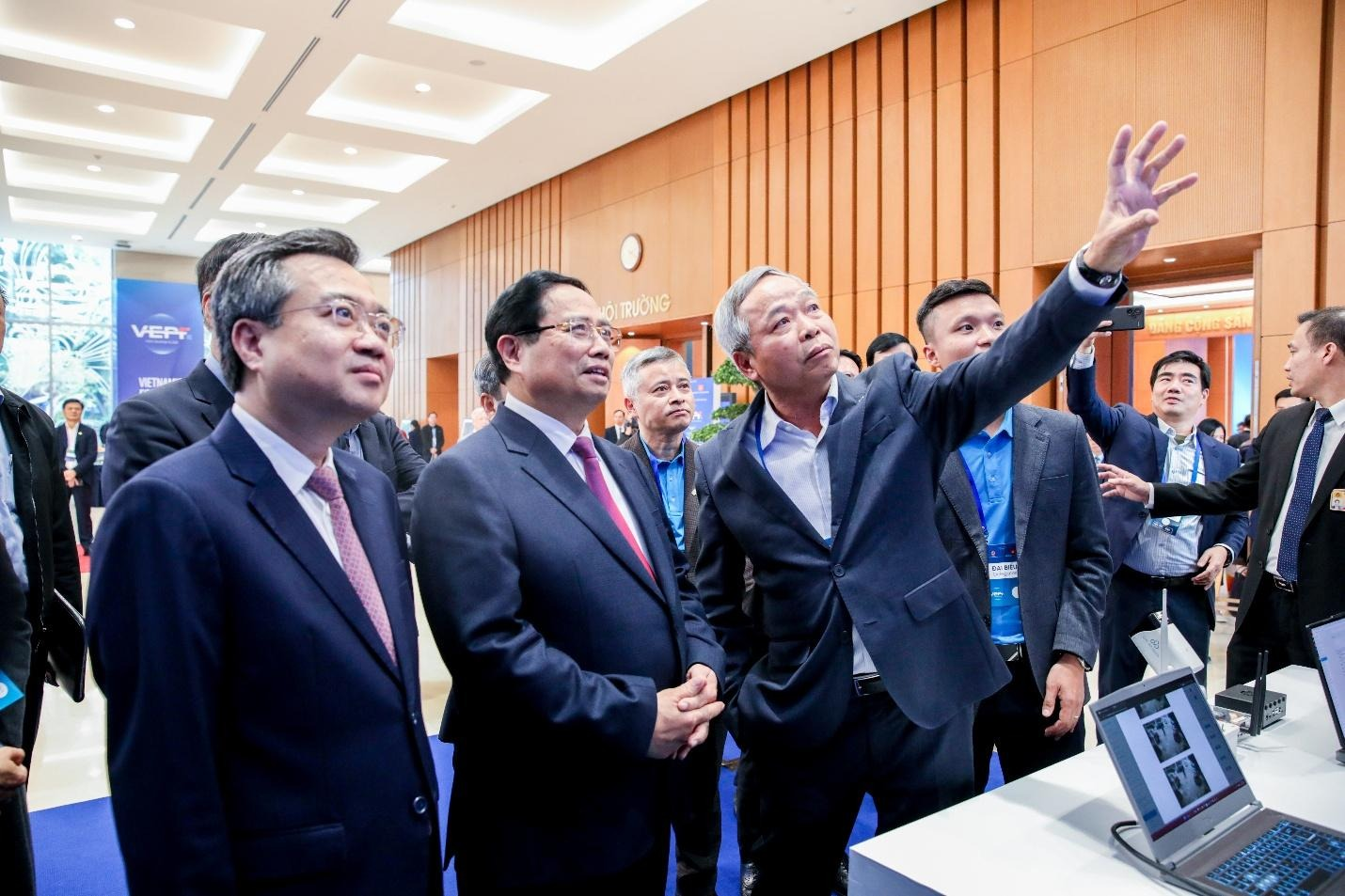
CMC Chairman introduces the AI Camera solution to Prime Minister Pham Minh Chinh at the Vietnam Economic Forum 2025 exhibition
Chairman Chinh noted, “With approval, CMC’s AI Camera solution can integrate with existing home security cameras nationwide, transforming them into 24/7 AI-powered guardians for millions of households.”
Technologically, the solution focuses on detecting anomalies, managing traffic, ensuring urban security, and monitoring fire risks.
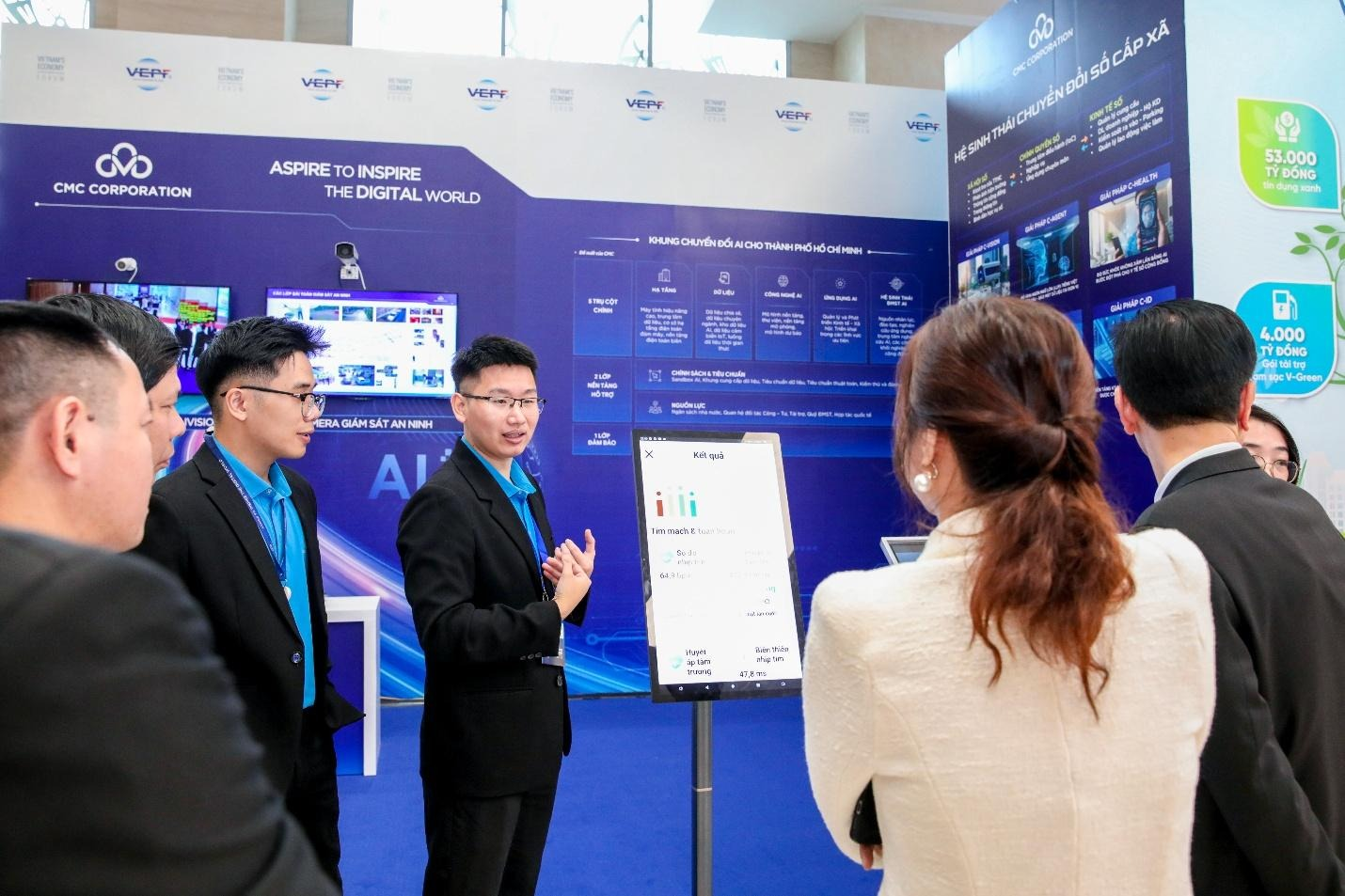
CMC’s booth at the Vietnam Economic Forum 2025
Alongside the AI Camera, CMC showcased eight comprehensive digital transformation solutions for grassroots governance, unveiled at Techfest Vietnam 2025. These tools aim to enhance local administration, citizen services, and economic development.
CMC’s approach of “bringing AI to the frontlines” (wards/communes) and its policy recommendations share a common goal: translating dual transformation into measurable programs for sustainable growth in 2026–2030.
Prime Minister Pham Minh Chinh Participates in VEPF High-Level Plenary Session
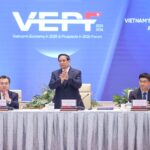
Addressing the esteemed audience at the high-level plenary session of the Vietnam Economy in 2025 and Prospects in 2026 Forum (VEPF) held in Hanoi on December 16, Prime Minister Pham Minh Chinh emphasized that Vietnam has unequivocally recognized the dual imperatives of green transition and digital transformation. He underscored these as not only objective necessities but also strategic choices and top priorities for the nation’s future.
Vietnam Economic Forum 2025: The Pathway to Sustainable Development

Deputy Minister of Finance Do Thanh Trung emphasized that fiscal policy must continue to play a pivotal role in fostering long-term growth. It should be proactively managed, ensuring sustainability and a clear focus on key priorities.
Vietnam’s Economy Resilient Enough to Withstand Shocks, Prime Minister Affirms

Prime Minister Nguyen Xuan Phuc assessed that this term has demonstrated Vietnam’s economic resilience in the face of significant external shocks, including the COVID-19 pandemic and its aftermath, geopolitical conflicts disrupting global supply chains, tightening monetary policies in major economies, complex tariff policies, slowing global growth, and rising inflation. These challenges, akin to strong headwinds, have been successfully navigated, enabling Vietnam to achieve positive outcomes.
Unleashing Private Sector Innovation: The Technology Behind Economic Runway Creation

Vietnam must steadfastly pursue the dual transformation model—integrating digital and green transitions—as a long-term growth engine. Simultaneously, it should amplify the private sector’s leadership role, aligning with key resolutions on science, technology, innovation, digital transformation, and private economic development.
BIC: 20 Years of Building Vietnam’s Leading Non-Life Insurance Brand

With six years of expertise inherited from the BIDV – QBE joint venture, and two decades of robust growth under its own brand, BIDV Insurance Corporation (BIC) has solidified its position as one of Vietnam’s leading non-life insurance companies.