










Mr. Thao’s journey into science and technology didn’t begin in a laboratory, but rather in the mud, in flooded sewers, and on sea dikes battered by waves. Over two decades, he has worked on hundreds of large and small construction sites, realizing one thing: technology can be complex, but its purpose is always simple—to improve people’s lives.
For him, pride doesn’t come from acclaimed inventions but from moments like seeing a road free from flooding, a coastline no longer eroding, or a heritage site like Hoan Kiem Lake preserved for future generations.
How have your hands-on experiences with drainage systems and deteriorating infrastructure influenced your research approach?
Looking at the state of urban infrastructure in Vietnamese cities, especially Ho Chi Minh City and Hanoi, it’s clear we’re at a “peak” of many persistent issues: traffic congestion, environmental pollution, and flooding.
These aren’t just concerns for experts and professionals but are visible to the entire society and its citizens. This indicates we’re entering a new phase where these problems must be addressed.
Take flooding, for example. To solve it, we need a comprehensive perspective. Flooding isn’t just caused by heavy rain but is a combination of factors like rainwater, wastewater, storm surges, and upstream flooding. If these four factors occur simultaneously, the drainage system will be overwhelmed. Therefore, to effectively manage flooding, all four factors must be considered. This is a complex equation that requires a synchronized solution.
Because there are so many influencing factors, the question of “why flooding occurs” is hard to answer immediately. To provide specific solutions, we must conduct surveys and assessments of natural and social conditions, strategic goals, and economic and social development requirements. Based on these surveys and evaluations of infrastructure, planning, investment, and operational capabilities, we can address the unique characteristics of each region and river basin to provide comprehensive and specific solutions.
In my view, as we enter a new phase, we can’t continue with traditional thinking and methods. We need to reassess the entire situation, identify the issues that need addressing, and not only solve immediate problems but also aim for long-term, sustainable solutions.
After surveying sea dikes and coastal areas this year, what has most clearly shown you that nature is “changing the rules”?
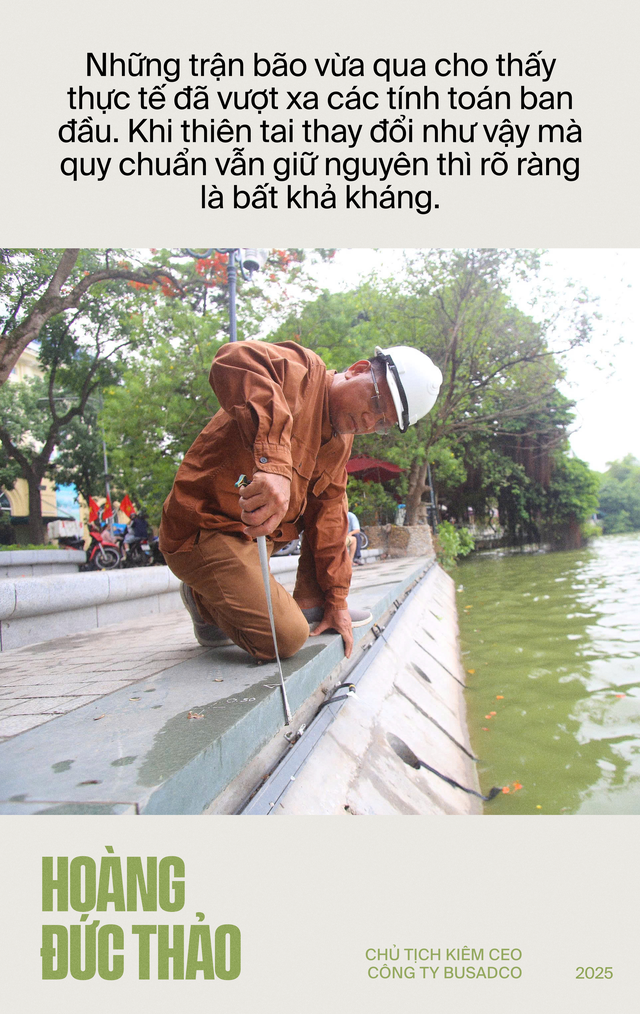
Looking at the storms from 2025, from Storm 10 to Storm 14, it’s evident that the impact of nature on coastal and riverine areas is at a critical level. Many sea dikes and protective embankments have been eroded or even breached. What we’ve seen on the ground shows that waves, winds, and currents, combined with rising sea levels, prolonged heavy rains, and upstream flooding, are putting immense pressure on coastal structures.
From the projects I’ve surveyed, the severity of the impact is clear: waves, winds, and currents are affecting the shores, and if the shores aren’t protected by robust sea dikes, seawater will inundate the land. Additionally, the impact of waves, winds, and currents creates coastal currents that continuously erode structures, leading to breaches and landslides. Therefore, traditional or poorly maintained sea dikes are the most vulnerable to damage.
These are the environmental challenges that coastal and riverine areas are currently facing.
But it’s important to clarify: “environment” here isn’t just a single concept but encompasses two distinct categories. In coastal and riverine areas, the environment is linked to natural disasters, climate change, and systems of dikes and irrigation. In urban areas, the environment is tied to drainage systems, regulation, and discharge.
These two categories are independent but interconnected. As I mentioned, if heavy rain coincides with storm surges and upstream flooding, urban drainage systems will be immediately affected. And when natural disasters impact a wide area, it’s not just about a single sea dike or drainage system but a comprehensive problem requiring coordination across multiple sectors and levels.
Many technologies in drainage, riverbank protection, and coastal defense face barriers due to “lack of precedent.” How can these challenges be addressed?
In my opinion, we need a technical revolution. This revolution involves reforming national standards and regulations. Current standards and regulations are outdated compared to practical requirements.
Let me explain: Vietnam’s current standards and regulations are mostly imported and adapted from other countries, without considering Vietnam’s specific conditions, technologies, and needs.
Therefore, there’s a need for new research and calculations tailored to our situation. To have suitable standards, we must first master the technology, which will provide the basis for developing appropriate technical standards and regulations.
In reality, current standards and regulations are primarily designed for storms up to category 10, 11, or 12. Anything beyond that is considered “uncontrollable.” Recent storms have shown that reality has surpassed the limits of calculations made by consultants, reviewers, and managers.
When natural disasters change like this, and standards and regulations remain unchanged, it becomes uncontrollable. Uncontrollable here means that if we don’t reform technology and standards and regulations, no one can be held accountable when consequences occur.
In this context, consultants, reviewers, and managers aren’t at fault because they must adhere to existing standards and regulations. Therefore, recent storms and natural disasters have posed a significant challenge for sectors like water resources, urban rainwater and wastewater management, and disaster prevention.
The Hoan Kiem Lake embankment is a unique project in terms of both technology and cultural-historical significance. Can you share the journey of bringing Busadco’s technology to this project, from proposal to implementation?
The Hoan Kiem Lake embankment project was approved by the Prime Minister in 2007 to commemorate the 1000th anniversary of Thang Long.
Initially, it was expected to be completed by 2010. However, by 2019, various technologies, both domestic and foreign, were still being considered.
Many functional organizations published proposals, but none were suitable because the project required more than just technical solutions. It involved cultural heritage, historical significance, scenic beauty, and even spiritual factors.
Therefore, any technology used for the Hoan Kiem Lake embankment had to meet these highly specific requirements. Fortunately, our technology was compatible with these conditions, allowing us to solve the complex problem of protecting the lake’s embankment.
I didn’t know anyone or have any connections. We’re just a science and technology enterprise from a remote area. Luckily, during our research, someone in the industry suggested, “Why don’t you propose your technology?” They gave me a contact number. I called, and the district representative asked us to present our proposal. This began a long process of reviews and approvals. Over a year later, we were awarded the project.
We were given three months to complete the project but finished it in just 65 days. Importantly, Busadco demonstrated that the structure would last over 150 years, meeting the requirements for a “Group A, National Special” project.

What was the biggest challenge during project implementation, and how did you and your team overcome it?
The biggest challenge and failure for Busadco was during the construction of the offshore wave-breaking dike to protect the coast and create beaches in Ca Mau’s East Sea.
In 2018, 2019, and 2020, the area experienced severe flooding and erosion. Each year, Ca Mau lost about 500 hectares of coastal land and protective forests to the sea. In response, many domestic and international experts and organizations conducted surveys and proposed technologies, including Busadco.
Busadco proposed two technological solutions, one of which involved an offshore wave-breaking dike, located about 300 meters from the shore. The goal was to reduce wave energy, create beaches, and protect the coast from erosion and land loss.
In the West Sea, a 1.2 km dike, 300 meters from the shore, was constructed, completed, and is operating stably.
However, in the East Sea, a 1.4 km dike, 100 to 300 meters from the shore, aimed at breaking waves, creating beaches, and protecting forests, faced a setback during Storm 3, with winds reaching category 9–10.
The dike, which had just been constructed and not yet accepted, was damaged by the storm. We determined that the failure was due to both the storm’s impact and factors we hadn’t fully considered.
After the incident, Ca Mau province organized a meeting with relevant departments, consultants, investors, and contractors, chaired by the Deputy Chairman of the Provincial People’s Committee.
We took responsibility for the risks, having introduced new technology in a complex environment with unpredictable natural conditions. At the meeting, I committed to rectifying the issue and requested that no individuals or organizations be held accountable. After the meeting, Busadco worked tirelessly to improve the technology and reconstructed 550 meters of the dike.
Over the past five years, the project has been successfully restored and continues to function effectively: breaking waves, creating beaches, and protecting the coast. However, this remains our most significant “lesson” and a costly experience in our journey of dedication and innovation.
When developing solutions for environmental infrastructure and disaster prevention, what is the biggest challenge: technology, mechanisms, or convincing local authorities to accept new approaches?
There are many challenges, but the biggest one stems from traditional solution systems and outdated technical standards and regulations. Many standards and regulations were established long ago and no longer align with the context of climate change or the current needs of infrastructure development and disaster prevention.
This issue requires not only management agencies but also the scientific community, especially those in water resources, environment, urban drainage, and disaster prevention, to reassess and find new directions for this phase.
Additionally, challenges arise from resource limitations, technology, and the need for synchronization. For infrastructure and disaster prevention systems to operate effectively, all aspects—from technology and investment to operation—must be coordinated. Only then can we overcome the current limitations.
Will Busadco continue to test new materials and technologies? In the next 5–10 years, what contributions do you expect these innovations to make to Vietnam’s infrastructure and environment?
We definitely have plans for that and have been pioneers in innovating coastal and riverbank protection and developing integrated urban and rural infrastructure for environmental protection, disaster prevention, and climate change adaptation.
Previously, we focused mainly on sea dikes. Moving forward, our goal is to perfect the entire dike system, adapting to disaster prevention and climate change, and meeting growing development demands. A proper dike system includes not just the sea dike but also the dike slope, body, crest elevation, and sustainable structures on both the sea and land sides. This requires a comprehensive and integrated approach.
Alongside this, we’re researching new technologies and materials, particularly non-steel reinforced concrete. In marine environments, acidic wastewater, and other corrosive conditions, steel quickly deteriorates and weakens structures.
Beyond dikes, we’re developing non-steel modular housing systems suitable for coastal areas, storm-prone regions, mountainous areas, and ethnic minority communities. The goal is to minimize the use of materials like sand, stone, and cement in challenging terrains by using lightweight, prefabricated components. This solution is also ideal for upgrading old urban areas and narrow alleys, requiring lightweight structures and quick construction without disrupting neighboring residents.
In environmental protection, we continue to research equipment and solutions for drainage system operation, especially small sluices and tide gates, to address localized urban flooding.
In the next 5–10 years, we aim to develop integrated and closed-loop technology systems for Vietnam’s infrastructure, from urban to rural areas, focusing on rainwater and wastewater management, environmental protection, disaster prevention, and climate change adaptation.
Another focus is on standards and regulations. To date, Busadco has contributed to the development of 18 national standards based on our proprietary technologies. Moving forward, we’ll continue proposing new standards and supporting the state in upgrading them to national regulations for widespread application, meeting development needs.
We hope for collaboration and support from managers, consultants, experts, and scientists to fully evaluate, refine, and officially implement new technologies, contributing more effectively to infrastructure, environmental protection, disaster prevention, and climate change adaptation.
What brings you the most joy in your work at Busadco and in your field?
My greatest joy is that Busadco and I have the opportunity to contribute to infrastructure, environmental protection, disaster prevention, and climate change adaptation. It’s a source of pride for a science and technology enterprise to master its own technology, conduct research, and apply it in practice. This demonstrates our market leadership and technological self-reliance.
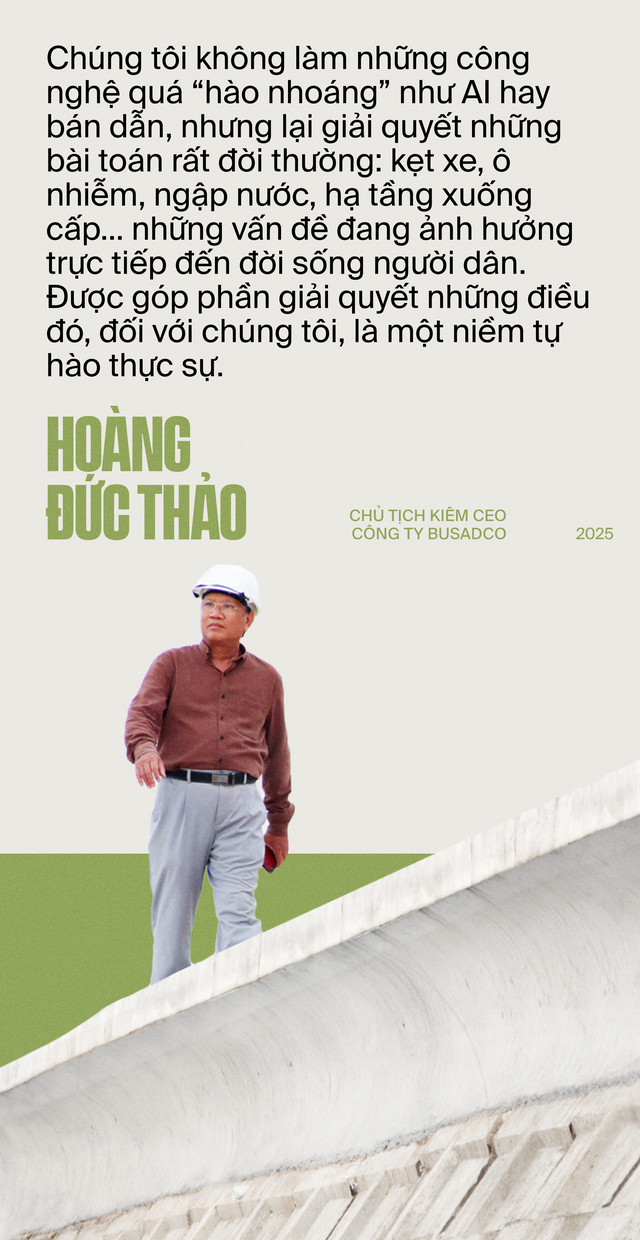
Another joy is seeing Vietnamese technology, brands, and intellect recognized both domestically and internationally. We don’t work on trendy technologies like AI or semiconductors, but we solve everyday problems: traffic congestion, pollution, flooding, and infrastructure degradation—issues directly affecting people’s lives. Contributing to these solutions is a true source of pride for us.
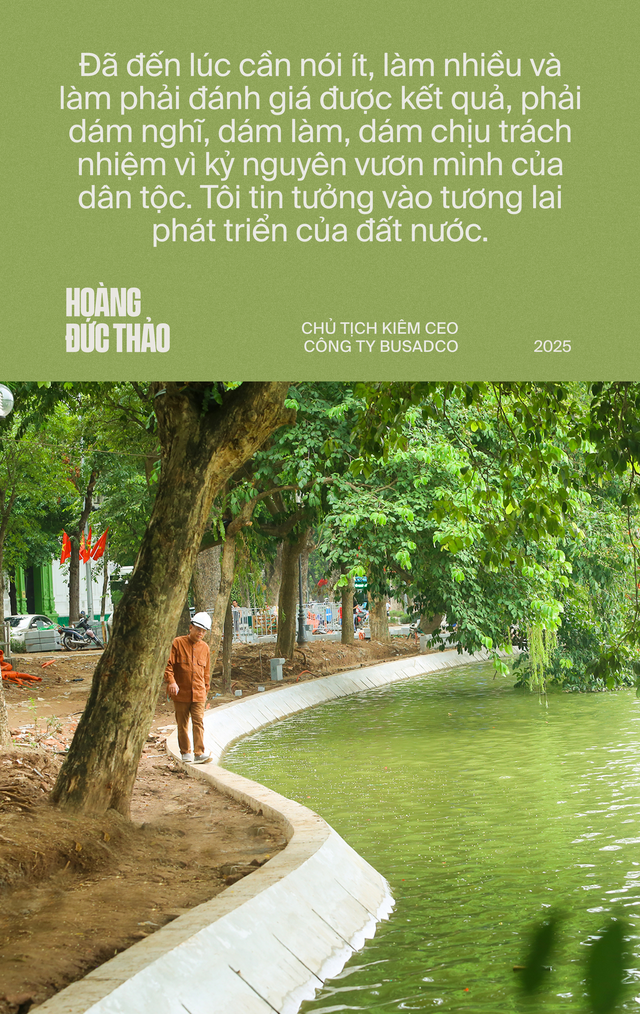
Perhaps the greatest honor was contributing new technology to the Hoan Kiem Lake embankment project. Hoan Kiem Lake is a national heritage site, the heart of the country. International visitors and state leaders passing through Hanoi all see it. Completing this project felt like creating a lasting legacy for future generations.
As the first science and technology enterprise in the country, what sets Busadco apart from others in the same field?
Busadco is a science and technology enterprise focused on research and application. We don’t transfer or copy anyone else’s technology but conduct our own research and commercialize our products.
Our second distinction is that Busadco always starts with identifying practical limitations and shortcomings. We then research and address these issues to develop new technological solutions. Once a solution is found, we proceed with idea development, testing, experimentation, technical design, model building, prototyping, testing, standard development, production process establishment, marketing, market selection, and partner negotiation.
Thus, Busadco follows a closed-loop process from idea to solution, technology, production, marketing, and contract signing.
As a science and technology enterprise, what changes do you expect Resolution 57 to bring in applying inventions to practical use?
To achieve the goal of making Vietnam a developing country with modern industry and high-middle income by 2030, and a developed, wealthy, democratic, equitable, and civilized nation by 2045, the only path is innovation, science and technology development, and digital transformation. Looking at developed nations, they too have followed this path, starting with technology.
Agriculture has helped us secure food and clothing; industry has increased average income and accumulated capital. But to become a developed nation with high income and a modern civilization, we must innovate, develop science and technology, and there is no other way.
I believe Resolution 57 is gradually being implemented. Its core is innovation, science and technology development, and digital transformation. From a researcher’s perspective, the new Science and Technology Law and related decrees are much clearer and more feasible.
However, it’s not just about one law; many related laws need revision, such as those on taxes, land, planning, environment, procurement, intellectual property, and standards and regulations, to create a synchronized legal system that meets practical needs.
Most importantly, the Party and State have recognized the importance of this, making it actionable. It’s no longer just slogans but a unified effort across the political system, from central to local levels, connecting the state, scientists, and businesses for collaborative development.
It’s time to act more and speak less, to evaluate results, and to dare to think, act, and take responsibility for the nation’s aspirations. I’m confident in the country’s future development.
Thank you for sharing your insights!
The “Serving the Country” content series honors inspiring stories of dedication and practical contributions to Vietnam’s socio-economic development, with the companionship of Tan Hiep Phat Group.
As a leading Vietnamese beverage company, Tan Hiep Phat has long envisioned not only business success but also contributing to the industry, consumers, and society. Over three decades, the group has invested in four state-of-the-art factory clusters in key economic regions—Ninh Binh, Da Nang, Ho Chi Minh City, and Can Tho—creating tens of thousands of jobs and contributing significantly to state revenue.
Beyond business, Tan Hiep Phat actively engages in social responsibility, supporting programs like “Sustaining Passion,” “Connecting Love,” “Continuing the Journey with You,” “Steady Steps for the Future,” “Golden Bell,” and sponsoring shelters, scholarships, bridge construction, and water donations in drought-affected areas. These efforts aim to improve lives and spread positivity.
For Tan Hiep Phat, social responsibility is a core value and a long-term commitment to community service, contributing to a prosperous and humane Vietnam.
Chinese Construction Giant Eyes Investment in Quang Tri’s Urban and Infrastructure Projects

Mr. Nghiem Gioi Hoa, the founder of Pacific Construction Group, expressed his keen interest in exploring further investment opportunities. He proposed establishing a representative office in Quang Tri Province to facilitate seamless project connections and promotions.
Sprint to Disburse Public Investment Funds
As 2025 draws to a close, numerous public investment projects are racing against time to meet their deadlines. Amidst economic pressures, over 1 million billion VND in public investment capital is seen as a crucial catalyst to drive growth and unlock private sector resources.
Unlocking Hanoi’s Potential: Resolving the Ring Road 1 Bottleneck
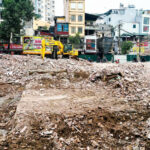
Hanoi City has announced the substantial completion of land clearance for the Hoang Cau – Voi Phuc section of Ring Road 1 within just over five months, decisively resolving a long-standing infrastructure bottleneck.
Hanoi Granted Special Mechanisms and Policies to Implement Major Projects
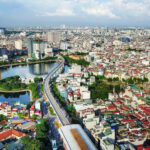
On the morning of December 11th, with the majority of delegates in attendance voting in favor, the National Assembly adopted a resolution piloting specific mechanisms and policies to implement major, critical projects in the capital city of Hanoi.
Da Nang Secures Nearly VND 9 Trillion for Land Clearance of North-South High-Speed Railway Project Across 9 Local Communes and Wards

Da Nang City has approved a budget of nearly VND 9 trillion for compensation, support, and resettlement efforts to facilitate the construction of the North-South high-speed railway section passing through its territory.