












Berkshire Hathaway’s Investment Turning Point
2025 marks a new chapter in Berkshire Hathaway’s investment history as the conglomerate officially concludes its 17-year journey with Chinese electric vehicle manufacturer BYD.
According to the Q1 2025 financial report, the value of the BYD investment has dropped to zero, completely ending Berkshire’s presence in the world’s largest electric vehicle market. A Berkshire spokesperson stated that the divestment process had been gradual over the past few years.
The journey began in 2008, just weeks after the global financial crisis triggered by Lehman Brothers’ collapse. Following a suggestion from long-time partner Charlie Munger, Berkshire invested $230 million to acquire 225 million BYD shares, equivalent to 9.9% of the company, at a price of 8 HKD per share. At the time, many considered Buffett and Munger’s decision to invest in a young Chinese EV startup as “reckless.”
However, the late billionaire Munger (who passed away in 2023 at age 99) described BYD and its founder Wang Chuanfu as a “true miracle.” The results exceeded expectations: BYD’s stock surged nearly 4,000%, pushing the investment’s value to a peak of $9 billion in Q2 2022. Berkshire realized a profit of over $7 billion from gradual sales, a 40-fold return on the initial investment. BYD’s revenue grew 37-fold to $109 billion last year, with net profit increasing 25-fold. This remains one of Berkshire’s most miraculous deals.
Since 2022, Berkshire has gradually reduced its stake in BYD. By June 2024, it had sold 76% of its holdings, retaining less than 5%. Specifically, the investment value declined from $5.1 billion in Q3 2022 to $2.2 billion in Q4 2023, reaching zero in Q1 2025.
Billionaire Buffett has not detailed the divestment decision, but he once praised BYD as an “extraordinary company” led by an “extraordinary person.” At the 2023 shareholder meeting, he warned of the fiercely competitive global auto industry, where “no one maintains a long-term advantage.” BYD now ranks 7th globally in sales, surpassing Honda, but faces intense price wars in China and concerns about a global oversupply of affordable vehicles.
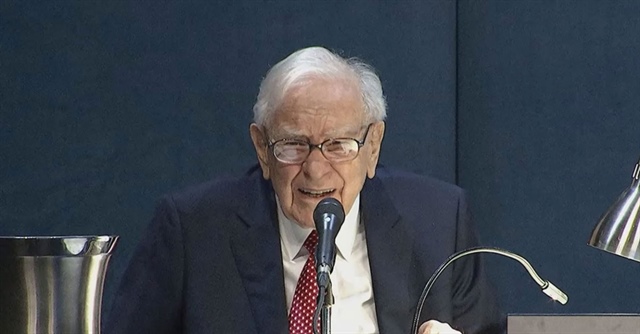
Billionaire and legendary investor Warren Buffett. Photo: CNBC |
Alongside exiting BYD, Berkshire has increased investments in five Japanese trading companies: Itochu, Mitsubishi Corp., Mitsui & Co., Sumitomo Corp., and Marubeni. Since 2019, Berkshire has gradually raised its stakes, reaching nearly 10% in each company by March 2025. This move has driven continuous growth in Japanese stock prices.
Warren Buffett’s investment philosophy prioritizes “sustainable value,” focusing on companies with long-term competitive advantages, low valuations, and exceptional management. BYD was the only Asian exception in a portfolio dominated by U.S. companies (e.g., Apple at $68 billion, American Express, Bank of America, Coca-Cola).
Buffett acknowledged that Munger championed BYD, similar to Costco, but the strategy has now shifted back to core principles: avoiding high risk.
Currently, China’s economy faces significant uncertainties, including slow growth, high public debt, intense domestic competition, and regional tensions. These factors contributed to Berkshire’s decision.
According to plans, the 95-year-old Buffett will retire and hand over leadership to Greg Abel on January 1, 2026, after 60 years at Berkshire’s helm. Abel, who leads Berkshire’s non-insurance segment, is expected to strengthen ties with Japan and continue Buffett’s value-investing philosophy.
Warren Buffett’s Investment Philosophy and Japan’s Rise
Warren Buffett, the “Sage of Omaha,” is renowned for his “value investing” strategy: buying undervalued stocks relative to intrinsic value, holding long-term, and avoiding speculation. Berkshire’s portfolio remains U.S.-focused, but Japan now plays a significant role, reflecting a strategic shift.
At the 2024 annual meeting, Buffett declared, “Over the next 50 years, we will not sell our Japanese holdings.” He expressed pride in these investments during a Nikkei interview, highlighting trading companies like Mitsubishi for their diversified sectors, attractive valuations, and stable profits.
Japan’s economy stagnated from the 1990s to the early 2020s, a period analysts dubbed the “Lost Decades.” The economy declined after the asset price bubble (real estate and stocks) burst in late 1991.
From 1990 to 2020, Japan’s GDP grew only 0.9% annually, far below China’s 9-10% growth. However, since 2023, Japan’s economy has shown recovery signs: positive inflation, rising wages, tourism boom, and the Nikkei index surpassing its 1989 peak.
Japan is now a major FDI destination, supported by the U.S., strengthening its technology and defense sectors.
Japanese trading companies exemplify Buffett’s philosophy: low P/E ratios (8-10 times), high dividend yields, and risk diversification through global trade. Berkshire bought at post-Covid-19 lows, now profiting from exports and a weak yen. Compared to BYD’s explosive but volatile growth, Japanese companies offer stability, aligning with the value-investing approach pursued by Buffett and his successor, Greg Abel.
Mạnh Hà
– 14:15 17/12/2025
Unbelievable Story in the Warren Buffett Family: Only Daughter Didn’t Know Her Father Was a Billionaire Until Her 20s, Once Worked as a Food Delivery Person and Newspaper Vendor to Earn Money

“I had no idea my father was wealthy until I was in my 20s, and it wasn’t something my parents ever mentioned. I stumbled upon an article in the Wall Street Journal, and that was the first time I realized there was so much I didn’t know,” she shared.
“Asian Nation’s Sudden U-Turn: Why the Shift Away from Russian Energy After Recent Pledge?”

Japan faces mounting pressure to reassess its LNG import strategy from Russia, amid shifting global energy dynamics and geopolitical tensions.
Expert Insights: VN-Index Targets 1,700 Points, Seizing Opportunities in Discounted Leading Stock Groups
In Mr. Khoa’s view, the likelihood of leading the next upward trend typically lies with sectors underpinned by favorable macroeconomic fundamentals, where valuations have been sufficiently discounted and early recovery signals are emerging ahead of the broader market.
Asian Powerhouse Defies Global Trend, Commits to Russian Energy Despite Shifting Dynamics

The Asian nation underscores the critical role of Russian energy in ensuring its energy security.
“Shocking Forecast: Chinese Automakers Poised to Dominate—5 Out of Top 10 Global Car Manufacturers by 2028, Leaving Toyota, Honda, Volkswagen, and Tesla on Edge”
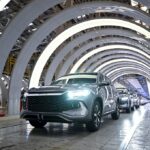
McKinsey’s forecast emerges amid the remarkable strides of China’s automotive industry, both domestically and on the global stage.