












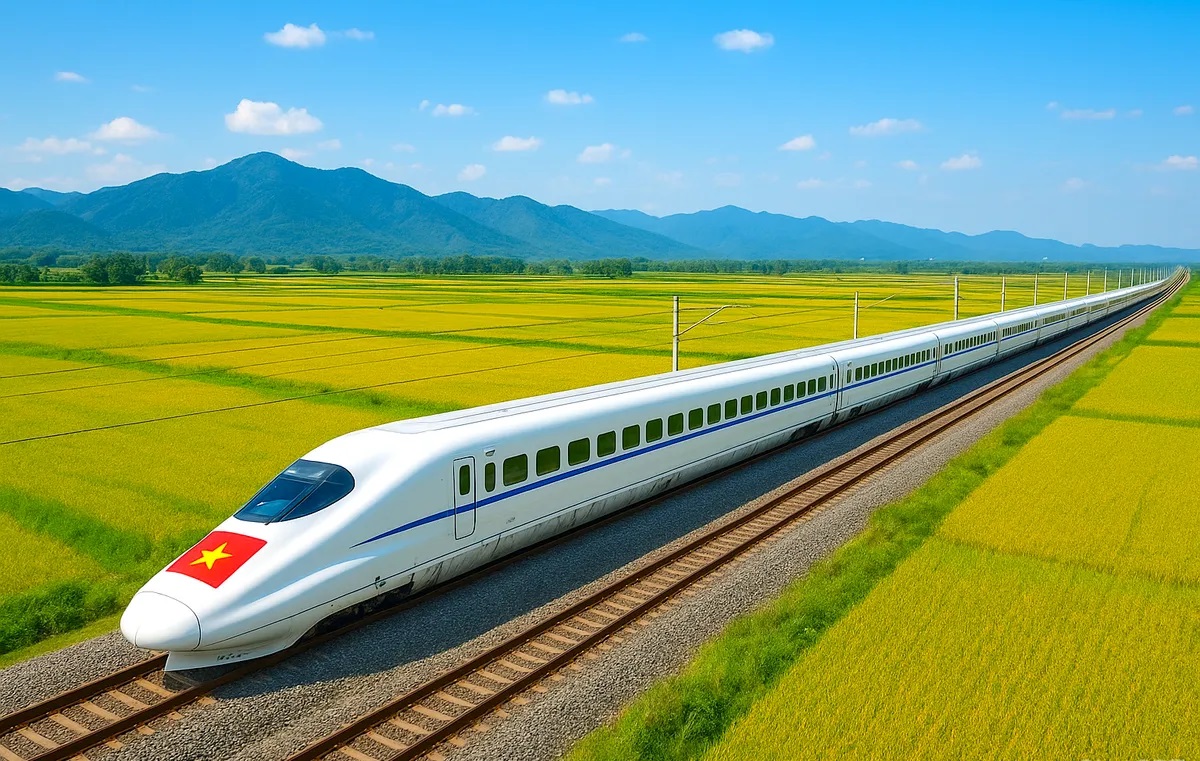
From Europe to Asia, the Velaro high-speed train, developed by Siemens, showcases the remarkable adaptability of modern rail technology. Beyond a standard model, Velaro has been customized to meet the infrastructure, climate, and transportation needs of each country, reflecting the flexible development trend of global high-speed rail.
Germany, Velaro’s birthplace, remains home to its most iconic versions. The Velaro D and Velaro MS, known commercially as ICE 3 and ICE 3neo, serve both domestic and international routes. Innovations in aerodynamics, multi-voltage operation, and passenger amenities highlight Europe’s focus on energy efficiency, noise reduction, and compliance with stringent cross-border standards, all while maintaining speeds of up to 320 km/h.
Spain, Velaro’s first export market, operates the Velaro E on its AVE network. Designed to withstand hot climates, this model set a speed record of over 400 km/h during testing, underscoring Spain’s ambition to build a high-speed rail backbone for inter-regional transport. Commercial operation at 350 km/h further illustrates the push for higher speed limits in markets with integrated infrastructure.
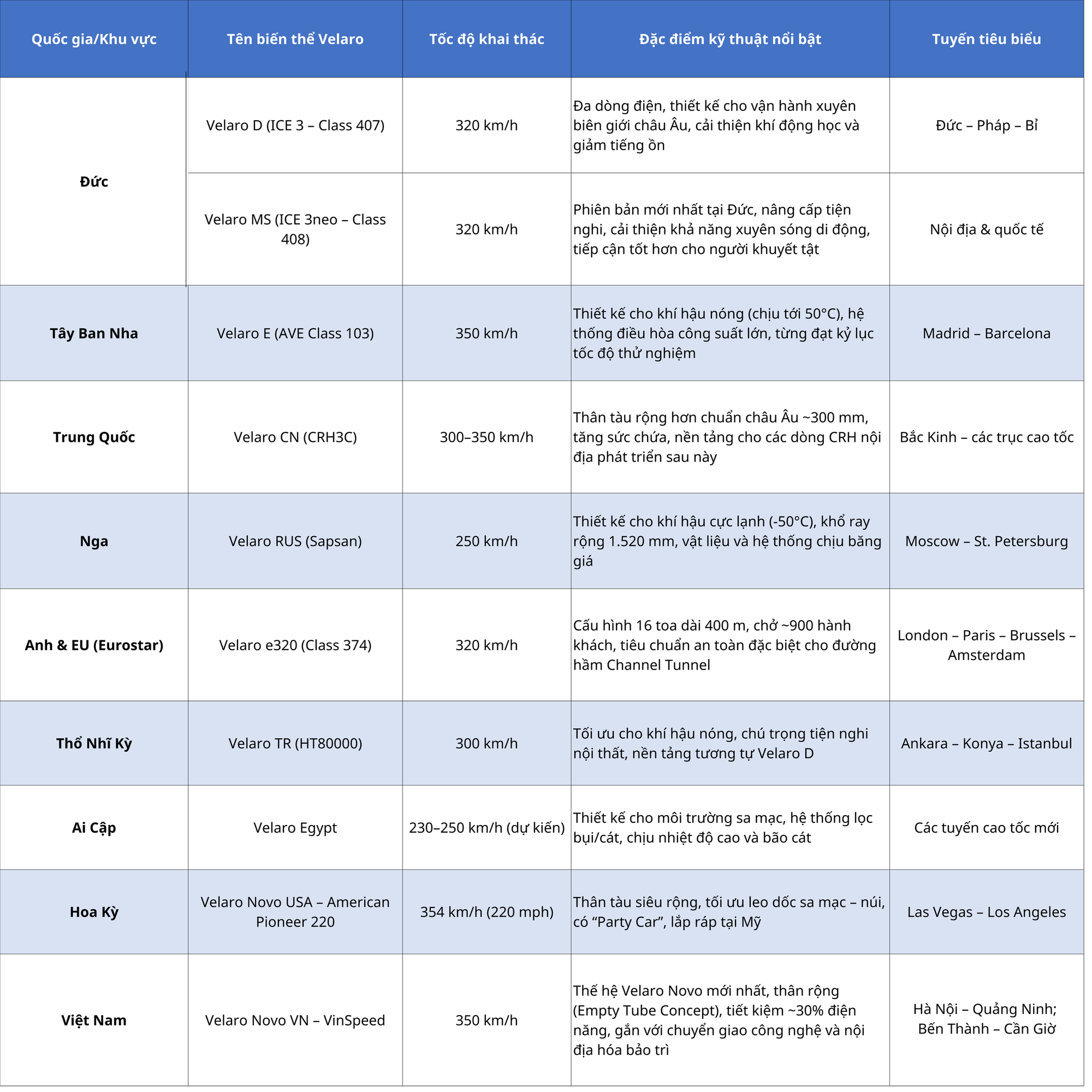
In Asia, China is Velaro’s largest and most influential customer. The Velaro CN features a wider body, significantly increasing passenger capacity. The Beijing–Shanghai high-speed railway, for instance, reduced travel time between the two cities from 14 hours to approximately 5 hours. Building on this technology, China has developed its own high-speed trains, transitioning from a technology buyer to a leader in high-speed rail, a trend increasingly adopted by other nations.
Russia presents a unique challenge. The Velaro RUS, or Sapsan, is designed to operate reliably in harsh cold conditions and on Russia’s specific broad-gauge tracks. Prioritizing durability, weather resistance, and reliability, this model demonstrates that in markets with extreme natural conditions, technical factors often outweigh absolute speed.
In Europe, Eurostar’s Velaro e320 exemplifies the trend toward increased capacity and enhanced safety standards. With a 16-car configuration and a capacity of up to 900 passengers, it serves cross-Channel routes, where technical and safety requirements are significantly higher than standard rail. This reflects the growing view of high-speed trains as a viable alternative to short-haul flights.
Emerging markets are also joining the race. Turkey and Egypt have chosen Velaro variants optimized for hot climates and rapidly growing transportation demands. Meanwhile, the U.S. is deploying the Brightline West project with the Velaro Novo, emphasizing passenger experience and performance in complex terrain.
Notably, VinSpeed Railway Investment and Development JSC (Vingroup) and Siemens Mobility GmbH (Siemens AG, Germany) have signed a Comprehensive Strategic Cooperation and Technology Transfer Agreement, establishing a deep partnership in high-speed rail in Vietnam.
The Velaro Novo, a distributed-power EMU, is Siemens Mobility’s most advanced high-speed train, designed to redefine future high-speed travel standards. With a top speed of 350 km/h, its wider body and optimized hollow tube design increase passenger capacity by at least 10% compared to previous generations and other high-speed trains, enhancing passenger experience and operator revenue per trip.
Beyond performance, the Velaro Novo is highly regarded for its sustainability. Energy consumption is reduced by approximately 30% compared to older models, contributing to lower emissions and operational costs. Its superior climbing ability suits Vietnam’s hilly terrain, as well as urban and coastal areas.
The focus on technology transfer and localization highlights a shift from merely importing vehicles to deeper engagement in the high-speed rail value chain.
In summary, the diversity of Velaro variants reflects a broader trend: high-speed trains are no longer one-size-fits-all but flexible technology platforms tailored to specific markets, as nations increasingly view high-speed rail as a strategic solution for sustainable development.
Strategic Comprehensive Partnership Between VinSpeed and German Conglomerate for High-Speed Rail Development

VinSpeed and Siemens Mobility GmbH have entered into a strategic partnership to facilitate technology transfer and extensive collaboration in the field of high-speed rail in Vietnam.
VinSpeed and Siemens Mobility Sign Comprehensive Strategic Partnership for High-Speed Rail Development
VinSpeed Railway Investment and Development JSC (Vingroup) and Siemens Mobility GmbH (Siemens AG, Germany) have officially signed a Comprehensive Strategic Cooperation and Technology Transfer Agreement, establishing an extensive partnership in the field of high-speed rail in Vietnam.
ACB Unveils Sustainable Development Model Aimed at Creating Shared Value for Vietnamese Communities

On December 18, 2025, Asia Commercial Bank (ACB) officially unveiled its sustainable development model centered on Creating Shared Value (CSV), marking a strategic shift in how the bank approaches social responsibility.
Ensuring Security and Safety for the Inauguration of Long Thanh International Airport

The Office of the Government has issued Announcement No. 699/TB-VPCP dated December 17, 2025, outlining Prime Minister Phạm Minh Chính’s conclusions following his inspection of the progress of Phase 1 of the Long Thành International Airport project and its connecting transportation routes.
Prime Minister: Double-Digit Growth Target is Well-Founded, Feasible, and Achievable
Prime Minister Pham Minh Chinh emphasizes the urgent need to accelerate sustainable development, rooted in the principles of green transformation and digital innovation. This vision prioritizes rapid progress while ensuring environmental sustainability and leveraging technological advancements for long-term growth.