


















According to Jalopnik, a reputable automotive news source in the U.S., Honda has officially notified its dealerships about the recall of the Honda CR-V e:FCEV. Vehicle owners will begin receiving direct notifications starting February 2nd next year.
Honda has identified a potential coolant leak in the hydrogen fuel cell stack, which could seep into the protective casing. This issue not only results in coolant loss but also poses a risk of internal short circuits, leading to sudden power loss and potential safety hazards.
To address this, dealerships will replace the entire fuel cell stack with an upgraded component. The new design uses rubber gaskets instead of adhesive at the connection points, and the wobble joints are meticulously deburred to ensure a perfect seal.
“As of December 5th, we’ve recorded 14 warranty claims related to this issue. Fortunately, there have been no reports of accidents or injuries. While the VIN lookup system hasn’t updated the specific dates yet, the recall is expected to affect vehicles produced between June 3, 2024, and March 26, 2025,” stated a Honda dealership representative in the U.S.
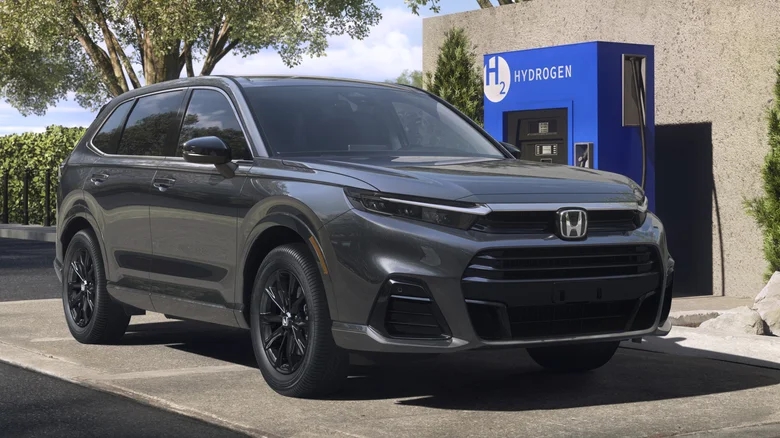
Hydrogen-powered vehicles are seen as a promising solution for reducing future emissions.
Modern vehicles are intricate machines, and this complexity multiplies with the integration of cutting-edge technologies. With thousands of components, operational errors are inevitable. This is the challenge facing the 2025 Honda CR-V e:FCEV, leading to a recall issued by the National Highway Traffic Safety Administration (NHTSA).
Out of the 388 CR-V e:FCEV units subject to recall, Honda estimates that 60% are affected by this issue. The Japanese automaker identifies two root causes:
First, reduced adhesive application resulted in incomplete sealing at critical junctions within the fuel cell stack, compromising its integrity.
Second, the supplier failed to properly deburr the O-ring grooves, leaving sharp metal edges. These edges create an uneven surface, preventing the O-ring from sealing effectively and risking damage to the rubber gasket during operation, leading to coolant leaks.
Over time, leaked coolant penetrates the fuel cell stack. When it comes into contact with sensitive internal electronics, it causes electrical shorts. The vehicle’s safety system immediately detects this and triggers a warning light on the dashboard, alerting the driver to take action.
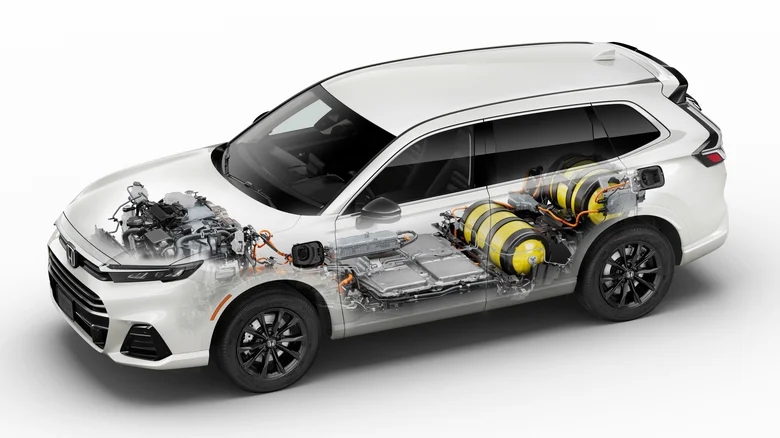
The intricate design of the Honda CR-V e:FCEV.
Depending on the leak severity and system condition, the driver receives progressively urgent warnings on the dashboard. Initially, a ‘Power System’ alert appears upon detecting high-voltage leakage, along with a low insulation fluid warning, prompting the driver to contact a dealership.
If air enters the cooling system, the vehicle activates a protective mode, displaying ‘Power may be reduced’ and limiting fuel cell output to 20 kW. In the most critical scenario, if coolant temperatures rise excessively, halting power generation, the screen will urgently display ‘Do not drive’ or ‘Stop driving when safe’ to ensure passenger and vehicle safety.
Latest Updates on Gold Bullion Licensing

For the first time, businesses and commercial banks can apply for gold bar production licenses under the new draft circular from the State Bank of Vietnam. Streamlined administrative procedures and the elimination of unnecessary conditions make gold trading more accessible and efficient.