





















Minister of Science and Technology Nguyen Manh Hung presents a report on Vietnam’s digital economy and society development – Photo: VGP/Nhat Bac
|
Vietnam is entering a pivotal phase of accelerated strategic implementation to fulfill its ambition of rapid and sustainable development, aiming to become a high-income nation in the coming decades. In this journey, the digital economy and digital society are no longer optional but essential, serving as the core drivers of growth and innovation.
The next phase of Vietnam’s digital economy and society development will shift from digitizing existing systems to creating new development spaces. Here, data, AI, digital platforms, digital enterprises, and digital citizens will collectively fuel growth.
While the digital economy’s share in GDP is growing rapidly, domestic value-added remains low, heavily reliant on cross-border platforms. Many small and medium-sized enterprises have yet to fully engage in the digital value chain.
Thus, the upcoming phase demands not just more effort, but a transformative approach—deeper, more value-added, and sustainable. Breakthrough innovations are imperative.
5 Breakthrough Innovations for Digital Economy and Society
First, design a national digital economy architecture instead of piecemeal digitization across sectors. Transition from sector-specific digital transformation plans to a redesigned economic structure built on shared digital infrastructure layers such as telecommunications, internet, computing, data, AI, digital platforms, and services. The government must act as the chief architect of the national digital economy and society, shaping the framework for market operations.
At its core, the digital economy restructures the entire economic landscape—from production, distribution, and consumption to market organization, enterprise governance, and resource allocation. It relies on new production factors like data, new tools like digital infrastructure, cloud, IoT, AI, and digital platforms, and new operational frameworks such as regulations on science, technology, innovation, digital transformation, data, cybersecurity, and AI. Digital enterprises and value chains are central, supported by digital citizens and digital trust. Without trust, there can be no digital transactions or a digital economy.
Second, treat data, AI, and computational power as foundational production capabilities of the digital economy, akin to electricity, water, and telecommunications. These should be accessible as services to the government, businesses, and citizens. Here, I emphasize the evolving role of next-generation telecom providers in digital economy and society development. They must go beyond connectivity, offering core digital capabilities for businesses to build products, services, and operate the economy. Their value lies not in subscriber numbers but in the services other businesses create on their networks. Telecom providers must become the backbone of the national digital space, encompassing data centers, cloud computing, edge computing, platforms, and cybersecurity.
Third, evolve e-government from procedural digitization to data-driven and predictive governance. The state’s complexity surpasses human processing capacity, but AI can manage and forecast when operations are digitized. Policies designed, simulated, tested, and evaluated using data will be faster and more accurate. Risk-based management, social impact assessments, and targeted inspections will enhance efficiency.
Fourth, develop a national digital market centered around businesses. Shift from supporting digital transformation to creating digital markets, fostering demand for Vietnamese enterprises, and building trust in Vietnamese digital businesses. Domestic enterprises will grow within the local market before expanding globally, forming Vietnamese tech conglomerates with core digital capabilities.
Fifth, build a human-centric digital society founded on digital trust. Digital transformation ultimately transforms people. Digital skills, mindset, and ethics must be universal, fostering a humane, safe, creative, and responsible Vietnamese digital culture. A digital society empowers citizens with access to information, public services, lifelong learning, and social participation. Digital citizens are not just beneficiaries but active policy contributors. The government becomes a data-driven public service provider, and the digital community forms a new social space parallel to the physical one.
The digital economy and society are not just about technology but about restructuring development, rebuilding trust, and redefining the roles of the state, businesses, and citizens in the digital era. With data as the foundation, digital platforms as drivers, institutions as guides, and people at the center, Vietnam is poised for successful growth model transformation, enhancing productivity and quality of life.
– 10:25 20/12/2025
Vietnam Poised for Stunning Surge, Projected to Hit $39 Billion by 2025: Doubling Southeast Asia’s Benchmark
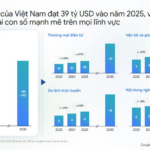
Achieving the $39 billion target by 2025 is not merely a milestone in economic growth but a testament to the adaptability and technological embrace of the Vietnamese people.
The Digital Transformation Bill: Proposing 9 Prohibited Actions in the Digital Transformation Era

The Ministry of Science and Technology is drafting the Digital Transformation Act to enhance the legal framework for the country’s digitalization and create an interdisciplinary legal foundation for digital transformation in sectors embracing digitalization. Notably, the act includes provisions on prohibited actions during digital transformation.
The Vietnamese Textile and Apparel Industry: Leading the Pack with Impressive Growth Rates

The textile industry is a powerhouse in Vietnam, with 2024 exports reaching an impressive $44 billion. This significant milestone has propelled the country to second place globally, just behind China, in terms of total textile and apparel exports, surpassing Bangladesh. Vietnam’s dominance in this sector is projected to continue, with forecasts estimating a further increase to $46 billion in 2025.
Sustainable Digital Finance: Unlocking New Momentum for Vietnam’s Banking and Finance Industry

The digital shift has become an inevitable trend in Vietnam’s banking and finance sector. To sustain their growth, banks must adopt a comprehensive strategy. MB has released a report titled “The Shift to Sustainable Digital Finance for Vietnam’s Banking and Finance Sector,” offering new insights and direction in this digital era.
The Average Wage for Workers is 50% Higher Than the Global Average: How Can Vietnam’s Textile Industry Retain its Competitive Edge and Attract Investment Amidst Rising Labor Costs?
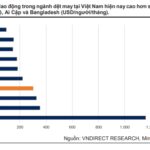
VNDirect believes that Vietnam’s textile industry possesses three significant advantages that enable it to compete on a global scale.