












This content pertains to a Resolution outlining mechanisms and policies to address challenges in the implementation of the Land Law, effective from January 1, 2026.
When changing land use purposes, individuals must pay land use fees or land rent once for the remaining period, calculated based on the difference between the land type after and before the change.
For garden land, ponds, or agricultural land within the same plot containing residential land, when converting to residential land, the land use fee is calculated at 30% of the difference between the land use fee based on residential land prices and the land use fee based on agricultural land prices at the time of the decision to allow the land use change. This applies to the area converted within the local residential land allocation limit.
Currently, under clauses 1 and 2 of Article 8 of Decree 103/2024/NĐ-CP, households and individuals, upon receiving a decision allowing the conversion to residential land, will have their land use fees calculated as follows:

Thus, from January 1, 2026, individuals will only pay 30% of the difference when converting agricultural land to residential land within the limit, instead of the current 100%.
According to independent real estate consultant Mr. Lê Quốc Kiên, this policy will help resolve issues for individuals genuinely needing to build homes, legalize long-term residential land, or divide land for their children.
For investors purchasing large plots to subdivide and sell, the new Resolution maintains barriers to limit lot splitting. The reduced area is too small compared to the investment scale and applies only once per conversion.
For the market, the supply of residential land from locals will remain scarce. Only local residents or small investors who have already purchased land will sell, with fewer offerings from large investors. Consequently, investors must develop detailed 1/500 projects and cannot subdivide land into small, fragmented plots as before.
Under the 2023 Real Estate Business Law, subdividing and selling land with infrastructure in 1/500 areas within wards, districts, and cities of special, first, second, and third-tier urban areas (approximately 105 urban areas) is prohibited. Developers must construct and sell houses. Therefore, the already limited supply of residential land will become even scarcer.
Converting Agricultural Land to Residential: Essential 2026 Regulations Every Citizen Should Know
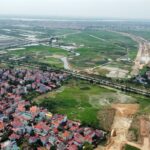
Many families own agricultural land that qualifies for residential zoning but only need to change the land use for a portion of the area. During the application process, some are informed that they must convert the entire plot, which can be unnecessary and costly.
Latest Land Reclamation Cases by the State Starting from 2026
Beginning in 2026, the government will expand land reclamation efforts to include three additional scenarios, prioritizing economic and social development for the greater good of the nation and its citizens.
Unlocking Land Subdivision Opportunities: Easier Rules from 2026 Offer More Housing Options for Residents

Under the newly adopted Resolution on mechanisms to address challenges in the implementation of the Land Law, passed by the National Assembly on December 11, the criteria for land subdivision and consolidation have been significantly relaxed compared to previous regulations.
Developer Advances Funds for Compensation, Support, and Resettlement
The newly adopted resolution outlines key mechanisms and policies to address challenges in the implementation of the Land Law. It stipulates that developers must advance funds to cover compensation, support, and resettlement costs, as well as any discrepancies between the agreed land prices and the average market rates.
“Parliament Approves Three Additional Cases for Land Reclamation to Boost Socio-Economic Development”
The National Assembly has introduced three additional scenarios where the state can reclaim land for socio-economic development, including the implementation of projects within international financial centers.