
















According to a report by a journalist from the Labor Newspaper, just over a month ago, the price of live pigs was commonly around 45,000 – 48,000 VND/kg, with some areas in the Mekong Delta even dropping to 43,000 VND/kg. However, at present, most regions have seen prices rise to 68,000 VND/kg, with many places reaching 70,000 VND/kg.
Rapid Price Increase
With the surge in live pig prices near the year-end, many small-scale farmers are opting to hold onto their pigs, continuing to raise them in anticipation of further price increases. Additionally, traders are purchasing pigs weighing between 90 – 100 kg to fatten them up, hoping to profit by over a million VND per pig. These actions further tighten the short-term supply.
At the Ho Chi Minh City agricultural wholesale market, the price of pork cuts has also risen in line with the increase in live pig prices. In November, pork cuts were priced between 56,000 – 60,000 VND/kg, but now they have climbed to 74,000 – 80,000 VND/kg, an increase of about 18,000 – 20,000 VND/kg. Prices for deboned pork at the wholesale market have also seen a rise of over 20,000 VND/kg compared to previous levels.
Market managers note that as the year-end peak season approaches, the general trend for pork prices is upward, with little chance of a decrease. Many traders are keen to push prices higher. However, recent experience shows that when prices rise too quickly, consumer demand stalls, forcing traders to slightly reduce prices to retain customers.
From a consumer perspective, Ms. Lê Kim Huệ, a resident of Thạnh Mỹ Tây Ward, Ho Chi Minh City, mentions that pork prices have been rising steadily over the past month, with a recent increase of about 30,000 VND/kg. “With lean pork nearing 150,000 VND/kg, my family has shifted to buying fish and chicken to avoid excessive spending,” she says.
Meanwhile, Ms. Hân, from Bình Trưng Ward, Ho Chi Minh City, shares that she used to shop for meat and fish at local markets but now prefers supermarkets, as pork prices there rise more slowly, and some items like bones and trotters have yet to see price adjustments.
A survey of local markets in Ho Chi Minh City, such as Bà Chiểu, Thị Nghè, and Đo Đạc, reveals that pork prices are at high levels: pig trotters are selling for 120,000 – 140,000 VND/kg, pork thigh for 120,000 – 130,000 VND/kg, lean pork for 140,000 – 145,000 VND/kg, and pork belly and tenderloin for 170,000 – 180,000 VND/kg, depending on the market. Ms. Hồng, a pork vendor at Thị Nghè Market, notes that stalls are cautiously monitoring each other when adjusting prices. “If prices rise too sharply, we lose customers, so we increase them gradually to maintain our client base,” she explains. Ms. Thu, a vendor at Đo Đạc Market, adds that the wholesale market has just announced an additional increase of 8,000 VND/kg, suggesting that retail pork prices are likely to continue rising.
In Đồng Nai, pig farmers report that traders are eager to place early deposits, willing to pay 1,000 – 2,000 VND/kg more than companies. This indicates expectations of further increases in live pig prices, especially as Tet demand approaches.
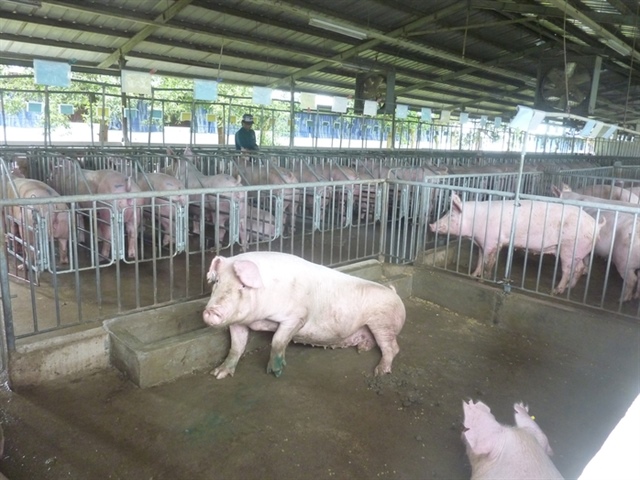
Traders are collecting pigs to fatten them up to 130 – 140 kg/head before selling. |
Risks of Fattening Pigs
According to Mr. Nguyễn Văn Đoàn, a pig farmer in Gia Kiệm Commune, Đồng Nai, the primary reason for the sudden surge in pig prices is that farming facilities are holding back their stock, reluctant to sell. “Previously, market-ready pigs were sold at 100 – 110 kg/head, but now farmers are waiting for higher prices before selling,” he explains. This practice has significantly increased the number of pigs reaching larger weights, typically 120 – 130 kg/head, further tightening the short-term supply.
Similarly, Mr. Trần Thanh Hòa, another pig farmer in Đồng Nai, confirms that traders and wholesalers are buying pigs weighing 90 – 100 kg to fatten them up quickly for profit. In a short period, each pig can yield a profit of over a million VND, making this practice quite popular. This also contributes to localized supply shortages, driving up live pig prices.
Calculations from farming cooperatives show that fattening pigs for about a month can increase their weight from 100 kg to 130 kg, an average gain of about 1 kg/day. With a feed cost of approximately 3 kg, or 30,000 VND, to produce 1 kg of meat priced at around 63,000 VND, farmers can profit about 33,000 VND/kg. Thus, with an additional 30 kg of meat, the profit margin reaches nearly 2 million VND/head, leaving over 1 million VND in actual profit after expenses. Since large companies typically sell pigs at 90 – 105 kg, these become an attractive input source for traders to purchase for fattening.
However, Mr. Nguyễn Kim Đoán, Vice Chairman of the Đồng Nai Livestock Association, warns that fattening pigs carries significant risks. “If pigs stop eating or fall ill during the fattening period, farmers are forced to sell at low prices, resulting in substantial losses,” he cautions.
According to Mr. Đoán, while pig prices may continue to rise, a sharp increase is unlikely, as the supply in the southern market remains sufficient to meet demand. Fattened pigs could increase total output by 10% – 15%, helping to ease price pressures. “Large farming companies also avoid excessively high pig prices, as this could allow cheaper imported pork to enter the market, directly competing with domestic supplies,” he notes.
From a corporate perspective, Mr. Lê Xuân Huy, Deputy General Director of C.P. Vietnam Livestock Corporation, agrees that live pig prices are unlikely to rise sharply in the near future, due to the potential influx of frozen imported pork, including low-cost pigs from Cambodia. “Part of the current price increase is driven by companies purchasing raw pork for Tet processing. Next month, as processing companies halt raw material purchases, live pig prices should stabilize,” he predicts.
|
50,000 VND/kg Ensures Profitability Mr. Phạm Đức Bình, Director of Thanh Bình Livestock Company, notes that the Central and Northern regions suffered heavy losses from recent storms, so pig prices there are likely to continue rising. In contrast, the Southern region has a relatively abundant supply, making it difficult for prices to remain high. According to Mr. Bình, at current prices, farming companies are already highly profitable. “A price of around 50,000 VND/kg is already significantly profitable. For companies with closed production chains, from breeding to feed and farming, costs are only about 43,000 VND/kg. With current selling prices in the South at 61,000 – 63,000 VND/kg, profits exceed expectations,” he observes. |
Article and photo: Nguyễn Hải
– 05:00 24/12/2025
Pig Prices Surge 36% to $2.80/kg Amid Supply Shortages, Boosting Profits for High-Tech Farming Giants
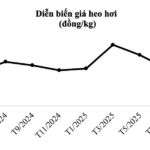
Historically, prices have surged following significant declines caused by pandemics. This year, the pattern repeats amidst reduced supply and heightened year-end demand, particularly during the peak consumption period leading up to the Lunar New Year.
Forging Agricultural Success: Hoa Phat’s Steel Expertise Transforms Farming
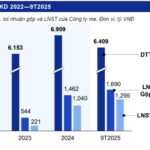
Steel complexes have thrived under a closed-loop model, and this approach is now being applied to agriculture. This insight was shared by Ms. Pham Thi Hong Van, CEO of Hoa Phat Agricultural Corporation (HPA), during the IPO launch event for HPA shares held on the afternoon of December 1, 2025.
Today’s Live Pig Prices, November 24: Market Decline Continues—What’s Driving the Trend?

Pork prices at slaughterhouses in Ho Chi Minh City have risen, yet retail prices for processed pork at wholesale markets remain stable.
Why Are Pork Prices Still High in Markets Despite a Sharp Drop in Live Pig Prices?
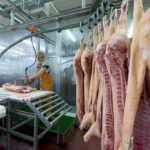
Pork prices at retail markets and supermarkets remain stubbornly high, despite hog prices plummeting to multi-year lows. This persistent disparity is squeezing the entire pork industry.
Pig Price Plunge: What’s in Store for the Pork Industry in Q3?
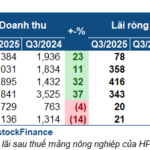
Unlike the explosive growth in the first two quarters, the third quarter of 2025 saw a significant drop in live hog prices compared to the same period last year, defying earlier predictions of price increases. However, businesses in the livestock industry reported mixed results during this period.