











Establishing the International Financial Center.
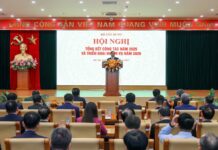
On the morning of December 21, at the Government Office, Prime Minister Pham Minh Chinh chaired a conference announcing the establishment of the International Financial Center in Vietnam.
At the conference, the Ministry of Finance affirmed that the establishment of the International Financial Center is one of the institutional breakthroughs and policies to unleash resources, transform the growth model in tandem with restructuring the economy. This initiative also aims to enhance productivity, efficiency, and national competitiveness.
In reality, the International Financial Center in Vietnam was established under the National Assembly’s resolution dated June 27. On December 18, the Government issued Decree 323 on the establishment of the International Financial Center in Vietnam.
Accordingly, the International Financial Center operates under the model of “one center, two destinations,” located in Ho Chi Minh City and Da Nang. Ho Chi Minh City serves as a large-scale financial hub, focusing on the development of stock, bond, banking, fund management, and listing services. Meanwhile, Da Nang concentrates on financial services related to logistics, maritime, free trade, and agro-industrial supply chains. The center in Ho Chi Minh City is expected to cover 899 hectares, while Da Nang will cover 300 hectares.
Under the Government’s decree, the operating regulations are approved by the International Financial Center’s Governing Council and uniformly applied at both locations. Similarly, all standards, regulations, procedures, rules, business forms, and licensing criteria will be simultaneously applied at both locations.
The Center Helps Vietnam Attract Global Investment, Goods, Technology, and Talent
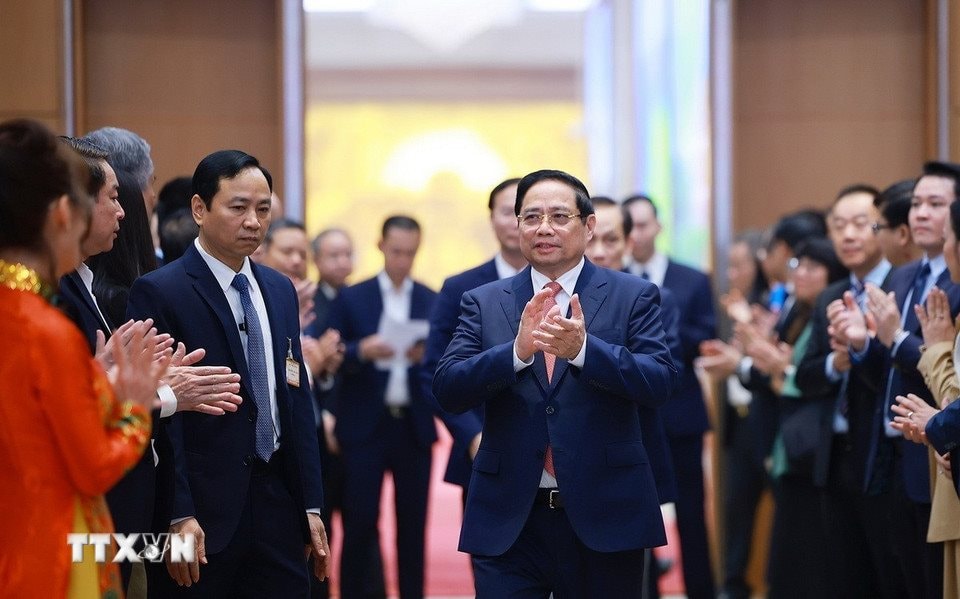
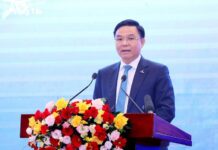
Prime Minister attending and chairing the conference announcing the establishment of the International Financial Center in Vietnam. Photo: TTXVN
At the conference, the Prime Minister acknowledged that the world is facing headwinds, with many places experiencing conflicts, divisions, and supply chain disruptions. However, Vietnam stands out as a rare bright spot in terms of economic growth, political and social stability, and sustainable development.
According to the head of the Government, Vietnam consistently pursues an independent, self-reliant, diversified, and multilateral foreign policy, serving as a good friend, reliable partner, and responsible member of the international community. Vietnam has established comprehensive strategic partnerships and strategic partnerships with most of the world’s major economic powers, including the US, China, EU, UK, Russia, Japan, South Korea, India, and Australia…
“Vietnam’s stability, including its macroeconomic foundation and development prospects, is the safest ‘anchor’ and the most highly valued ‘asset’ that global financial investors are always seeking to discover investment opportunities with Vietnam,” the Prime Minister stated.
The Prime Minister believes that as the global economic focus shifts significantly towards the Asia-Pacific region, Vietnam, with its favorable geo-economic position, can leverage this opportunity to become a natural “convergence point” for the flow of capital, goods, and technology globally if we seize the chance.
According to the Prime Minister, in the digital age and era of deep integration, the flow of capital, technology, and knowledge between countries, regions, and globally is being accelerated at an unprecedented pace. Therefore, the establishment of the International Financial Center in Vietnam is an urgent necessity, stemming from its potential, strengths, and timely vision, for the strategic goal of rapid and sustainable development.
Additionally, building the International Financial Center helps attract investment resources, new growth drivers, and elevates Vietnam to a higher level in the global value chain. The center’s establishment helps capitalize on the “favorable opportunity” to attract global investment, goods, technology, and talent.
“We cannot miss this opportunity; we must leverage it to create new momentum for rapid, sustainable development and enhance competitiveness at the regional and global levels,” the Prime Minister emphasized.
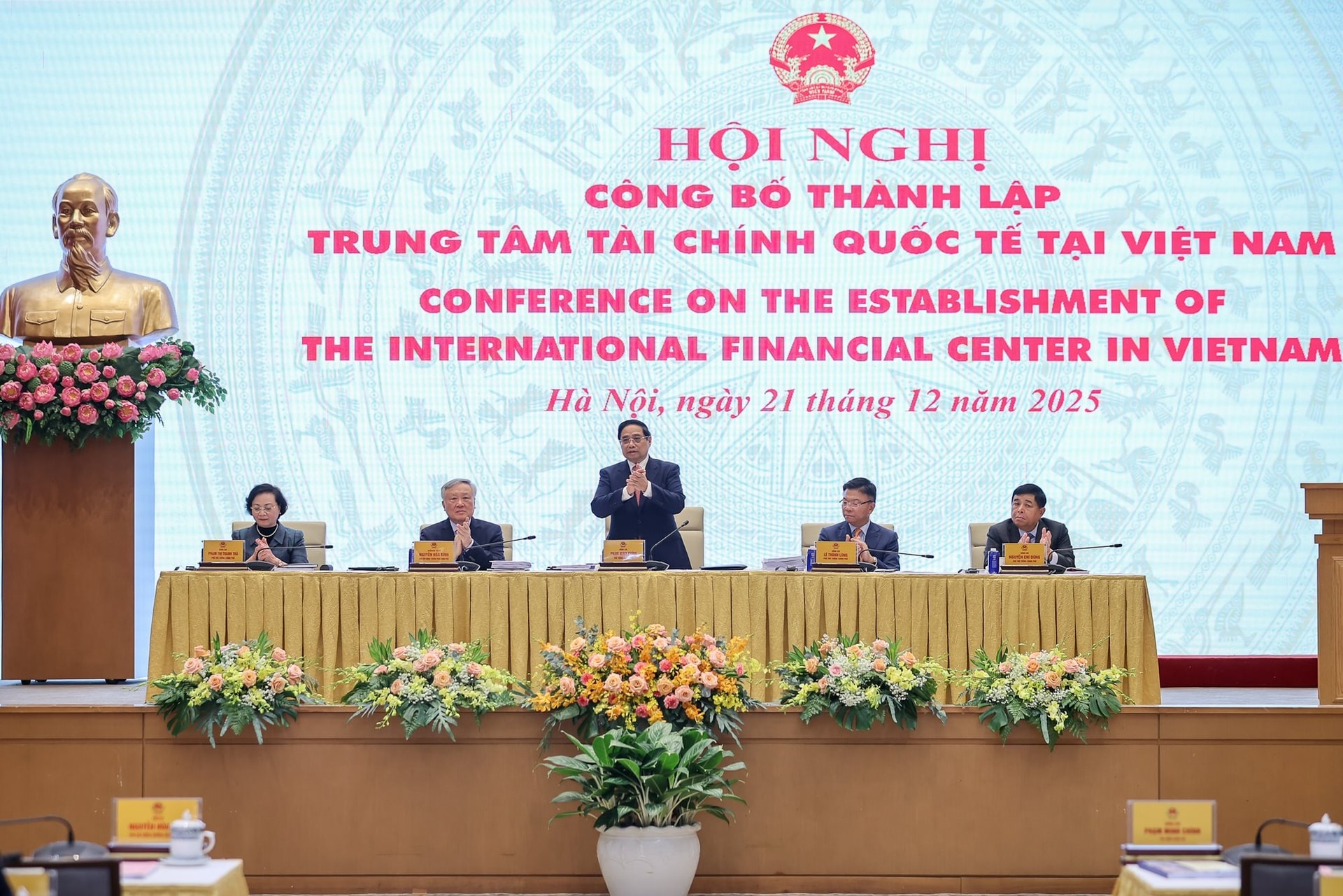
Prime Minister chaired the conference announcing the establishment of the International Financial Center in Vietnam. Photo: VGP
According to the Prime Minister, the greatest benefit of the International Financial Center is not just measured in monetary terms but in the innovation of management thinking, modern technology with the spirit that “resources stem from thinking and vision, momentum from technology and creativity, and strength from the people and businesses.” International competitive pressure will drive more robust, transparent, and comprehensive administrative reforms. Successful pilot mechanisms at the Center will be scaled up, fostering innovation, creativity, and sustainable development.
Announcing the Establishment of the International Financial Center’s Governing Council
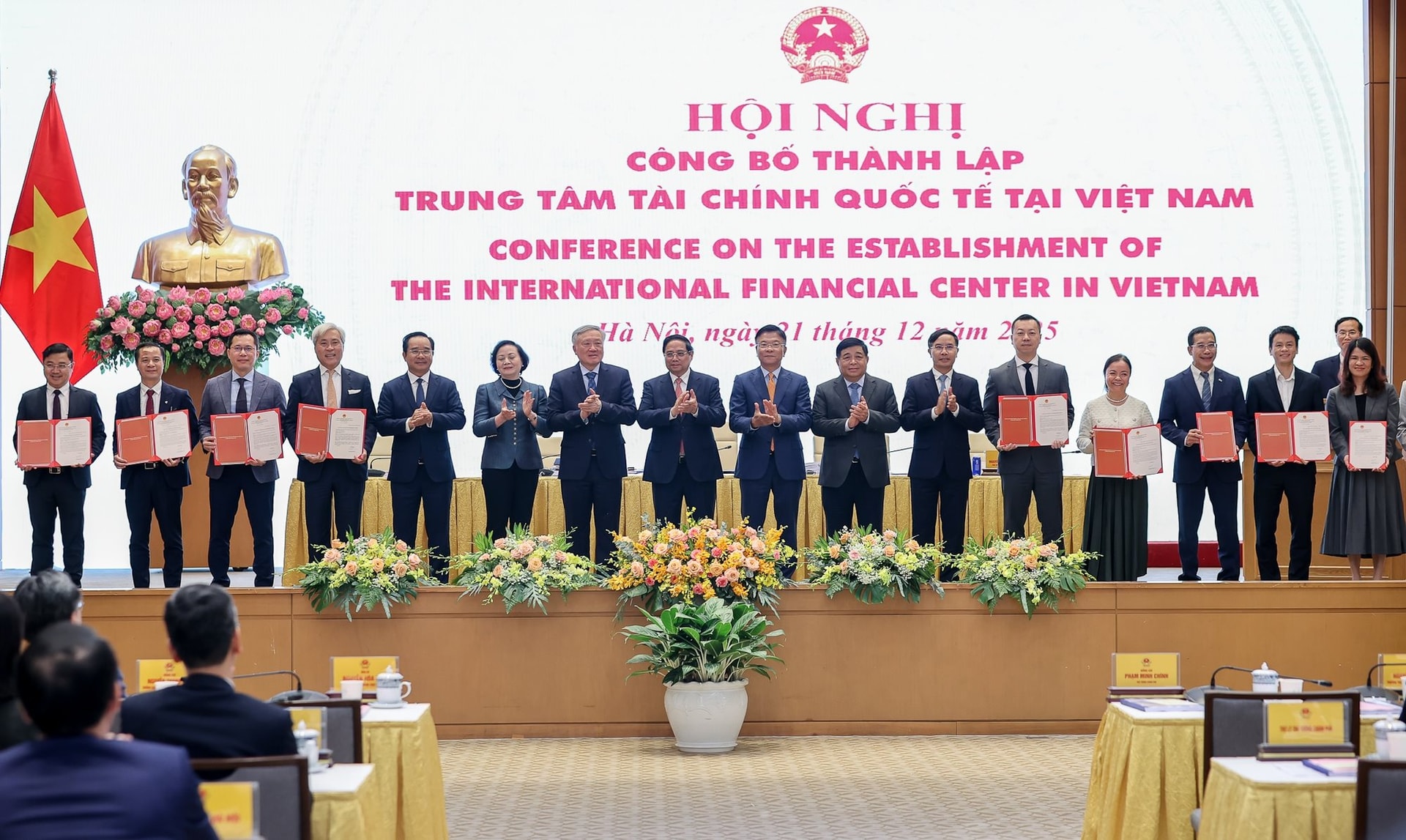
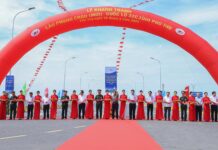
Announcement of Members of the International Financial Center in Ho Chi Minh City. Photo: VGP
At the conference, Minister of Finance Nguyen Van Thang announced the Prime Minister’s decision to establish the Governing Council of the International Financial Center. The Council is chaired by Deputy Prime Minister Nguyen Hoa Binh.
The vice-chairs of the Governing Council include ministers, heads of agencies, and local leaders, such as: Minister of Finance Nguyen Van Thang; Governor of the State Bank Nguyen Thi Hong; Chairman of Ho Chi Minh City People’s Committee Nguyen Van Duoc; Chairman of Da Nang City People’s Committee Pham Duc An.
Members of the Governing Council include Deputy Minister of Justice Nguyen Thanh Tinh; Deputy Minister of Home Affairs Nguyen Manh Khuong; Deputy Minister of Industry and Trade Nguyen Sinh Nhat Tan; Deputy Minister of Agriculture and Environment Nguyen Hoang Hiep.
According to the Government’s decree, within 5 years, the Governing Council of the International Financial Center will chair the preliminary review, evaluation, and report to the Government on the Center’s operational results; if necessary, it will propose a restructuring plan towards a leaner, unified model when meeting safety, efficiency conditions, while ensuring uninterrupted operations at both locations…
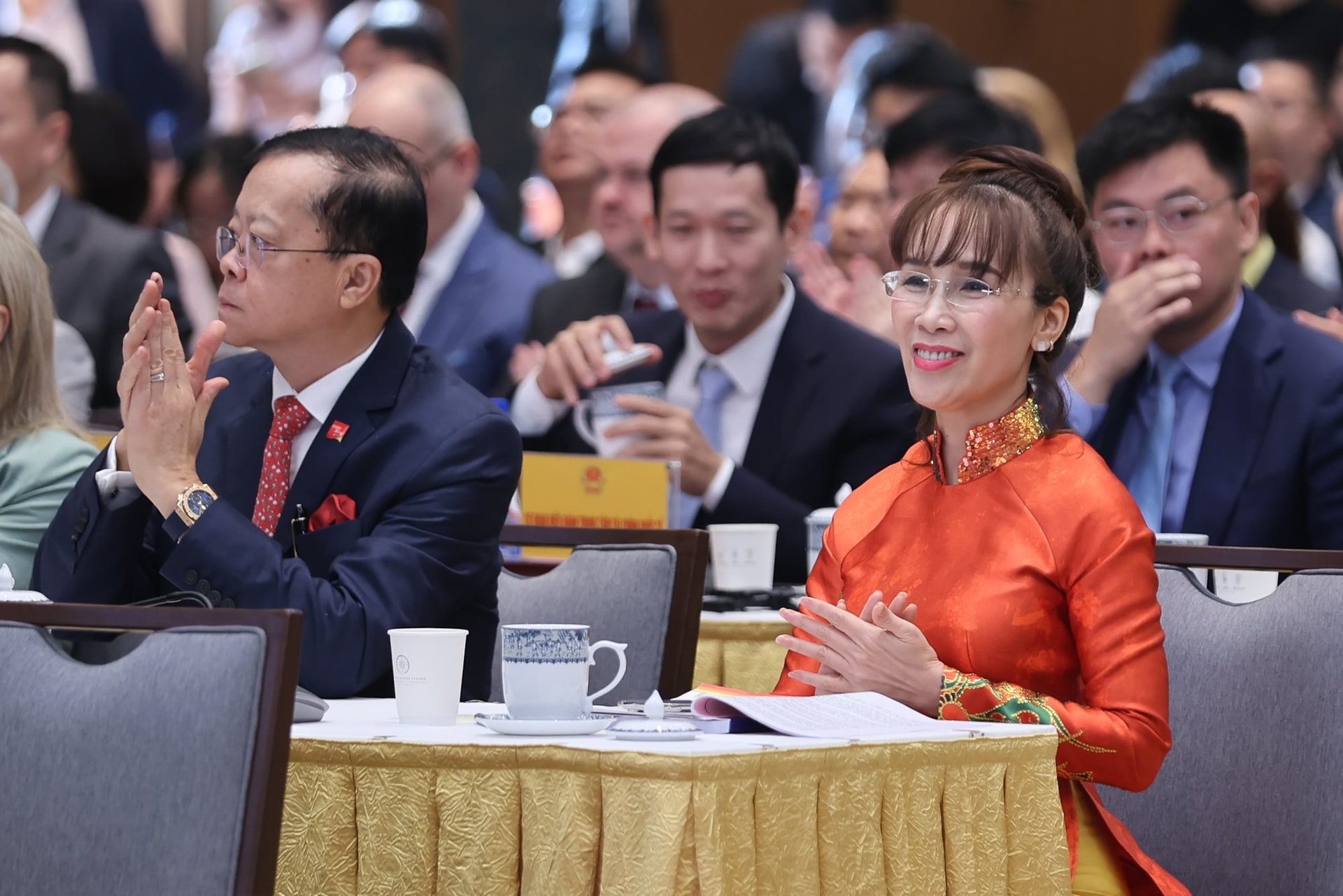
Ms. Nguyen Phuong Thao, Standing Vice Chairwoman of HDBank, at the conference. Photo: VGP
At the Conference, business representative, billionaire Nguyen Thi Phuong Thao, Standing Vice Chairwoman of HDBank’s Board of Directors, stated that the establishment of the International Financial Center affirms that Vietnam not only attracts capital but also attracts intelligence, technology, and sustainable values.
According to Ms. Nguyen Thi Phuong Thao, within the International Financial Center, Vietnam is building a fast, digital, interconnected procedural system and a competitive tax incentive framework with principles. Additionally, the regulator has a sandbox mechanism for financial innovation, a flexible yet secure foreign exchange environment, and a robust international arbitration mechanism to protect investor confidence.
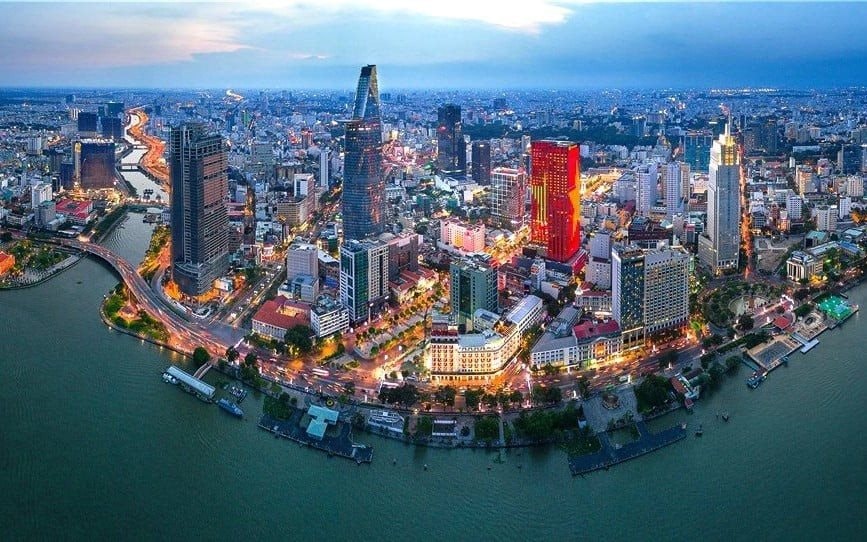
The International Financial Center operates under the model of “one center, two destinations,” located in Ho Chi Minh City and Da Nang. Photo: VGP
In fact, the history of global finance has witnessed the rise of London in the 19th century, New York in the 20th century, and Singapore or Shanghai in recent decades. These international financial centers have had a significant impact on the economy. According to experts, the establishment of the International Financial Center will have a major impact on Vietnam’s economy.
Previously, on October 12, according to the Report at the 1st National Congress of the Government Party Committee for the 2025–2030 term, Vietnam’s GDP increased from $346 billion (in 2020, ranked 37th globally) to $510 billion (in 2025), rising 5 places to 32nd globally and 4th in ASEAN. Per capita GDP increased by 1.4 times, from $3,552 to approximately $5,000, entering the group of upper-middle-income countries.
Ho Chi Minh City Directs Department of Construction to Prepare Pre-Feasibility Report for Thu Thiem 4 Bridge

The Ho Chi Minh City People’s Committee has tasked the Department of Construction with preparing a pre-feasibility report for the Thu Thiem 4 Bridge, reigniting the project aimed at connecting the Southern region with the Thu Thiem urban area.
Which Cases Qualify for Land Rent Exemption in Ho Chi Minh City?
Non-profit projects investing in Ho Chi Minh City will be exempt from land rental fees for the entire lease term.
Vietnam’s Wealthiest City Celebrates: 50,000-Seat Stadium in the Works, Surpassing My Dinh in Capacity and Approaching National Largest Group Status
The 50,000-seat central stadium stands as the centerpiece of the Rach Chiec Sports Complex, a monumental 92 trillion VND project set to break ground in Ho Chi Minh City on January 15, 2026.
Why the Ministry of Construction Plans to Amend Two Real Estate Laws in 2026
The Ministry of Construction has announced its mandate to review and amend the Housing and Real Estate Business Law in 2026. These revisions aim to enhance market transparency and play a pivotal role in stabilizing and reducing real estate prices.
Revitalizing Ho Chi Minh City’s Public Investment: Replacing Underperforming Officials to Accelerate Capital Disbursement
The Chairman of Ho Chi Minh City has issued a directive to promptly replace underperforming civil servants, officials, and public employees who demonstrate incompetence, lethargy, or engage in corrupt practices that cause harassment and inconvenience to the public. The directive emphasizes a zero-tolerance policy towards negative behaviors in public investment management, ensuring swift and decisive action against any misconduct.