


















The current situation was highlighted at the seminar titled “Public Investment – Untying Knots to Boost Growth in 2026,” held on December 23rd.
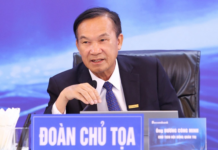
“A paradox is unfolding: despite vast reserves and advanced mining technologies, the market faces a severe shortage of stone,” stated Mr. Phan Tấn Đạt, Chairman of the Ho Chi Minh City Mineral Industry Association.
According to Mr. Đạt, the scarcity of materials doesn’t stem from resource depletion but from the inability to exploit mineral resources in time to meet the demands of concurrent public investment projects. Many mines, though included in plans, remain untapped due to licensing delays, permit renewals, capacity adjustments, or incomplete land clearance.
Experts argue that common construction materials are still managed as if they were rare minerals. The lengthy process—from exploration and reserve assessment to mining project approval and environmental clearance—prevents supply from responding swiftly to sudden demand spikes.
This pressure intensifies as public investment enters its peak phase. The seminar revealed that from 2026 to 2030, total development investment is projected at approximately 8.5 million billion VND, funding major infrastructure projects like the North-South high-speed railway, international airports, and the goal of completing 5,000 km of highways by 2030.
 Mr. Phan Tấn Đạt speaking at the event – Photo: Tử Kính
|
Mr. Nguyễn Thế Minh, Deputy Director of the Department of Construction Economics and Investment Management (Ministry of Construction), noted that the simultaneous launch of multiple large projects has caused a sharp rise in material demand. Meanwhile, the construction materials market operates almost entirely under a free-market mechanism.
“When demand outstrips supply, it leads to shortages, hoarding, price manipulation, and inflation,” Mr. Minh explained, pointing out that prices are self-declared by businesses, and regulators lack effective tools to stabilize the market.
Another issue Mr. Minh raised is the discrepancy between announced material prices and actual market availability in some localities. In certain cases, prices are published, but there’s no corresponding supply, leading to inaccurate cost estimates and price indices. This results in contractors incurring losses as they work, fostering a wait-and-see attitude or halting construction, which delays progress and public investment disbursement.
Mr. Nguyễn Văn Hòa, Vice Chairman of Can Tho City People’s Committee, observed that in the Mekong Delta region, multiple provinces and cities are simultaneously implementing large-scale transportation projects. However, the region has limited stone quarries, and river sand is increasingly scarce.
“The lack of effective regional coordination has led to sand and stone shortages, driving material prices higher than at the time of bidding,” Mr. Hòa noted, adding that some packages in the area are operating at minimal capacity due to material supply issues.
According to Can Tho City’s leadership, each locality’s independent sourcing efforts, despite projects having regional significance, have exposed significant limitations. Many localities without quarries are entirely dependent on supplies from other provinces but lack binding mechanisms or specific priorities for urgent public investment projects.
In Ho Chi Minh City, representatives from the Department of Agriculture and Environment reported that 2025 is a critical year as the nation focuses on completing highways, leading to a surge in material demand by year-end. Meanwhile, many local mines are operating near their permitted capacity limits.
The city has reviewed material needs by project and phase, connected mine owners with approximately 18 investors and project management boards, and proposed increasing the capacity of certain quarries to supply 20 key projects in 2025.
However, speakers acknowledged these as temporary fixes. Long-term systemic issues remain unresolved. Mr. Đậu Anh Tuấn, Deputy Secretary General and Head of the Legal Department at VCCI, noted that public investment now demands high speed and scale, but land, mineral, and construction regulations haven’t kept pace.
According to Mr. Tuấn, 2025 saw significant legal amendments, with dozens of laws and hundreds of decrees issued. Yet, in practice, laws often conflict, causing public investment projects to stall at stages beyond the control of investors or contractors.
Proposals from the seminar included a comprehensive regional material supply review, rather than by administrative boundaries; preparing reserve assessments, quality evaluations, and land clearance for mines to enable immediate exploitation when needed; and exploring the use of sea sand, alternative materials, and design solutions to reduce backfilling needs.
Specifically for the Mekong Delta, Mr. Nguyễn Văn Hòa suggested that the Ministry of Construction and the Ministry of Agriculture and Environment conduct a comprehensive regional material assessment to guide local coordination, establish standards for using sea sand in backfilling similar to river sand, and develop long-term planning for construction stone to support inter-regional projects.
– 14:00 24/12/2025
2025 Economic Outlook and 2026 Forecast: Sustaining Budget Momentum for the Next Development Phase
With the government’s and citizens’ unwavering commitment to reform, the 2026 financial and budgetary framework is poised to serve as a pivotal cornerstone for a new era of high-quality economic growth in Vietnam.
Maximizing Public Investment Efficiency and Scaling Credit Growth Strategies

From a banking operations perspective, and considering the role of credit supply in the economy, public investment and its efficiency have a significant and positive impact on the credit growth of financial institutions.
Foreign Fund Propels VN-Index to 3,200 Points as Top Portfolio Stock Hits Ceiling
Sacombank’s STB stock stands as the cornerstone of Pyn Elite Fund’s portfolio, commanding a substantial 17.2% allocation as of November’s close.
Public Investment: From Immediate Momentum to a Foundation for Long-Term Development

Amidst the intricate and ever-evolving global and regional economic landscape, traditional growth drivers face mounting pressures. In response, Vietnam is strategically positioning investment, particularly public investment, as a pivotal tool to stabilize macroeconomic conditions, foster growth, and lay the groundwork for long-term sustainable development.
JPMorgan Predicts VN-Index to Hit 2,200 Points by 2026
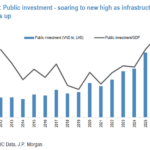
The world’s largest investment bank forecasts the VN-Index to hit 2,200 points by 2026, driven by sweeping economic reforms and unprecedented fiscal expansion from the government.