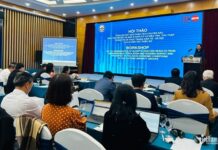











This information was announced at the conference revealing the research findings of “Stay or Migrate: Life in the Mekong Delta, Vietnam”, held in Can Tho on the afternoon of December 17th. The conference was jointly organized by the World Bank in Vietnam, Cambodia, and Laos, along with the Can Tho Institute of Economics and Society.
According to the World Bank report, over the past decade, nearly 1.7 million people have left the Mekong Delta (MD) region. This trend is partly attributed to the increasingly challenging conditions in agriculture and aquaculture.
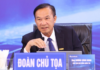
At the conference, Ms. Mariam J. Sherman, World Bank Director for Vietnam, Cambodia, and Laos, noted that the MD is home to nearly 18 million people. It produces over 50% of the country’s rice, more than two-thirds of its aquaculture output, and a significant portion of fruits and vegetables for domestic consumption and export.
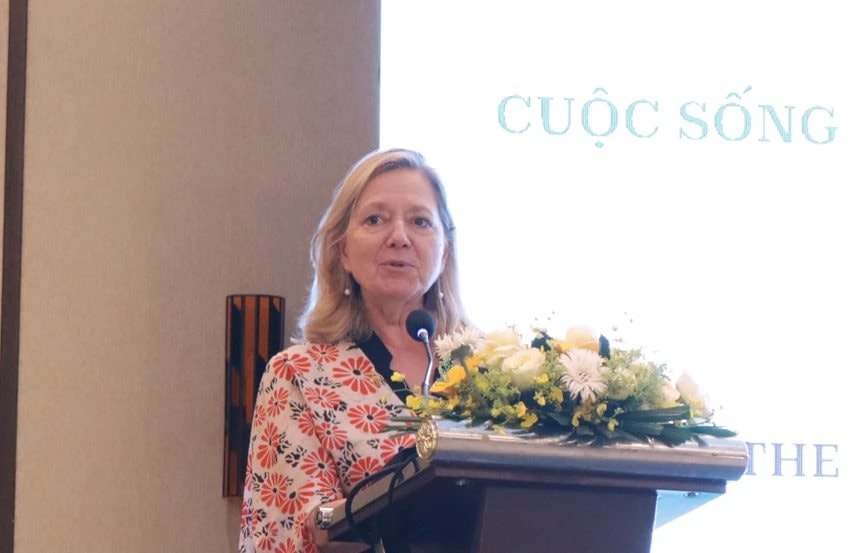
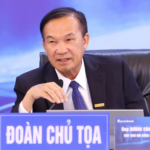
Ms. Mariam J. Sherman speaking at the conference. Photo: Plo
For decades, the MD has been a success story for Vietnam in poverty reduction and food security. However, the report highlights that the region is at a critical juncture.
Specifically, since 2018, households in the MD have faced severe impacts from droughts, saltwater intrusion, and the COVID-19 pandemic. These consecutive shocks have left many families vulnerable, depleted their savings, and even forced them to sell assets, leading to prolonged vulnerability.
The World Bank report indicates that while agriculture remains a primary livelihood, it is no longer the main driver of growth. Climate change further complicates the situation, directly affecting agriculture, aquaculture, infrastructure, and livelihoods.
According to a 2024 survey, approximately 14% of households in the region have at least one migrant, primarily seeking employment. Migration is particularly prevalent among low-income households, which often have more members working away from home and rely heavily on remittances. For farming households, migration serves as a means to offset income losses caused by droughts, floods, or saltwater intrusion.
Additionally, the World Bank report concludes that the future of the MD must be people-centered, not solely focused on existing development spaces. The region should prioritize investment in education, skills, and mobility to ensure all residents, whether they stay or migrate, have opportunities to thrive.
The report recommends a people-centered development approach to not only reduce poverty and vulnerability but also enhance the MD’s contribution to Vietnam’s inclusive and sustainable development.
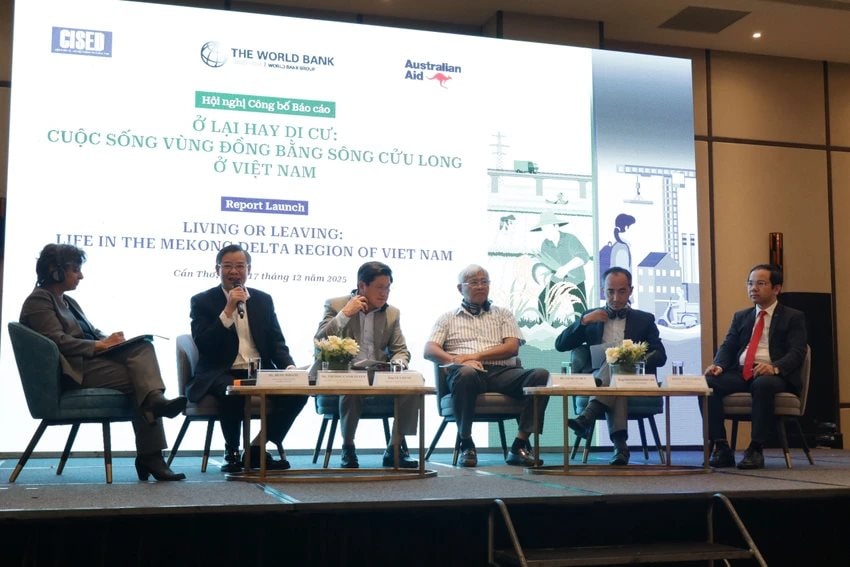
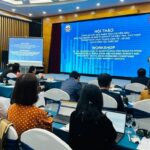
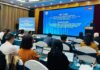
Experts sharing insights at the conference. Photo: Plo
Given the uncertain future, the World Bank proposes five priority policy areas for the MD’s development.
First, invest in education and skill development to expand opportunities for all, especially youth.
Second, modernize and transform agriculture to reduce labor, enhance resilience, and increase profitability.
Third, invest in local infrastructure to attract businesses, improve connectivity, and reduce transaction costs for farmers.
Fourth, promote safe and voluntary migration as an adaptation strategy.
Fifth, build a flexible social safety net to support vulnerable groups, particularly those unable or unwilling to migrate.
The World Bank pledges continued support to Vietnam through projects in transportation infrastructure, land and water management, to enhance the region’s resilience and connectivity.
The MD’s Challenge is Not “Stay or Migrate” but “Living Better”
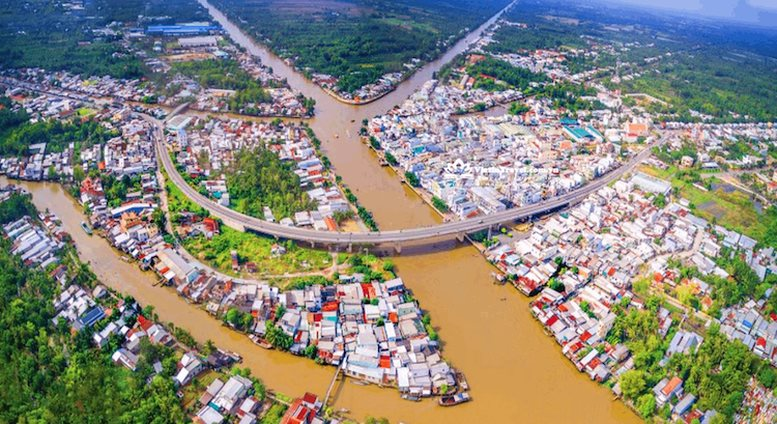
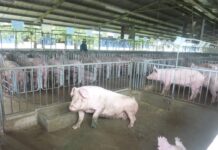
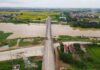
The MD is home to nearly 18 million people. Photo: VGP
According to Mr. Nguyen Anh Tuan, Deputy Head of the Central Policy and Strategy Department, the MD’s challenge is not “stay or migrate” but ensuring residents can “live better,” regardless of their choice.
Mr. Nguyen Anh Tuan emphasized three key directions for the MD’s future:
First, continue refining the institutional framework for MD development to match its new administrative and economic scale, ensuring effective coordination between central and local authorities.
Second, vigorously promote the transition to a green, high-value, and sustainable growth model. Agriculture remains foundational but should be integrated into a broader socio-economic ecosystem, linked with processing, logistics, markets, science, technology, and environmental protection.
Third, place human investment at the center of the MD’s adaptation and development strategy, aligning with the spirit of the 14th Party Congress’s Political Report. This includes developing high-quality human resources and enhancing labor productivity as key drivers of rapid and sustainable growth.
At the conference, Mr. Truong Canh Tuyen, Chairman of the Can Tho People’s Committee, appreciated the World Bank report for helping the city address issues and refine its integrated planning for the future.
The Can Tho leadership hopes that in the next 20 years, both Can Tho and the MD will see improved living standards, both materially and spiritually. The MD should become a desirable place to live, with vibrant cities and countryside. This way, the decision to “stay or migrate” will be reconsidered.
Vietnam Officially Exports Another Popular Fruit to China
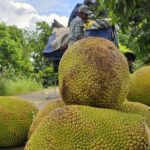
Vietnamese jackfruit is set to make its official debut in China’s formal import market starting June 1, 2026.
Vietnam Poised to Emerge as a Global LNG Re-Export Hub
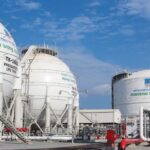
Strategically positioned, Vietnam is poised to emerge as a pivotal LNG re-export hub, a regional LNG trading center, and a critical energy backbone for FDI supply chains.
Prime Minister: Construction Sector to Implement “5 Guarantees, 6 Breakthroughs” for Synchronized, Modern Infrastructure Development
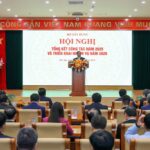
At the Ministry of Construction’s year-end conference, Prime Minister Pham Minh Chinh encapsulated the sector’s achievements in 32 words: “Refined institutions, synchronized planning, breakthrough infrastructure, green-digital transformation, streamlined apparatus, united internal affairs, urban development, and rural innovation.” He urged the Ministry to pursue “5 guarantees, 6 breakthroughs” and highlighted 3 critical tasks for developing synchronized infrastructure.
Vietnam Unveils Transformative Economic Model, Poised to Rival Global Powerhouses Like New York and Shanghai
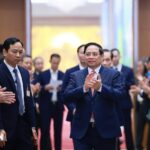
According to the Prime Minister, the establishment of this model in Vietnam marks a “turning point” in the nation’s integration and development journey after 40 years of renewal.
Why the Ministry of Construction Plans to Amend Two Real Estate Laws in 2026
The Ministry of Construction has announced its mandate to review and amend the Housing and Real Estate Business Law in 2026. These revisions aim to enhance market transparency and play a pivotal role in stabilizing and reducing real estate prices.