
















On the afternoon of December 23, in Ho Chi Minh City, the Enterprise Forum Magazine, under the guidance of the Vietnam Chamber of Commerce and Industry (VCCI), in collaboration with the Ho Chi Minh City Mining Association, organized a seminar themed: “Public Investment – Unlocking Growth for 2026.”
Numerous Key Projects Set to Launch
Speaking at the seminar, Ms. Nguyễn Ngọc Thúy, Deputy Director of the Ho Chi Minh City Department of Agriculture and Environment, stated that entering the 2026-2030 phase, Ho Chi Minh City is preparing to implement the Ring Road 4 project, the Ho Chi Minh City – Moc Bai Expressway, and expansions of the Ho Chi Minh City – Long Thanh and Ho Chi Minh City – Trung Luong expressways, along with metro line number 2.
Within the implementation structure, the Ho Chi Minh City Department of Agriculture and Environment is tasked with advising on compensation, land clearance, and coordinating to ensure construction material supplies. Facing high material demand during peak periods, while mining capacities at many sites are nearing limits, the department has implemented solutions in line with the Government’s Resolution.
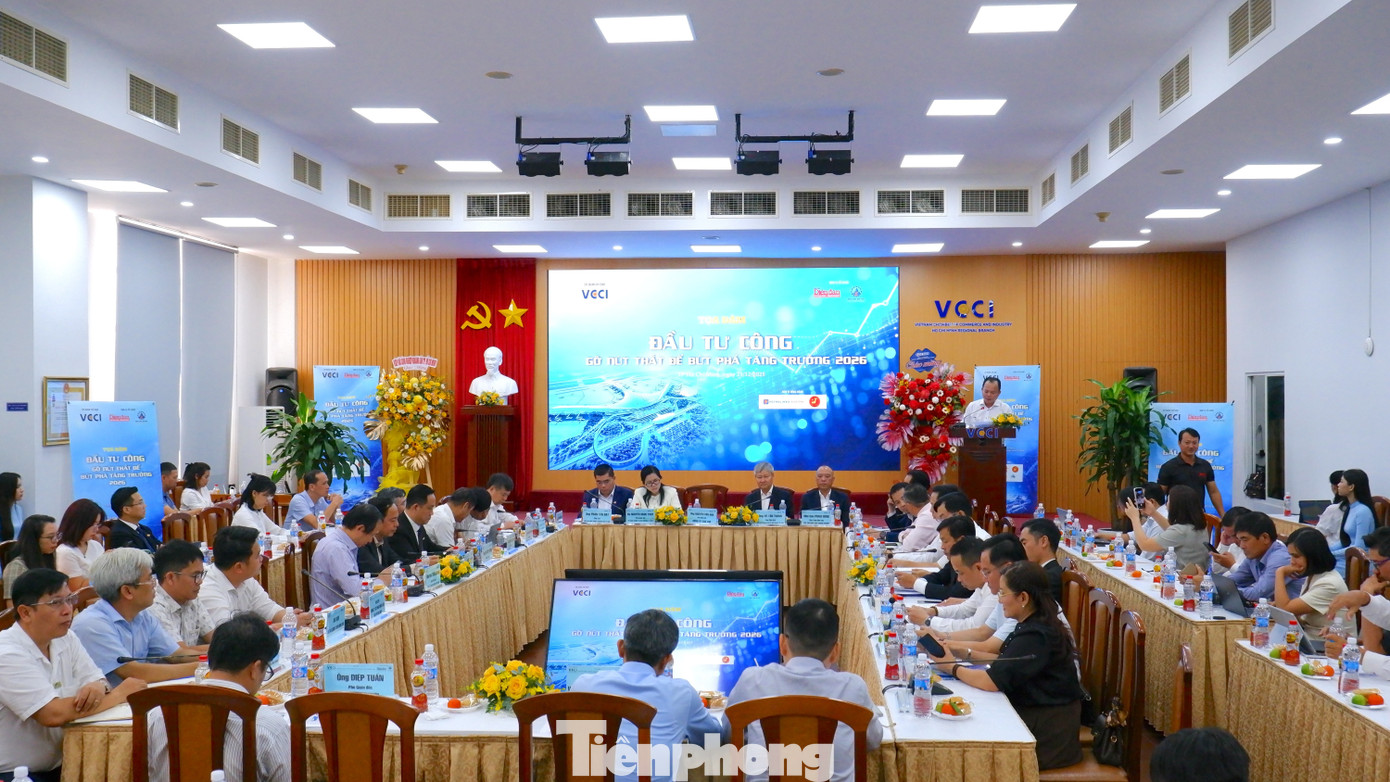
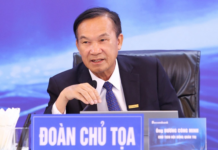
Seminar overview.
“We have organized multiple specialized meetings, working directly with investors, contractors, and mine owners, while reviewing material needs for each project and phase to proactively connect supply sources,” said Ms. Thúy.
Notably, Ho Chi Minh City has increased the mining capacity of the Thuong Tan III and Nui So quarries, adding nearly 700,000 m³ of materials to serve approximately 20 key projects in 2025. Moving forward, the Department of Agriculture and Environment will continue to closely coordinate with departments, agencies, localities, and businesses to effectively implement special mechanisms and manage construction materials aligned with actual project progress.
Mr. Nguyễn Văn Hòa, Vice Chairman of Can Tho City People’s Committee, stated that the locality is implementing nearly 200 projects, including over 100 public investment projects and approximately 41 industrial zones during the 2016-2030 period. However, the city’s public investment capital disbursement in 2025 has not met expectations compared to the national average. From this reality, city leaders have identified the need to focus on removing bottlenecks in implementation.
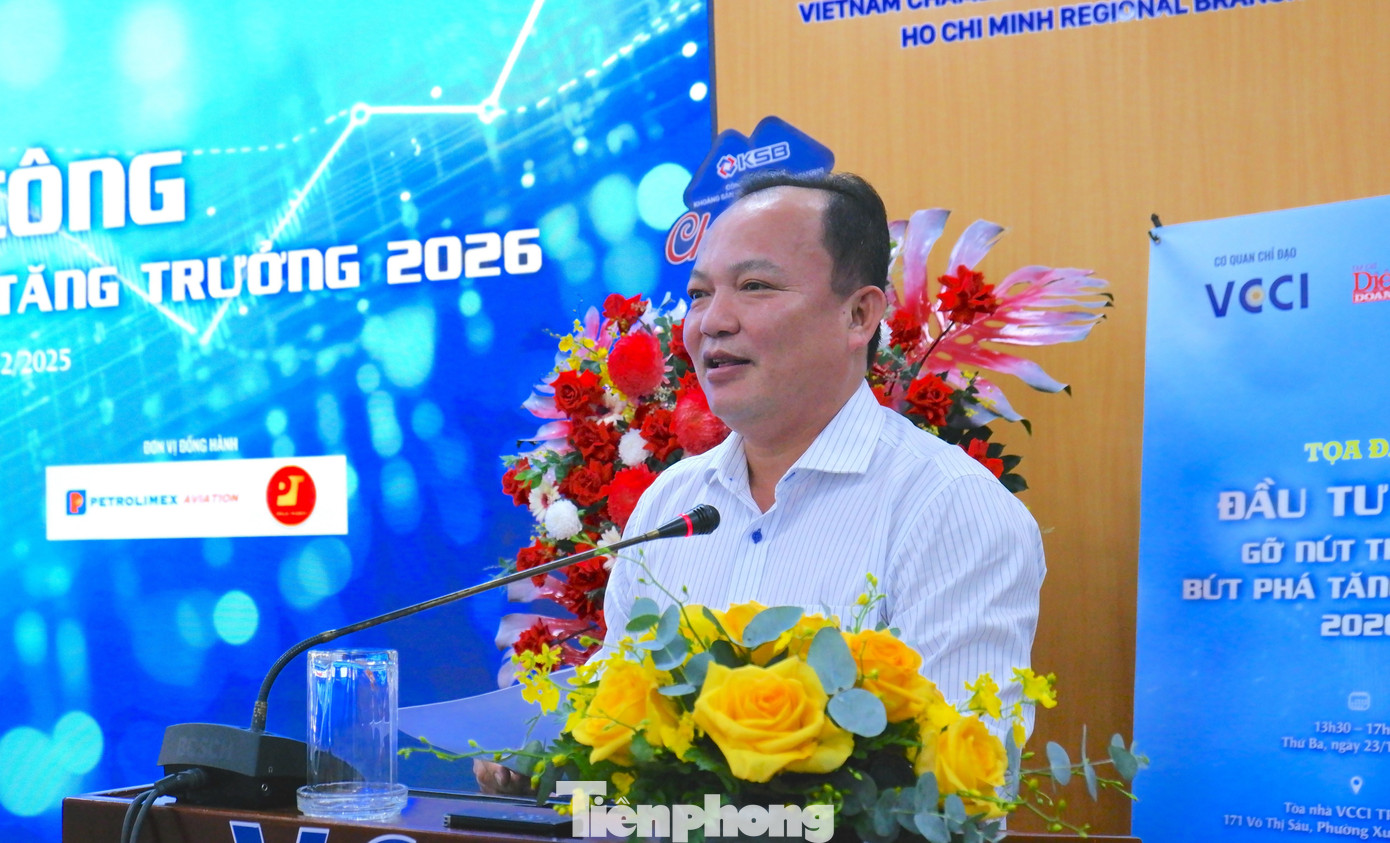
Mr. Nguyễn Văn Hòa, Vice Chairman of Can Tho City People’s Committee.
Regarding construction materials, the leadership of Can Tho City People’s Committee proposed a long-term comprehensive solution, allocating material resources among localities, researching the use of sea sand for land reclamation, and promoting science and technology applications to optimize designs and reduce material demand.
Key to Implementation Organization
Mr. Nguyễn Thế Minh, Deputy Director of the Department of Economics and Construction Investment Management, Ministry of Construction, analyzed that during the implementation phase of the Mineral Law since 2010, management has primarily followed market mechanisms, with most material mines serving local needs. Despite large reserves, licensed mining capacities are limited, leading to severe material shortages when major projects are implemented simultaneously.
Mr. Nguyễn Thế Minh stated that the National Assembly has consecutively issued special mechanisms to gradually address difficulties. Notably, the amendment to the Land Law, allowing land reclamation in mineral mining areas, is considered “crucial” to resolving land agreement issues with landowners.
“At this point, the legal framework essentially meets practical requirements; the remaining issue lies in implementation organization,” Mr. Minh affirmed.
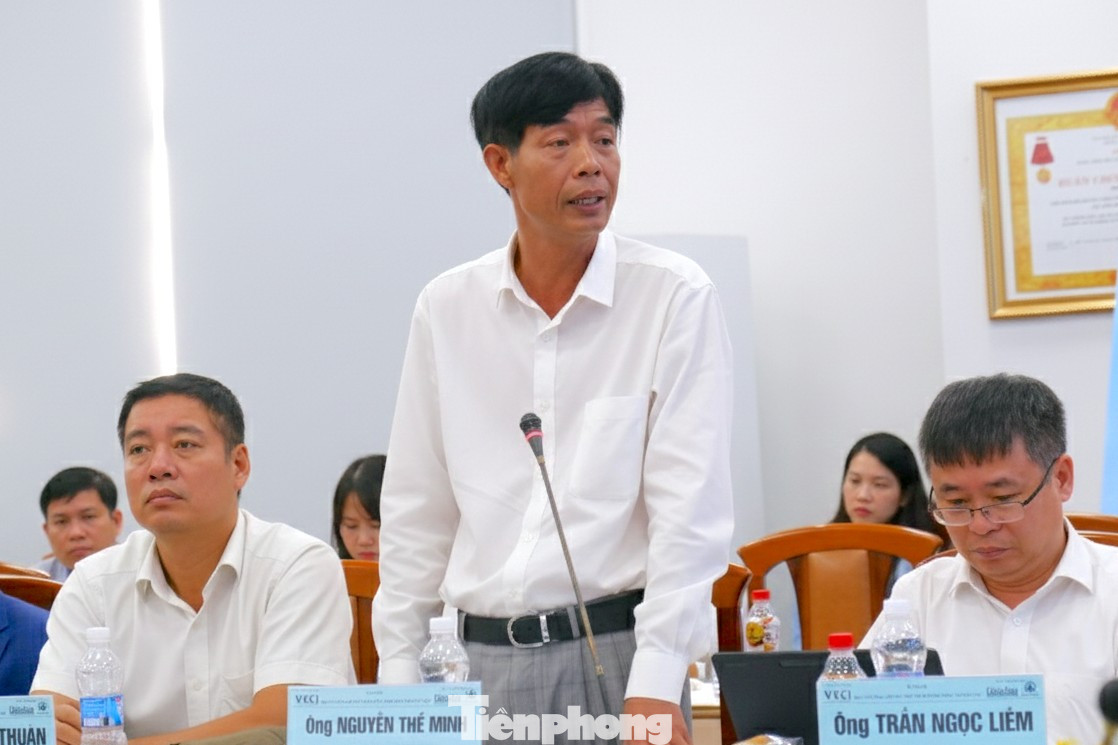
Mr. Nguyễn Thế Minh, Deputy Director of the Department of Economics and Construction Investment Management, Ministry of Construction.
According to Mr. Minh, the reality in the Mekong Delta shows that materials are not necessarily lacking but are delayed due to procedures and a lack of synchronized coordination among localities. The Can Tho – Ca Mau Expressway project is a typical example, taking nearly a year after groundbreaking to have its first sand mine licensed. If localities proactively identify mining areas, reserves, and clear land in advance, mine licensing time could be reduced to just 1-2 months.
Additionally, Mr. Nguyễn Thế Minh proposed boldly increasing short-term mining capacities, establishing resource-sharing mechanisms among localities, expanding supply sources from other regions, and announcing material prices that reflect market realities.
“The Government and National Assembly have addressed mechanism issues; the remaining challenge is implementation. Outdated regulations should not be applied. Work with a high sense of responsibility for the country’s development goals. Avoid localities creating unnecessary ‘sub-licenses’ or cumbersome procedures like seeking Provincial Party Standing Committee opinions for each mine or annual licensing, forcing contractors to renew… These procedures can add three months, affecting project completion timelines,” said Mr. Minh.
New Land Price List in Ho Chi Minh City: Peak Rates Reach Over 687 Million VND per Square Meter

The Ho Chi Minh City People’s Committee has recently submitted a proposal outlining the new Land Price List, set to take effect from January 1, 2026, across the city.
4 Steps to Determine Eligibility for Social Housing in HCMC Based on Distance from Workplace

Looking to buy or rent-to-own social housing in HCMC, even if you already own a home elsewhere? Follow these 4 simple steps to determine your eligibility.
Ho Chi Minh City Launches $15 Million Fund to Attract Experts and Foster Talent Development

The Ho Chi Minh City Talent Development Fund, a non-budget initiative, aims to raise VND 100-150 billion by 2026, with an ambitious target of reaching approximately VND 350 billion by 2030 to attract experts and foster local talent.
Record-Breaking Growth Post-Merger: Province Hits 100 Trillion VND in Budget Revenue
A multitude of the province’s key performance indicators have not only been met but exceeded, showcasing remarkable progress and achievement.
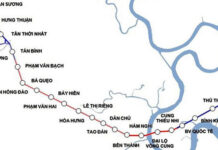
Ho Chi Minh City Extends Metro Line 2: Adding 200m to Directly Connect Ben Thanh Station
Ho Chi Minh City has adjusted the length of Metro Line 2 to 11.269 kilometers, connecting it to Ben Thanh Station to ensure seamless integration with the city’s urban rail network.