
















According to Article 104 of the 2019 Labor Code, bonuses are monetary, property, or other forms of rewards provided by employers to employees based on: business performance and the employee’s completion of tasks.
Legal Provisions on Lunar New Year Bonuses
Bonus policies are determined by the company and must be publicly announced in the workplace after consulting with the labor representative organization (if any).
Therefore, the law does not mandate companies to provide Lunar New Year bonuses.

Companies are not obligated to pay Lunar New Year bonuses, but if agreed upon, they must fulfill the payment, and the bonus is subject to personal income tax.
However, companies are required to pay Lunar New Year bonuses in the following cases: the company’s bonus policy includes Lunar New Year bonuses; the employment contract includes an agreement on Lunar New Year bonuses; or the collective labor agreement includes provisions for Lunar New Year bonuses.
In such cases, the company must fulfill its commitments based on business performance and the employee’s task completion.
Are Lunar New Year Bonuses Subject to Personal Income Tax?
According to Point e, Clause 2, Article 2 of Circular 111/2013/TT-BTC issued by the Ministry of Finance, all cash or non-cash bonuses in any form are considered income from salaries and wages, and are subject to personal income tax.
Therefore, Lunar New Year bonuses paid by companies are taxable income and must be included in the tax settlement as per regulations.
Only specific bonuses are tax-exempt, including: bonuses associated with state-awarded titles; Ho Chi Minh Prizes, State Prizes; Certificates of Merit, Letters of Commendation under the Law on Emulation and Rewards.
Lunar New Year bonuses paid by companies do not qualify for this exemption.
Summary:
Companies are not required to pay Lunar New Year bonuses if there is no agreement;
If agreed upon, bonuses must be paid as committed;
Lunar New Year bonuses are subject to personal income tax;
Only state-awarded bonuses are tax-exempt.
Major Changes to Personal Income Tax Deductions for Dependents Starting 2026: What You Need to Know
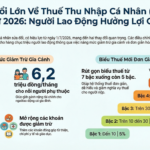
The revised Personal Income Tax Law, effective from July 1, 2026, increases the family deduction threshold while streamlining the progressive tax brackets to just five levels.
Navigating VAT Calculations for Sole Proprietors

For businesses with annual revenue below 500 million VND, VAT exemption applies. However, exceeding this threshold by even a marginal amount, such as 501 million VND, triggers VAT liability. The discrepancy in calculation compared to personal income tax raises concerns about fairness, reasonableness, and the potential for revenue manipulation in practice.
Lunar New Year Bonus 2026: Up to 350 Million VND per Person

The Ministry of Home Affairs encourages businesses to develop year-end bonus plans based on their 2025 production and business performance, ensuring transparency by communicating these plans to employees.
Latest Updates on Personal Income Tax: Essential Information for Every Citizen

Revised Introduction:
Introducing the latest series of proposals on personal income tax, designed to streamline financial obligations and foster economic fairness. These innovative recommendations aim to address contemporary challenges while ensuring a balanced approach for individuals and households. Discover how these updates can impact your financial planning and contribute to a more equitable tax system.
How is the Current Securities Transfer Tax Calculated?

Uncover the intricacies of share transfer taxes with these three essential questions, crafted directly from official tax authority feedback. Test your knowledge and ensure compliance with this critical aspect of financial transactions.