














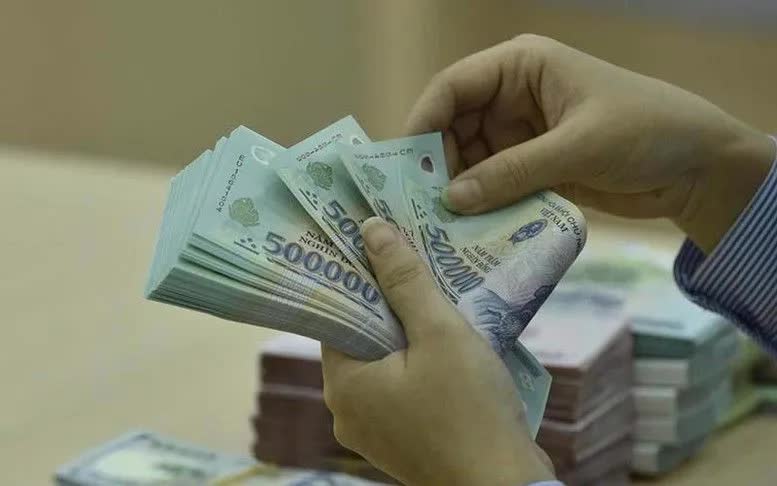
Illustrative image.
According to the representative of the Department of Internal Affairs of Khanh Hoa Province, the locality has reported on the labor and salary situation in 2025 and the Tet bonus plan for 2026 at 764 surveyed enterprises with over 62,000 employees in the province.
The results show that the average salary in 2025 reached over 12.8 million VND per person per month. For the 2026 Solar New Year, 476 enterprises have established bonus plans, with an average of over 2.7 million VND per person; the highest is 50 million VND per person (belonging to state-owned enterprises with controlling shares or capital contributions), and the lowest is 500,000 VND per person.
For the 2026 Lunar New Year of the Horse, 527 enterprises have bonus plans. The average bonus is over 9.4 million VND per person; the highest is 350 million VND per person (FDI enterprises), and the lowest is 500,000 VND per person (belonging to private and FDI enterprises).
In Ca Mau Province, approximately 160 units and enterprises have also reported on salary and Tet bonus situations for 2026. In 2025, the average salary ranged from 7.8 to 12 million VND per person per month; the highest was 200 million VND per person per month, and the lowest was approximately 3.4 million VND per person per month, both belonging to private enterprises.
For the 2026 Solar New Year, 55 enterprises (employing over 3,470 workers) plan to give bonuses, with an average of 2 to 9.2 million VND per person; the highest is nearly 37 million VND per person (private enterprises), and the lowest is 100,000 VND per person (private and state-owned enterprises with 100% state capital).
Specifically, for the 2026 Lunar New Year, nearly 120 enterprises (over 24,880 workers) have bonus plans, with an average of 4.5 to 12.5 million VND per person; the highest is 200 million VND per person, and the lowest is 100,000 VND per person, both belonging to private enterprises in the seafood sector.
For employees, Article 104 of the 2019 Labor Code defines bonuses as money, assets, or other forms decided by the employer, based on production results, business performance, and the employee’s work completion. The bonus regulations must be issued by the enterprise and publicly announced in the workplace after consulting with the representative organization of employees at the grassroots level (if any).
Accordingly, the 2026 Lunar New Year bonus is not a mandatory obligation for enterprises. Whether to give bonuses, the bonus amount, and the form of bonuses depend on the enterprise’s operational situation and the employee’s work performance in the year. Enterprises are also not required to give bonuses in cash but can provide assets or other forms, as long as they are clearly and transparently specified in the bonus regulations.
Previously, the Ministry of Internal Affairs issued Official Dispatch 10287/BNV-CTL&BHXH, requesting enterprises to develop Tet bonus plans based on the 2025 production and business results, in accordance with Article 104 of the Labor Code, and to publicly inform employees.
The Ministry of Internal Affairs also requires the Departments of Internal Affairs of provinces and cities to coordinate with the Management Boards of Industrial Parks, Economic Zones, and Export Processing Zones to survey and monitor salary situations, wage arrears, labor relations, and bonus plans for the 2026 Solar and Lunar New Year; synthesize and report to the Ministry of Internal Affairs before December 25.
Is a Year-End Bonus Mandatory for Employees in Businesses?
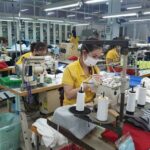
While Vietnamese law does not mandate Lunar New Year bonuses, businesses are legally obligated to fulfill any agreed-upon bonus commitments. These bonuses are considered taxable income.
Shinec Subsidiary Develops Ninh Diêm 1 Industrial Zone with Over 2.8 Trillion VND Capital
On December 15, 2025, the People’s Committee of Khanh Hoa Province officially approved the investment policy and designated the investor for the development and operation of the infrastructure of Ninh Diem 1 Industrial Zone.
Year-End Sprint: Businesses Strategize Lunar New Year Bonuses

As the year draws to a close, businesses are racing to finalize their Lunar New Year bonus plans, all under the watchful eye of labor unions.
Reclaiming Nha Trang’s Prime 8,000m² Beachfront Land

The People’s Committee of Nha Trang Ward, Khanh Hoa Province, announces the reclamation of the 70 Tran Phu land plot, spanning over 8,000m². This site was formerly the headquarters of Khanh Hoa Radio and Television Station.
Appointing Key Personnel in Hà Tĩnh Province, Khánh Hòa Province, and Huế City
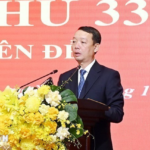
On November 29, 2025, Prime Minister Phạm Minh Chính signed and issued decisions approving the election results and relieving the positions of Chairman and Vice Chairman of the People’s Committees of Hà Tĩnh Province, Khánh Hòa Province, and Huế City.