











The Noi Bai – Bac Ninh – Ha Long Expressway, a critical transportation artery in northern Vietnam, is currently undergoing significant development. The Bac Ninh section of this route is divided into two segments. Segment 1, spanning approximately 15.5 km from km 15+600 (bordering Hanoi) to km 31+109 (at the Southwest Interchange connecting to National Highway 1), is operational with 4 lanes for motorized vehicles and 2 lanes for non-motorized vehicles, allowing a maximum speed of 90 km/h.
Segment 2, extending from the Southwest Interchange to the Hanoi Capital Region’s Ring Road 4 (approximately 9.7 km), is under construction with a 90-meter cross-section, including a 17-meter-wide expressway. The section from Ring Road 4 to Ha Long has yet to commence construction.
According to the National Road Network Plan for 2021-2030, with a vision to 2050, approved by the Prime Minister in Decision No. 1454/QĐ-TTg dated September 1, 2021, and adjusted in Decision No. 12/QĐ-TTg dated January 3, 2025, the Noi Bai – Bac Ninh – Ha Long Expressway is planned to feature 6 lanes.
Bac Ninh Province’s planning guidelines specify that the expressway will include 6 lanes for motorized vehicles, 2 emergency stopping lanes, and parallel roads on both sides.
To complete the Bac Ninh – Hai Duong (now Hai Phong) Expressway segment within Bac Ninh Province and ensure seamless connectivity with Ring Road 4, Noi Bai – Bac Ninh Road, National Highway 18, and industrial zones, the Bac Ninh Provincial People’s Committee has petitioned the Prime Minister to approve the construction of the Bac Ninh – Pha Lai Expressway segment from Ring Road 4 to National Highway 18 as a public investment project.
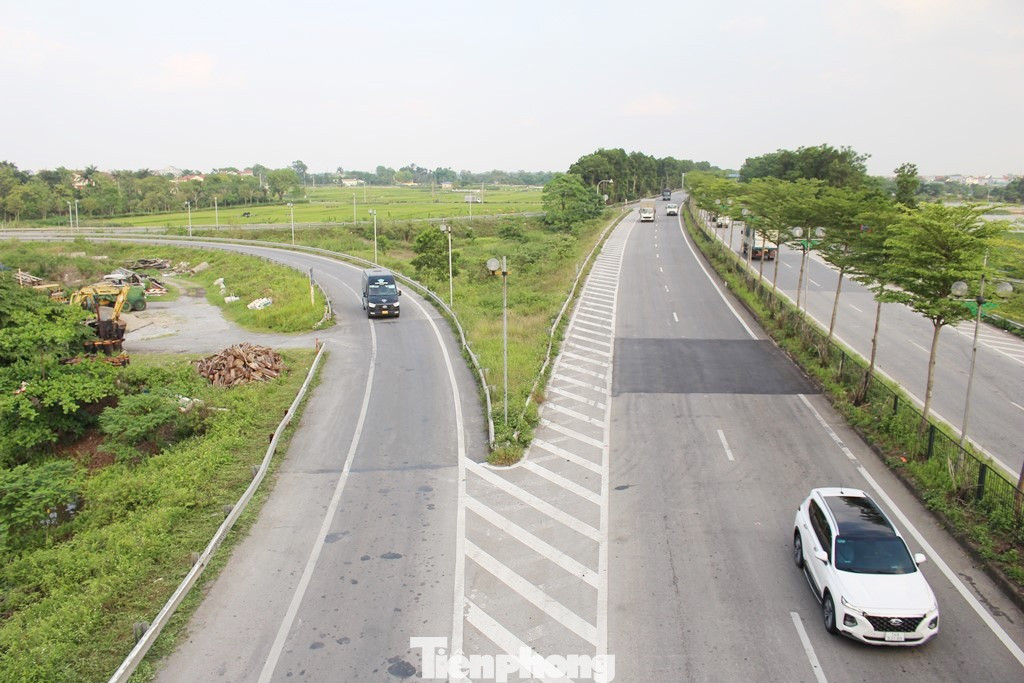
Illustrative image.
Based on existing infrastructure and regulatory documents, the Vietnam Expressway Corporation (VEC) has proposed investing in the Noi Bai – Bac Ninh – Pha Lai Expressway under a Public-Private Partnership (PPP) model.
VEC has outlined several implementation options, with the most viable proposal involving state budget support for land clearance and the construction of parallel roads.
VEC will mobilize investment capital for the expressway’s construction through the PPP model, with a total estimated investment of nearly VND 12,000 billion. The project’s post-tax cash flow is projected to remain positive.
Bac Ninh Provincial People’s Committee Chairman Pham Hoang Son has approved the route alignment, permitting VEC to conduct research on the Noi Bai – Bac Ninh – Hai Phong Expressway segment, totaling approximately 51 km.
Within Bac Ninh Province, the route will continue from the Ca Lo River bridge to Km31+750, connecting to the ongoing Hanoi Ring Road 4 project. Subsequently, the route will parallel National Highway 18 through Que Vo Ward, Bac Ninh Province, terminating at the junction at km 22 on National Highway 18 near the Que Vo 2 Industrial Park (approximately 10.3 km in length).
All proposals must prioritize supporting Bac Ninh Province’s socioeconomic development, particularly in key industrial hubs such as Yen Phong and Que Vo.
The expressway expansion aims to enhance investment attraction and drive development while minimizing disruptions to existing production activities and the investment environment.
Why a Conglomerate Halted Its Mega-Project on the Red River Scenic Avenue

The Deo Ca Group laid the foundational “bricks” that officially launched the Hong River Landscape Avenue project after years of stagnation. However, the group has since withdrawn its involvement, citing the field as outside its core expertise.
Sun Group Proposes $6.3 Billion Investment in 30-Year Mega Project in Ho Chi Minh City, Featuring a 75,000-Seat Stadium
Sunrise Vung Tau Co., Ltd. is the visionary behind the proposed National Sports Complex Rach Chiec project, spanning over 186 hectares with a total investment exceeding 145 trillion VND.
MIK Group Exits Hong River Scenic Avenue Project Following Deo Ca Withdrawal
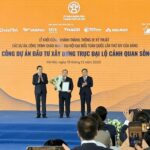
MIK Group has officially submitted a letter to the Hanoi People’s Committee, requesting to voluntarily withdraw from the consortium of investors responsible for the Red River Landscape Avenue project, valued at over 855 trillion VND.
Proposed Launch of the Rạch Chiếc National Sports Complex with a Budget of Over 145 Trillion VND in January 2026
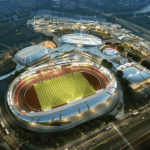
The Ho Chi Minh City People’s Committee has submitted a proposal to the City Council for the investment in the Rạch Chiếc National Sports Complex, with an estimated total investment of over 145.6 trillion VND, utilizing a public-private partnership (PPP) model.
The Military Enterprise Behind Vietnam’s $36 Billion Super Highway: Connecting the Legendary Ho Chi Minh Trail and the Prime Minister-Praised Phong Chau Bridge
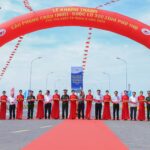
The project is executed by Corps 12 – Truong Son Construction Corporation, a leading construction enterprise under the Ministry of Defense.