







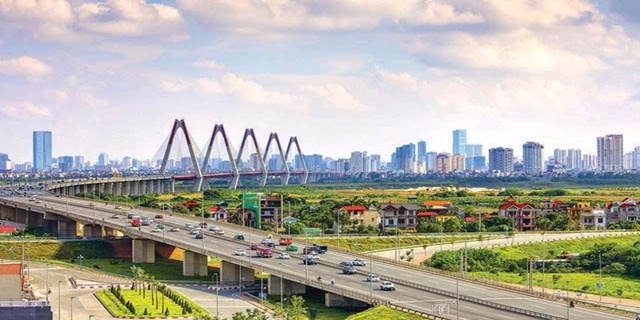
Illustrative Image
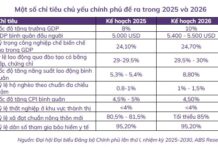
On February 21, during the government conference with local authorities to implement the conclusions of the Central Committee, National Assembly resolutions, and government directives on economic growth, the Prime Minister emphasized that GDP growth is the most critical factor in achieving two key goals by 2030: becoming a developing, modern industrialized country with upper-middle income, and by 2045, a developed, high-income nation. GDP growth will significantly impact the economy’s scale, per capita income, and global GDP ranking.
“There is no other way; we must maintain high, sustainable growth continuously from now until 2045. Only then can we overcome the middle-income trap, achieve strategic goals, and fulfill our aspirations for a new era of prosperity, civilization, and happiness for our people,” the Prime Minister stressed.
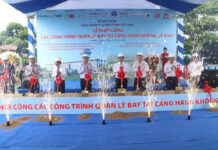
Recently, on December 19, Vietnam officially launched and inaugurated 234 projects with a total investment of over 3.4 million billion VND, providing long-term growth momentum. At the groundbreaking and inauguration ceremony, the Prime Minister stated that to realize the two 100-year strategic goals, developing a synchronized, modern infrastructure system—one of the three strategic breakthroughs—is of utmost importance. It opens new development spaces and lays the foundation for rapid, sustainable national growth.
Prof. Trần Thọ Đạt, a member of the National Financial and Monetary Policy Advisory Council and Chairman of the Science and Training Council at the National Economics University, noted that the December 19 event holds multifaceted significance, encompassing economic, political, and long-term development aspects. Importantly, it is not merely about launching new investment projects but a synchronized series of actions, including groundbreaking, inaugurations, technical openings, and the operationalization of hundreds of infrastructure projects nationwide.
From a development perspective, public investment truly fulfills its role when it transforms into the economy’s tangible capabilities—functional infrastructure that facilitates the flow of goods, services, labor, and capital. The completion and operationalization of numerous projects demonstrate a significant shift in governance mindset, from “plan-based investment” to “investment tied to output results and tangible effectiveness.”
Amid external challenges impacting traditional growth drivers, leveraging public investment is essential for macroeconomic stability and sustained growth. However, the deeper significance lies in using public investment as a tool to strengthen long-term development foundations, not just as a short-term solution.
Moreover, for existing and ongoing infrastructure projects to effectively contribute to rapid, green, and sustainable growth, the decisive factor is the connectivity and integration of the infrastructure system within a unified whole, aligned with the National Master Plan and long-term development strategy.
International experience shows that countries escaping the middle-income trap do so not by building numerous individual projects but by creating synchronized, multi-modal infrastructure systems with network effects.
According to World Bank and IMF data, approximately 86 countries and territories currently have upper-middle incomes (from $14,000 USD). Of these, only 43 have transitioned to high-income status, primarily tax havens and island nations. In Asia, aside from resource-rich Middle Eastern countries, only Japan, South Korea, Taiwan (China), and Singapore have achieved this.
Prof. Trần Thọ Đạt highlights that South Korea, Japan, and China prioritize connectivity between high-speed railways, highways, seaports, airports, and major economic and urban centers.
For Vietnam, this is particularly crucial in the current phase. The North-South Expressway, the future North-South High-Speed Railway, seaport systems, international airports, and logistics hubs must be planned and implemented as components of a unified national infrastructure system, not as standalone projects.
If airports are not effectively connected to economic and urban centers via highways and railways, if expressways do not link to growth poles, industrial zones, and economic zones, or if digital infrastructure does not complement physical infrastructure, the overall effectiveness of public investment will be significantly limited. In essence, public investment maximizes its impact when the focus shifts from “building projects” to “building systems,” Prof. Trần Thọ Đạt emphasized.
Unlocking Public Investment Capital: Deputy CEO of Nam A Bank Proposes Key Solutions
As public investment scales rapidly, the lack of proportionate growth in long-term capital channels places increasing strain on the banking system, which bears the brunt of this expanding burden.
Riverside Watermelon – The Ultimate Customer Magnet in Hai Duong’s Historic City Center
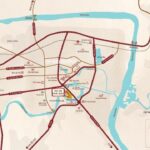
Following the merger of Hai Duong and Hai Phong City, the infrastructure for economic development planning has been significantly enhanced.
Metropoli5 Launches in the Western Market: Riding the Wave of Metro Line 5’s Commencement

Introducing Metropoli5 Nam An Khánh – the ultimate upgrade in residential living, strategically located at the heart of the thriving Western corridor of Hanoi. Positioned along the city’s rapidly expanding urban transportation network, this project promises unparalleled connectivity and future growth, setting a new standard for modern living in the capital.
Construction Material Shortage: Preventing Local ‘Self-Issued Sub-Licenses’
Representatives from the Department of Economic Affairs and Construction Investment Management under the Ministry of Construction emphasized that to address challenges in construction materials, local authorities must avoid applying outdated regulations. They should work with a high sense of responsibility toward the nation’s shared development goals. Imposing unnecessary “sub-licenses” or cumbersome procedures not only creates obstacles but also prolongs implementation timelines, directly impacting project schedules.
Record-Breaking Growth Post-Merger: Province Hits 100 Trillion VND in Budget Revenue
A multitude of the province’s key performance indicators have not only been met but exceeded, showcasing remarkable progress and achievement.