




















Today, December 26th, marks Vietnam Population Day. The primary focus of population management efforts in the coming year is to encourage couples to have two children, gradually returning to the replacement fertility rate, tailored to regional, local, and demographic specifics. This initiative addresses the significant population challenges Vietnam faces, notably the surplus of men and the shortage of women in the marriageable age group.

After 2034, the shortage of women in the marriageable age group (20-39 years) will persist and worsen. (Illustrative image – Source: TTXVN)
The 2024 mid-term population survey reveals a continued disparity, with approximately 400,000 more men than women in the marriageable age bracket.
Over the next 50 years, Vietnam’s population growth is projected under three fertility scenarios: low (1.45 children per woman), medium (1.85 children per woman), and high (2.01 children per woman). Under the medium scenario, by 2029, for every 100 marriageable men (aged 20-39), over 3 will be without a female counterpart due to gender imbalances from the early 2000s.
By 2034, the surplus of marriageable men over women will reach 711,700, or 4.9% of the male population aged 20-39.
Post-2034, the imbalance will persist and intensify, with the shortage of marriageable women becoming more pronounced.
By 2049, Vietnam is expected to face its most severe shortage of marriageable women, with a deficit of approximately 1.3 million.
After 2049, the surplus of marriageable men is projected to decrease, assuming the sex ratio at birth returns to equilibrium post-2034.
By 2074, there will still be around 829,000 more marriageable men than women, highlighting the enduring impact of early 21st-century gender imbalances on population demographics.
Additionally, Vietnam’s demographic golden age is forecasted to end by 2036, transitioning into an aging and super-aging population, characterized by a decline in the youth and middle-aged population and a rapid increase in the elderly.
Proposed Priority for Single Fathers with Two Children to Purchase Social Housing

The government has proposed policies prioritizing the purchase of social housing in the draft Population Law.
“Phạm Nhật Vượng’s Empire: Only 37.3% Female Staff, Yet Women Leaders Dominate at 59%—Banks Emerge as Female Strongholds, Except Sacombank”
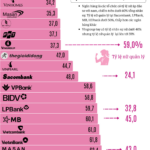
The “women empowerment” narrative at Vingroup transcends mere statistics; it’s deeply embedded in the founder’s philosophy of talent utilization. Surrounding Chairman Phạm Nhật Vượng, the most senior leadership roles—spanning finance, business, and legal—are predominantly held by formidable women leaders.
Skyrocketing Housing Prices Fuel Marriage Anxiety Among Youth: Calls for Real Estate Sector Audit Intensify

Given the soaring housing prices, many young people are hesitant to marry due to the inability to secure stable housing. Ms. Nguyễn Thanh Hải has proposed that the State Audit Office conduct an audit of the real estate sector.
“The Prestigious Honor: MB Receives the First-Class Defense Order of the Country”

On August 30, 2025, in Hanoi, Prime Minister Pham Minh Chinh chaired the conference “80 Years of Businesses Accompanying the Nation.” This significant political and economic event gathered leaders from central ministries, sectors, and over 250 outstanding enterprises.
Ho Chi Minh City Encourages Family Growth: A Generous Offer for Mothers
Let me know if you would like me to tweak it or provide additional suggestions.

“Having two children before the age of 35 can be a rewarding experience for women, and now there’s an added incentive. The city is offering a generous support package of 5 million VND, a 2 million increase from previous policies. This financial boost can make a significant difference for young families and is a welcome recognition of the importance of starting a family at a younger age.”