




















In reality, many public services, despite being available online, still cannot be fully resolved digitally. There are instances where citizens must visit government offices to submit documents, sign in person, or make direct payments. The gap between “online provision” and a “full-journey experience” remains a significant bottleneck in Vietnam’s public service digitalization process.
A seamless “full-journey experience” is crucial for citizens to truly benefit from online public services.
Over the past decade, Vietnam has invested significant resources in digitizing public services by standardizing data, processes, and technical platforms, enabling citizens to handle many procedures online conveniently. The effectiveness is evident as the proportion of level-four public services increased from 0.01% in 2011 to over 48% in 2024. Level four is the most advanced stage, where citizens can complete all procedures online, from submitting documents and tracking progress to making payments, without needing to visit government offices directly.
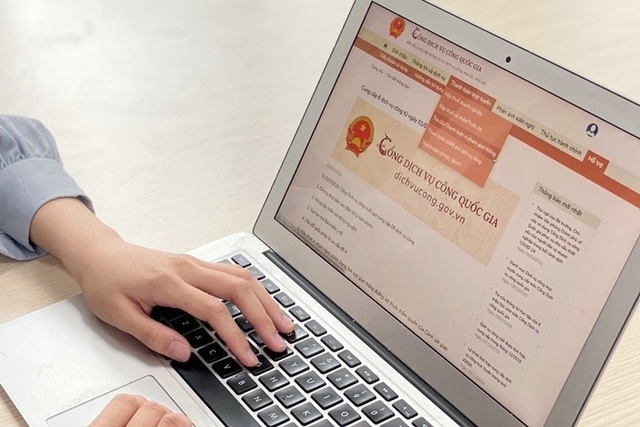
The digitalization of public services and public administration is being strongly promoted, alongside the growing internet usage among citizens.
Concurrently, citizens’ digital behavior has also surged. Internet users have increased from 32 million to nearly 80 million. Smartphones cover over 84% of the adult population. These conditions indicate that Vietnam has sufficient “infrastructure input” for online public services to be effective.
However, lessons from leading countries like Estonia, Singapore, and South Korea reveal a consistent insight. When technical infrastructure reaches maturity, the challenge shifts from merely digitizing procedures to ensuring citizens complete the entire journey online. These countries achieved high usage rates only after improving factors directly impacting user experience.
According to the Ministry of Science and Technology’s digital transformation report, by 2024, only about 48% of administrative procedures are provided as full-journey online public services. Notably, the proportion of full-journey online dossiers at the local level is even lower, at just 17%. This reflects a common paradox: many procedures are “online,” but users still cannot complete the entire journey digitally from start to finish.
In practice, many processes still break down at critical stages such as authentication, data interoperability, parallel submission of paper documents, or fee payments. When forced to switch between digital and physical environments, citizens sometimes opt to return to government offices, even though most procedures are digitized. These breakpoints can prevent online public services from achieving their expected efficiency in terms of time and social cost savings.
Payment is a prime example. As the final step, it is where users are most likely to drop off. If this step requires switching platforms or deviates from daily spending habits, users revert to offline methods despite most processes being digitized. In developed countries like Singapore, when public service fees are paid using methods citizens already use for school fees, medical bills, or travel, completion rates rise significantly because the process feels familiar.
This aligns with the key objectives outlined in Government Resolutions 57 and 68. These aim to promote public service digitalization, reduce direct contact and paperwork, enhance transparency, accelerate electronic payments, cut compliance costs, and improve citizen experience.
A civilian platform handling over 90% of public administrative services
Among civilian payment platforms integrated into online public services, MoMo stands out. Its coverage extends beyond a few procedures to form a comprehensive public service ecosystem, closely tied to citizens’ entire transaction lifecycle.
Annually, MoMo processes billions of transactions, covering 34 provinces and connecting nearly 500,000 payment acceptance points, from hospitals and schools to small businesses. According to regulatory data, MoMo supports payments for over 90% of public administrative services, accounting for about 35% of cashless transactions on the National Public Service Portal and nearly half of online university enrollment fees. Its significance lies not in market share but in the breadth of connected services.
MoMo is present in the four most frequently used public service pillars: administration, education, healthcare, and transportation. The platform is used to pay fees, charges, and financial obligations, while connecting with over 8,300 educational institutions for regular student payments.

For several consecutive years, MoMo has been recognized as the most used payment method by parents and students for university enrollment fees.
In healthcare, MoMo is integrated into over 200 hospitals, where frequent medical fees are incurred. The ecosystem extends to transportation, including vehicle insurance purchases, linking traffic accounts for non-stop toll payments (ETC), vehicle registration scheduling, and public transport services like bus, train, and metro ticketing. Additionally, through integrated data from the Traffic Police Department and Vietnam Register, MoMo allows users to check and receive automated traffic violation notifications directly in the app, reducing manual website searches.
These four groups dominate citizens’ “transaction flow” throughout a personal financial year. When unified on one platform, they create a consistent payment behavior, repeated frequently. This distinguishes an ecosystem from a standalone payment method.
Beneath the simple interface lies a robust technical structure: the highest global payment security standard PCI DSS Level 1, an ISO/IEC 27001:2022-certified information security management system, and TLS/SSL encryption protecting data even on public Wi-Fi—suitable for integration with VNeID and the National Public Service Portal.
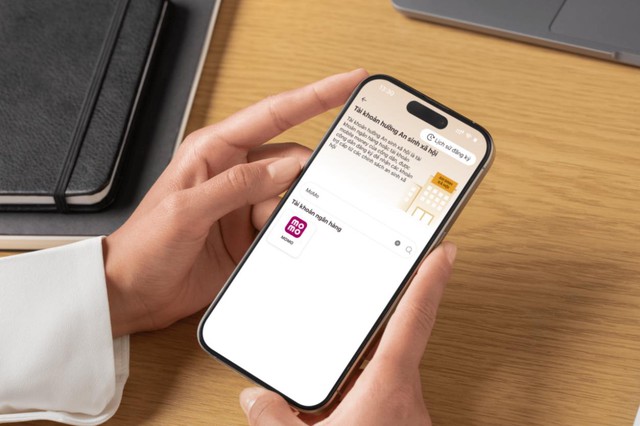
MoMo is among the pioneering Fintechs supporting “Social Security Benefit Account” linking via VNeID.
As VNeID, the population database, and public platforms mature, the private sector will continue to play a stabilizing role. Platforms will foster healthy competition, reduce reliance on a single system, and enhance service quality.
From 2025 to 2030, three factors are expected to shape digital public services: data interoperability, electronic payment speed, and the emergence of hybrid public-private delivery models.
MoMo’s involvement is just the beginning of a larger structure: a public-private partnership infrastructure, where public services are delivered at market speed while maintaining state safety standards. This will be crucial for Vietnam to significantly reduce compliance costs and boost economic productivity.
Green SM Joins Forces with Momo

MoMo and Xanh SM have announced a strategic partnership to integrate electric mobility services with the digital payment ecosystem, addressing the growing demand for electric-powered urban transportation solutions.
Revisiting the Remarkable Numbers of Shark Tank Vietnam After 7 Seasons on Air

Shark Tank Vietnam concluded its remarkable journey after 7 seasons and 100 episodes, solidifying its place as one of the most successful iterations in the region.
The LNG Giant Behind Thi Vai Terminal Prepares $4.3B Move, Unveiling Major M&A Plans

This enterprise has unveiled a bold investment plan exceeding 100 trillion VND for the 2026–2030 period, prioritizing infrastructure development as the cornerstone of its business growth strategy.
Viettel Fulfills 5G Network Deployment Commitment, Recognized by Ministry of Science and Technology

On December 25, 2025, Viettel Telecom Corporation announced that the Ministry of Science and Technology had issued document No. 7868/BKHCN-CVT, recognizing the successful deployment of Viettel’s 5G mobile telecommunications infrastructure. As of this milestone, Viettel has installed and activated 22,758 5G base stations, surpassing the minimum commitment of 20,000 stations pledged to the government.
Do Property Owners in Hanoi Need to Register a Business to Rent Out Their Properties?

Taxpayers have been inquiring about the regulations surrounding the establishment of business households and the tax policies applicable to real estate rentals.