













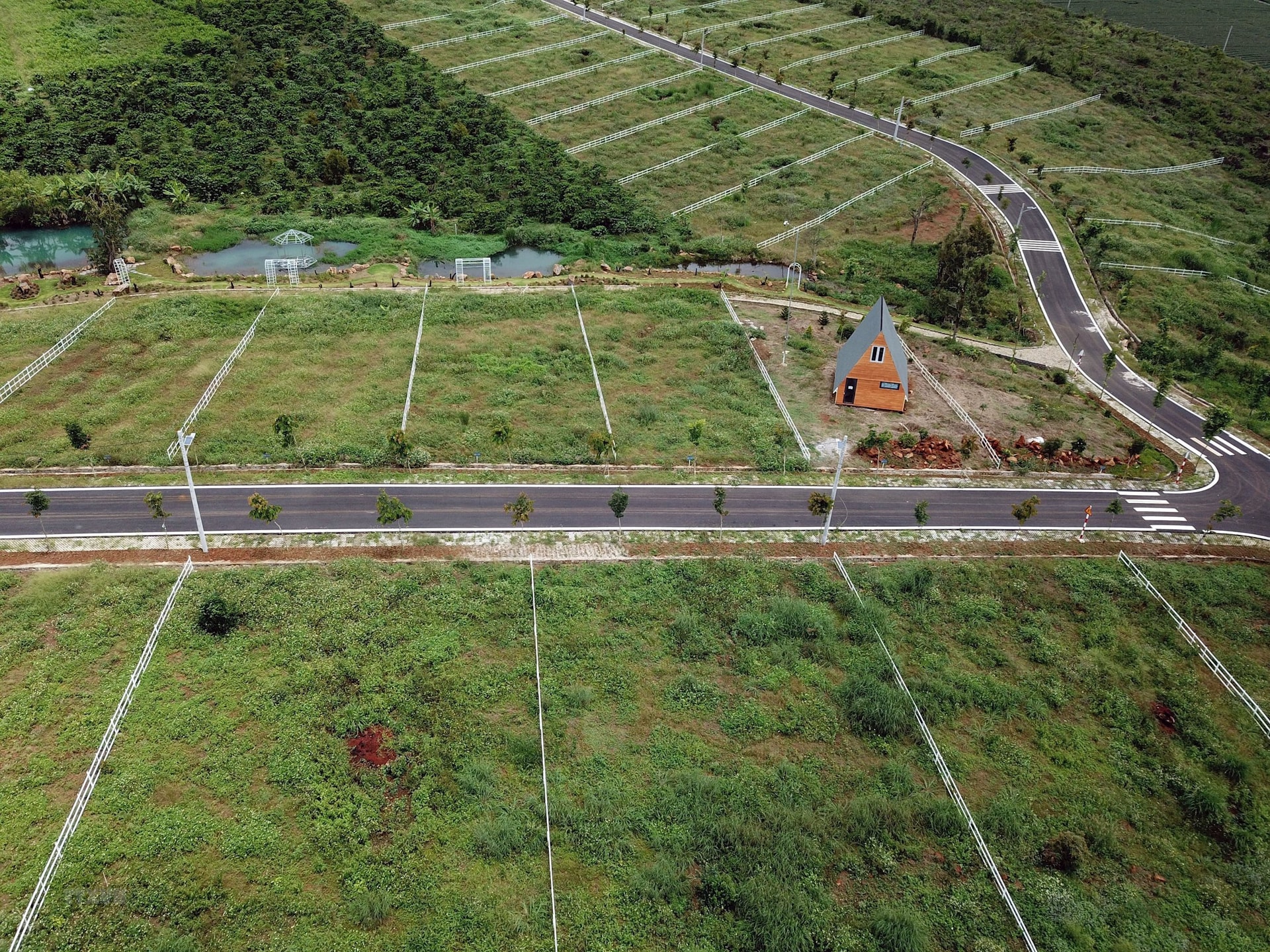
Illustrative image
The National Assembly recently passed a resolution outlining mechanisms and policies to address challenges in implementing the Land Law, effective from January 1, 2026. A key provision allows citizens converting agricultural or garden land to residential land within limits to pay only 30-50% of the land price difference, instead of the current 100%. This reduction aims to significantly ease financial barriers for those seeking residential status for their land.
Experts note that this policy reverts to the pre-2024 Land Law calculation method, reducing conversion costs for citizens. However, the fees remain high for many families, given the new land price framework.
In Ho Chi Minh City, for instance, the 2026 draft land price table sets agricultural land at a maximum of VND 625,000 per m² and a minimum of VND 320,000, while residential land starts at VND 2.3 million per m² and peaks at VND 687 million. With price gaps ranging from 5 to 25 times, even a 50-70% reduction means land use fees could still multiply compared to previous rates, imposing substantial financial strain, especially on those converting land use.
Mr. Le Hoang Chau, Chairman of the Ho Chi Minh City Real Estate Association (HoREA), acknowledges the reduction from 100% to 30-50% but stresses that, amid soaring land prices, the financial burden on citizens remains significant. In southern regions, much land is privately reclaimed or inherited, not state-allocated. Multi-generational households often share plots, and subdividing land for children starting families is common. Land use fee policies must balance fiscal obligations with flexibility to prevent excessive burdens and speculative exploitation.
Mr. Chau cites a family with a 2,000 m² orchard inherited from ancestors. With residential land priced at VND 10 million per m², agricultural land at VND 300,000, a coefficient K of 1.5, and a 200 m² residential limit, subdividing into four plots would cost approximately VND 3 billion for the first plot. The remaining three plots, exceeding the limit, would incur an additional VND 21.8 billion. The total VND 25 billion is akin to “repurchasing their own land.”
Despite challenges, experts view the policy positively, especially for genuine residential needs. Converting 100 m² of garden land with a VND 10 million per m² price difference currently costs VND 1 billion. Under the new policy, this drops to VND 300 million, enabling many families to formalize land use rights.
Market-wise, the policy avoids fueling speculative land subdivision. For large plots, only a small portion qualifies for reduced fees, ensuring investors pay nearly full fees for complete conversion, maintaining barriers against small-scale speculation.
To further ease citizen burdens, Mr. Le Hoang Chau proposes a 20% fee for land within limits, 30% for up to double the limit, and 100% beyond, except for family transfers. Fees should apply once per household per plot.
Who Benefits?
Experts highlight the 70% reduction in agricultural-to-residential conversion fees as pivotal in alleviating financial pressure.
Mr. Pham Thanh Tuan, a real estate legal expert, notes that the 2024 Land Law and new price tables sharply increased conversion costs, requiring full payment of price differences. This hindered land formalization, especially with high demand for household separation and new construction.
“The new regulation balances management goals with citizen affordability,” Mr. Tuan states.
Mr. Le Quoc Kien, a real estate consultant, illustrates with a 100 m² garden plot conversion where a VND 10 million per m² difference previously cost VND 1 billion. The new policy reduces this to VND 300 million, easing financial strain and facilitating land rights formalization.
Deputy Prime Minister Urges Caution in Implementing Land Price Tables and Adjustment Coefficients

Deputy Prime Minister Trần Hồng Hà emphasized that, in the absence of comprehensive market data and a realistic land price table, it is imperative to strictly adhere to the specific land valuation methods outlined in the Land Law.
Da Nang’s Real Estate Boom: Remittance Flows Fuel Central Property Investments as Tourism Rebounds

Travel is rebounding strongly, and the changes brought about by the 2024 Land Law are reshaping capital flows in the real estate market. Amid this transformation, Da Nang emerges as a long-term “capital anchor” for remittances, driven by its high quality of life, efficient resource utilization, and sustainable value appreciation potential.
T&T City Millennia Crowned “Most Livable Project 2025” in Year-End Recognition

As 2025 draws to a close, T&T City Millennia cements its position in the real estate market with a remarkable achievement: being honored as the “Most Livable Project 2025.” This prestigious recognition highlights the project’s exceptional quality and its appeal as a desirable place to call home.
Contrasting Fates of Ho Chi Minh City’s Largest Land Projects: Vinhomes Surges Ahead with $1.1B Investment and Rapid Development, While Lotte Remains Stalled

While Vinhomes Can Gio spans an impressive 2,900 hectares, with land payments completed and development in full swing, Thu Thiem Eco Smart City remains stagnant at less than 8 hectares. Despite land prices exceeding 200 million VND per square meter, the project shows no signs of progress.
Real Estate Giant Leads the Pack: 2025 Profits Double Previous Year’s Record
Despite impressive year-over-year growth, the company has yet to meet the targets approved by shareholders in April 2025. These ambitious goals include consolidated revenue of 1.025 trillion VND and post-tax profit of 320 billion VND, representing a fourfold and 5.3-fold increase, respectively, compared to the previous year’s results.