














The impending halt in CNG supply from January 1, 2026, is pushing nearly 500 buses, hundreds of industrial enterprises, and thousands of workers into a precarious situation, raising concerns about disruptions in production, public transportation, and the investment environment.
Imminent Notice, Unprepared Businesses
On December 18, 2025, Vietnam Petroleum Gas Distribution Company (PV GAS D), a subsidiary of Vietnam Gas Corporation (PV GAS), issued Document No. 803/KTA-KD, announcing the cessation of gas supply to Southern Gas Company (KMN) starting January 1, 2026. The gas purchase agreement between the two parties expires at 24:00 on December 31, 2025.
In Document No. 803, PV GAS D urged KMN to “proactively seek alternative fuel solutions.” However, Mr. Nguyen Ngoc Luan, General Director of Southern Gas Company, told reporters that this proposal is impractical.
“Given the current context, PV GAS is the sole entity authorized by the state to collect, transport, and distribute gas from Vietnam’s gas fields. There are no other commercial natural gas sources in the country outside of PV GAS’s system. Under these circumstances, the demand to ‘find alternative fuel solutions’ within a few days is unfeasible, both technically and commercially,” said Mr. Luan.
According to Mr. Luan, KMN has been part of the CNG supply chain for over 15 years, investing in compression stations, tanker trucks, and a customer network spanning multiple industrial zones. The gas supply disruption will not only affect one company but also impact numerous related customers.
Nearly 500 Buses and Hundreds of Factories at Risk of Disruption
KMN currently supplies CNG to various manufacturing industries, including steel, metals, ceramics, glass, food, and textiles, and fuels nearly 500 public buses in Ho Chi Minh City, serving approximately 80,000 passengers daily. Switching to gasoline or diesel could increase operating costs by 30-40%, straining the city’s subsidy budget and increasing greenhouse gas emissions, contradicting the goal of green transportation and the Net Zero commitment by 2050.
According to KMN, the Ho Chi Minh City Department of Construction sent two official letters in September and November 2025, requesting PV GAS to stabilize CNG prices and supply for buses.
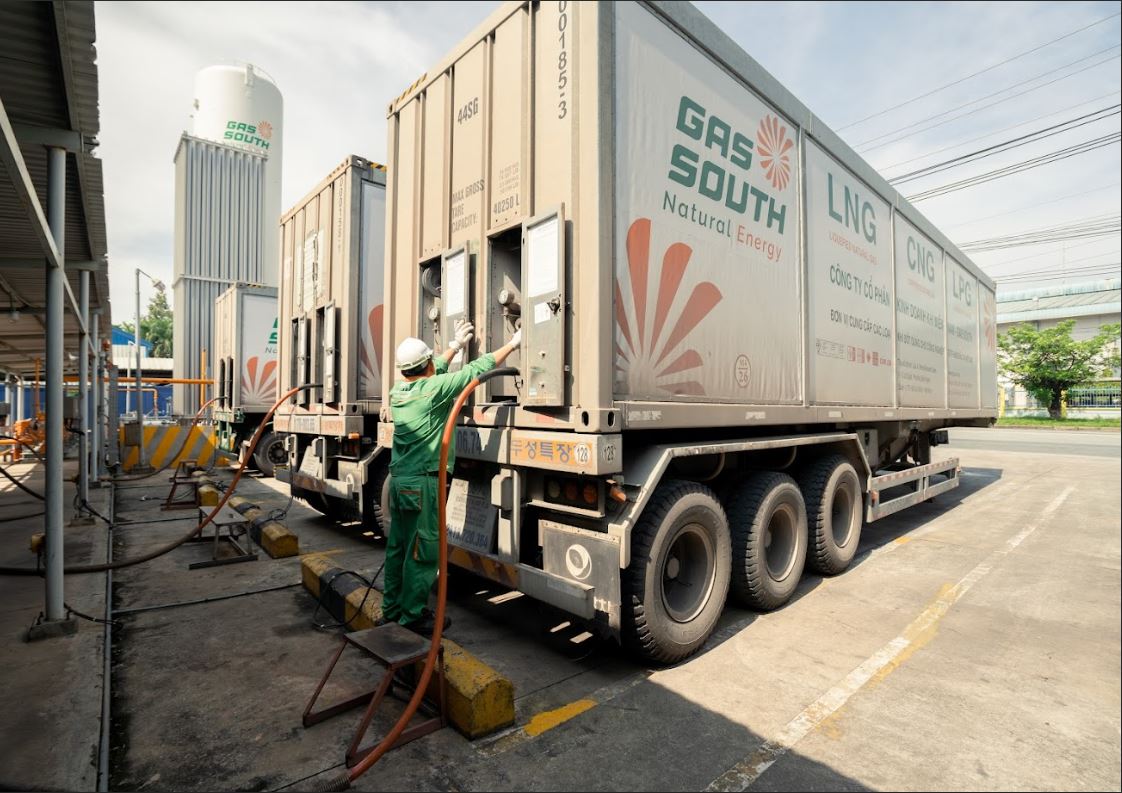
In 2024, KMN supplied approximately 146 million Sm³ of CNG to hundreds of customers in Ho Chi Minh City, Dong Nai, Tay Ninh, Can Tho, and other areas. All are now at risk of disruption from January 1, 2026.
Additionally, in 2024 alone, KMN supplied around 146 million Sm³ of CNG to hundreds of customers in Ho Chi Minh City, Dong Nai, Tay Ninh, Can Tho, and other regions, indirectly creating jobs for tens of thousands of workers. The total production value generated by these enterprises is estimated at hundreds of trillions of VND annually. Transitioning to other fuels within a short period is extremely challenging.
Not only domestic businesses, but Sojitz, a major Japanese trading conglomerate that has invested tens of millions of USD in Vietnam’s CNG ecosystem, has also expressed concerns that the situation “seriously undermines Japanese investors’ confidence” in Vietnam.
PV GAS D’s Stance: Contract Expired, No New Gas Sources
Conversely, Mr. Do Pham Hong Minh, Director of PV GAS D, told VTV Times reporters that the termination of gas supply is in accordance with the signed contract terms.
“The gas purchase agreement between the two parties ends on December 31, 2025. Currently, PV GAS D has no new gas sources to continue the contract, making the supply cessation unavoidable,” Mr. Minh stated.
According to PV GAS D representatives, contract extensions or new agreements depend on gas allocations in the next phase, not solely on the low-pressure gas distributor’s decision.
However, documents provided by KMN show that from August 26 to December 18, 2025, the company sent six consecutive letters requesting PV GAS and PV GAS D to extend the gas purchase agreement but received no specific responses regarding the extension.
Notably, in November 2025, Vietnam Oil and Gas Group issued Document No. 10821/CNNL-TMDV, directing PV GAS to “review and definitively resolve issues to avoid impacting the Group’s reputation.” However, according to KMN, this directive has not been implemented in practice.
This is not the first time KMN has raised issues with PV GAS. In 2020, the PV GAS Board of Directors issued Resolution No. 11/NQ-KVN, setting gas prices for KMN approximately 12% higher than those for Vietnam CNG Company (a PV GAS-controlled enterprise). At that time, after the Competition Authority (now the National Competition Commission) intervened, this pricing policy was halted.
More Than a Civil Dispute
From a legal perspective, lawyer Le Thanh Kinh, Director of Le Nguyen Law LLC and an arbitrator at the Vietnam International Arbitration Center (VIAC), believes the case should be considered beyond a typical contract dispute.
“The 2018 Competition Law addresses abuse of a dominant position, including unjustified refusal or interruption of essential input supply, causing market harm. In markets where an enterprise holds an absolute monopoly on supply, regulatory authorities will consider actual impacts, not just contract expiration,” analyzed lawyer Kinh.
According to lawyer Kinh, in Vietnam, PV GAS is the sole state-authorized entity to collect and transport gas from fields, while PV GAS D is its subsidiary responsible for low-pressure gas distribution. In the absence of alternative supply sources, assessing potential competition law violations falls under state regulatory authority, based on evidence and actual market impacts.
According to KMN, on November 6, 2025, the company submitted a complaint and petition to the National Competition Commission. The agency has accepted the case, worked with relevant parties, and is awaiting information from PV GAS as requested.
In this context, the state regulatory authority’s coordination role is of particular interest to the public and business community.
On December 22, at the announcement and handover ceremony for the Acting Minister of Industry and Trade, Acting Minister Le Manh Hung emphasized prioritizing national energy security, linked with energy transition, to establish a modern energy ecosystem meeting the country’s long-term development needs.
Experts suggest that from this specific case, the Ministry of Industry and Trade and relevant agencies should review coordination mechanisms and promptly address emerging issues to prevent energy supply chain disruptions and ensure a balance between business and societal interests.