













2025 marks another year of Vietnam achieving most of its macroeconomic targets set at the beginning of the year—from economic growth to inflation control and various other key indicators. Reflecting on the year’s economic landscape, Vietnam has overcome numerous challenges, from trade tariffs and climate change to global public debt issues. These developments set an optimistic tone for 2026 while also presenting new complexities. Can Vietnam find a new equilibrium amidst these multifaceted shifts?

Mr. Vu Binh Minh – Director of Capital and Currency Business, Capital Markets and Securities Services Division, HSBC Vietnam
|
Mr. Vu Binh Minh, Director of Capital and Currency Business at HSBC Vietnam’s Capital Markets and Securities Services Division, shares insights on 2025 and a preliminary outlook for 2026.
Macroeconomic Overview
The macroeconomic landscape can be divided into two phases, with trade tariffs serving as the pivotal turning point. Vietnam began 2025 on an optimistic note, buoyed by the successes of 2024. However, tariffs dominated discussions in Q1 as Vietnam, the third-largest bilateral trade surplus country with the U.S., faced heightened tariff risks within ASEAN.
Macroeconomic data revealed impressive GDP growth in Q2 and Q3, with each quarter outpacing the previous. Despite unpredictable trade conditions, Q3 industrial production (IIP) rose 10% year-on-year. Growth was broad-based, with the services sector showing robust performance driven by trade and tourism-related industries. Retail sales improved significantly, up 12% year-on-year in Q3. Tourism-linked sectors, including transportation and hospitality, surged, with Vietnam’s tourist arrivals reaching 120% of 2019 levels—leading ASEAN.
Trade dynamics remained robust, with exports and imports both growing nearly 20% year-on-year. Vietnam’s trade surplus doubled to $3 billion in Q3 compared to the first half of 2025, reaching $20.53 billion for the first 11 months. November saw strong but moderating growth, reflecting the fading impact of accelerated trade activity ahead of tariff implementation. Export and import growth slowed to 15.1% and 16%, respectively, from peak levels.
While trade growth decelerated broadly in recent months, electronics exports remained resilient. Since early 2025, electronics have overtaken light manufacturing as the top export to the U.S. Amid renewed U.S.-China trade tensions, Vietnam has become a critical hub for electronics assembly, reflecting its ascent in the technology value chain. Though still focused on lower-value segments, rising AI demand has significantly boosted Vietnam’s market share in smartphone and consumer electronics exports. Vietnam is also gaining importance in semiconductor manufacturing—a higher-value segment than pure assembly.
According to Bloomberg, by August 2025, Vietnam exported 75% of gaming consoles to the U.S. Monthly gaming console exports, averaging under $30 million in 2024, soared to over $400 million post-May due to U.S.-China tariff shifts. Bloomberg reports that Chinese exporters in Vietnam, such as Pegatron, Hosiden, and Goertek, are expanding production, labor forces, and facilities.
Foreign direct investment (FDI) into Vietnam flourished, driven by export growth. While new registered capital fell 8% year-on-year, adjusted and equity investment capital rose 17% and 50.7%, respectively, totaling $33.69 billion—a five-year high. Disbursed FDI reached $23.6 billion in 11 months, up 8.9% year-on-year, the highest in five years. Notably, FDI from China and the U.S. surged, offsetting declines from other regions.
Currency Markets
However, the outlook wasn’t entirely positive. Financial and currency markets faced volatility in 2025. Interbank interest rates remained stable in H1, thanks to the State Bank of Vietnam’s (SBV) flexible monetary policy aimed at credit growth and economic stimulus amid tariff risks.
In late 2025, VND interest rates rose sharply, nearing three-year highs. Credit growth outpaced deposit growth (16.15% vs. 12% year-to-date as of November 21), reflecting seasonal demand. The SBV supported liquidity with record OMO lending of nearly VND 370 trillion and introduced currency swap operations with commercial banks. It also raised the OMO rate to 4.5% from 4% since September 2024.
Inflation accelerated to 3.58% year-on-year in November, driven by post-flood food price increases, though remaining below the 5% target. The SBV is expected to maintain policy rates, given stable inflation and high growth targets. OMO operations and currency swaps will manage liquidity and interest rate expectations, reflecting a shift toward flexible open-market operations.
The USD/VND exchange rate was volatile in 2025, with the VND depreciating 3.5% against the USD despite a 9% drop in the USD index. This posed challenges for investors and policymakers, driven by tariff concerns, monetary policy divergences, foreign selling of Vietnamese equities, and gold market fluctuations. The SBV stabilized the rate post-September by adjusting the central rate and providing forward contracts, ensuring market liquidity. The rate is expected to stabilize further in 2025.
In 2026, structural forex demand will persist, but USD/VND appreciation is projected to slow as U.S.-Vietnam policy divergences narrow and tariff uncertainties ease.
Foundations for 2026
While 2026 remains uncertain, indicators like the PMI (53.8 in November) suggest optimism. New export orders grew for the second consecutive month. Vietnam’s focus on public investment, particularly in infrastructure (6-7% of GDP), has been a key growth driver. With global trade risks rising, continued public investment will be crucial, supported by Vietnam’s low public debt-to-GDP ratio compared to ASEAN peers.
Trade diversification is a priority amid U.S. tariff uncertainties. While the U.S. remains the top export market, Vietnam is expanding ties with the EU, where trade grew 36% from 2019 to 2024. New trade agreements and upgraded partnerships highlight significant diversification potential.
Financial markets faced external pressures in 2025, including Fed policy shifts and U.S. trade policies. While Vietnam managed inflation and macro stability, external risks persist. The SBV’s proactive policies will maintain market stability. Businesses, especially in trade, must hedge against currency and interest rate risks. 2026 will bring challenges and opportunities, with equilibrium key to Vietnam’s stronger future.
– 09:46 26/12/2025
Vietnam Poised to Join World’s Top 32 Economies by 2025 as Experts Predict GDP Surpassing $1 Trillion Soon
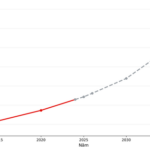
Here is the latest forecast from the UK’s independent Centre for Economics and Business Research (CEBR) in the World Economic League Table (WELT).
Vietnam Emerges as a Powerful Asian Player, Unveiling a $100 Billion Ace

Sputnik, a leading Russian news agency, recently published an article titled “Vietnam Emerges as a Powerful Force in a Turbulent Asia Ahead of 2026.”
Resilient Tactics Propel Vietnam’s Economy to Unexpected Success in 2025, Reports Russian Media

Russia’s Sputnik News recently published an article titled “Vietnam’s Resilient Strategy for Economic Success in 2025,” highlighting that despite significant external shocks, particularly tariff risks and global financial volatility, Vietnam’s economy in 2025 is poised to achieve most of its critical macroeconomic goals.
Why People Are Rushing to Deposit Money in Banks

After lingering at record lows for an extended period, the financial markets are witnessing a fierce interest rate battle as the year draws to a close. Not only private banks but also the “Big 4” institutions have joined the fray, prompting a significant shift in idle cash held by residents.
Riverside Watermelon – The Ultimate Customer Magnet in Hai Duong’s Historic City Center

Following the merger of Hai Duong and Hai Phong City, the infrastructure for economic development planning has been significantly enhanced.