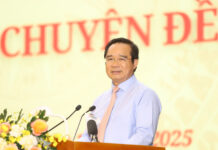






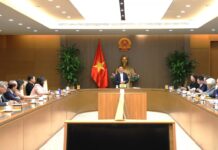

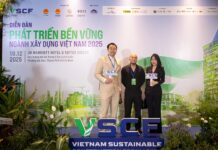




On the morning of December 27, 2025, at the Almaz Convention Center (Vinhomes Riverside, Hanoi), the Vietnam Real Estate Research Institute, the Vietnam Real Estate E-Magazine, in collaboration with Vinhomes, organized a seminar titled “High-Speed Green Transportation and the Community Value of Can Gio Coastal City.” This event was part of the “ESG++ Coastal City – The Heart of the Coastal Urban Era” series.
During the seminar, Mr. Bui Van Doanh, Director of the Vietnam Real Estate Research Institute, emphasized that in real estate, the key factor is often “location, location, and location.” Location determines the value of real estate. In Can Gio, high-speed transportation reduces distances. When the travel time from Can Gio to Ho Chi Minh City is only 13 to 15 minutes, the value of time is transformed into spatial value.
According to Mr. Doanh, speed shifts the perception of location, and location is the core element that defines real estate value. From travel speed, the value of a location is redefined. In Hanoi, for instance, before the Cat Linh – Ha Dong line began operating, property values along Nguyen Trai Street tended to rise. With green, high-speed transportation, the impact on real estate value becomes even more pronounced.
Economically, this is crucial. When the full potential of transportation infrastructure is harnessed, real estate value increases sustainably. In today’s context, speed has become a vital factor in creating real estate value.

Echoing Mr. Doanh’s views, Assoc. Prof. Dr. Nguyen Hong Thai, Vice Chairman of the Vietnam Railway Transport Economics Association and Head of the Transport and Economics Department at the University of Transport and Communications, added that real estate value is closely tied to the choice of residence and workplace. When deciding to invest or live in a new area, people always consider the impact on work, daily life, and family. If transportation is inconvenient and daily commutes take one to two hours, it becomes difficult to persuade residents to choose that location.
However, with high-speed green transportation, if the travel time from Can Gio to Ho Chi Minh City is only about 13 minutes, the narrative changes entirely. Beyond housing, life requires educational environments, workplaces, and social interactions.
When travel time is reduced, relationships between living, working, and family life are better balanced. This creates a new investment approach: leveraging existing infrastructure to form new connections, which is the foundation for long-term real estate value. However, investing in transportation development is not just an economic equation but also a responsibility of investors to explore new territories.
Assoc. Prof. Dr. Nguyen Hong Thai further analyzed that high-speed green transportation is central to structured urban development. It’s not just about reducing travel time but about choosing infrastructure models that define “urban order”—how cities expand, connect, and distribute living, working, and service functions while preserving sensitive natural spaces.
This perspective is supported by a specialized study conducted by the Vietnam Real Estate Research Institute (VIRES), which analyzed the relationship between high-speed green transportation, urban spatial structure, and community value in the development of coastal cities.
Experiences from Japan, South Korea, the Netherlands, and Singapore show that when high-speed green transportation is strategically integrated into planning, it often becomes the “backbone” of modern urban structure. It helps form multi-centered development hubs, reduces pressure on urban cores, and expands access to jobs and services more efficiently than car-dependent models.
Assoc. Prof. Dr. Arch. Tran Minh Tung, from the Civil Architecture Group at the Faculty of Architecture and Planning, Hanoi University of Civil Engineering, agreed that the “expansion” of social boundaries, or “urbanization” into suburban areas, must go hand in hand with protecting nature’s core values.
Developing infrastructure based on high-speed metro systems helps curb the growth of private transportation, maximizing the protection of Can Gio’s ecological buffers. The high speed of the metro system allows cities to implement “leapfrog” development strategies, directly connecting key points without sprawling along routes, thus preserving the integrity of Can Gio’s mangrove forests—the city’s “lungs.” Electric transportation like metros is a sustainable solution to reduce carbon emissions.
As residents shift from private vehicles to metros, they not only save time but also reduce emission distances, moving toward Ho Chi Minh City’s Net Zero goal and Vietnam’s broader objectives.
Assoc. Prof. Dr. Arch. Tran Minh Tung believes that high-speed metro connectivity is crucial for restructuring the “live-work-leisure” ecosystem in Ho Chi Minh City. He emphasized that when travel time between two points 54 km apart is reduced to under 20 minutes, the spatial structure of Ho Chi Minh City will shift from a single-core to a multi-core model.
This speed allows residents to commute daily with psychological comfort and optimized opportunity costs. The 30-minute threshold is considered the “golden limit” for individuals to decide on a residence without affecting work efficiency. “Therefore, this metro line is not just a means of transport but a physical tool to redefine urban boundaries,” he concluded.
Olympic Mega City: Vingroup’s Visionary Project Featuring eSports Arena, Golf Complex, and Thousands of Luxury Homes
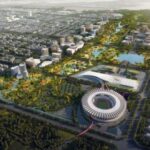
Vingroup is set to revolutionize the urban landscape with its ambitious plans for the Olympic City development. The project includes the construction of a state-of-the-art eSports arena capable of seating tens of thousands of spectators, two championship-level 18-hole golf courses, and thousands of residential units ranging from luxury apartments to exclusive villas. This visionary initiative promises to blend world-class sports facilities with premium living spaces, creating a dynamic and vibrant community hub.
The Ultimate Stadium Showdown: Vingroup Unveils World’s Largest Domed Arena, Sun Group Builds 50,000-Seat Venue in Prime Central Location
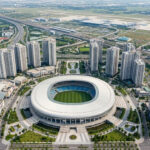
Beyond sports, the three new “super stadiums” will serve as economic hubs, driving retail, tourism, event hosting, and real estate, while positioning Vietnam on the global map of cities with iconic stadiums.
“Built-to-Sell”: TBS Group’s Unique Approach to Real Estate Development

Rooted in manufacturing, supply chain, and services, TBS Group ventures into real estate under the TBS Land brand, guided by the consistent philosophy: “Build from the heart, create for people.” Green Skyline emerges as a continuation of this legacy, where trust is built through genuine products, authentic value, and real experiences.
Exclusive Investment Opportunity: December 20-26, 2025 – 6 Mega Urban Projects with Over $2.1 Billion in Capital

During the week of December 20-26, 2025, four provinces attracted investment in eight projects, totaling over 54.6 trillion VND. Notably, six of these projects are urban developments, with a combined investment of more than 47.2 trillion VND. The most significant project is a nearly 24 trillion VND urban area in Dien Bien province.
Hồng An Ward: From a Transportation Hub to the Real Estate Epicenter of Western Hai Phong
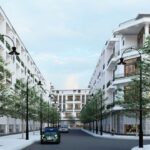
Following the merger of Hai Duong and Hai Phong, the urban development structure of the Port City is being reshaped towards expanding space, polarizing functions, and forming new development hubs.