















Record-Breaking Exports in the Vietnamese Wood Industry
According to statistics, by 2025, Vietnamese wood and wood products have reached over 160 countries and territories. The United States, Japan, China, South Korea, and the EU are the top five markets, accounting for more than 90% of the industry’s total export turnover.
Remarkably, despite numerous challenges related to traceability, illegal logging, anti-dumping investigations, and U.S. countervailing duties, Vietnam’s wood industry has generated $16.3 billion in revenue, even before the end of 2025.
This achievement solidifies the wood industry’s position as the leading sector in agriculture and places it among the top 7 export commodities in the country.
Vietnam has also risen to become the 5th largest wood exporter globally and the 2nd largest exporter of high-value-added wood products (indoor and outdoor furniture), second only to China.
According to the Department of Forestry (Ministry of Agriculture and Environment), over 24 years of exporting, Vietnam’s wood industry has maintained continuous growth and broken records multiple times. Wood product exports increased from $219 million in 2000 to $16 billion in 2022.
After a sharp decline to $13.5 billion in 2023 due to post-Covid-19 impacts, wood exports rebounded strongly in 2024, reaching an all-time high.
The Ho Chi Minh City Handicraft and Wood Industry Association (HAWA) forecasts that wood product exports could reach $17.3 billion in 2025.
Consequently, the trade surplus for wood and wood products remains high. Specifically, in 2023, the surplus was $11.33 billion; in 2024, it increased to $13.55 billion, accounting for nearly 75.7% of the agricultural sector’s total trade surplus. As of December 15, 2025, the surplus stands at $13.3 billion.
Business Adaptability Drives Success
Experts attribute this success to the Vietnamese wood industry’s establishment of a relatively complete production chain. Unlike many other agricultural sectors that export raw materials, the wood industry focuses on deep processing to export finished products.
Additionally, there has been a shift in the use of domestic and imported raw materials. Most Vietnamese wood products now use plantation timber, reducing reliance on imports and strictly prohibiting the use of natural forest wood.
Notably, amidst global volatility, particularly U.S. countervailing duties, Vietnamese wood businesses have demonstrated high adaptability. Many companies have accepted lower profit margins to maintain orders while expanding sales through international e-commerce platforms.
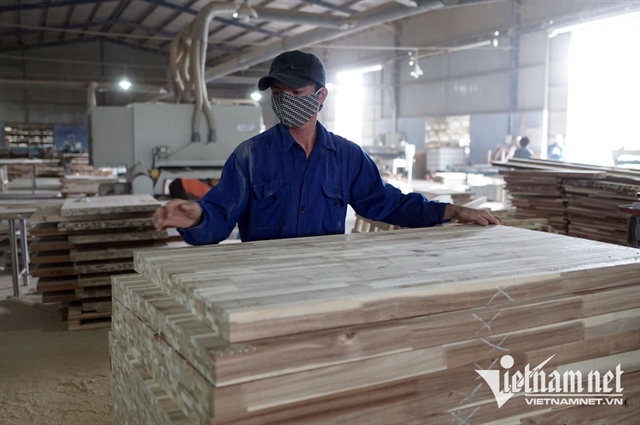
Businesses need to collaborate to build strong distribution channels for wood products from domestic to international markets. |
Mr. Huỳnh Lê Đại Thắng, Director of Nghia Son Furniture Company, shared that four years ago, his company began exploring furniture sales on major e-commerce platforms like Amazon, Walmart, and Wayfair. This transition quickly helped expand their market and increase sales.
In 2025, Nghia Son’s export sales grew by 40%, with a significant increase in the U.S. market. The company exported over 1,000 containers and has orders booked until May 2026.
According to Mr. Thắng, most domestic wood businesses currently engage in B2B wholesale. However, during challenging market conditions, international B2B customers increasingly pressure manufacturers on pricing. As a result, domestic producers often act as mere contractors without their own brands.
“By seriously investing in e-commerce, Vietnamese businesses can scale up and achieve breakthroughs,” said Mr. Thắng, citing a Chinese wood company that grew its e-commerce revenue from zero to approximately $400 million in just four years.
Mr. Nguyễn Chánh Phương, Vice Chairman of HAWA, emphasized that to succeed in e-commerce, businesses must focus on branding and design. Products must be unique, avoiding design replication or mere processing.
Long-term success requires businesses to collaborate in building robust distribution channels for wood products from domestic to international markets. In the future, the industry will establish specialized e-commerce companies to help businesses effectively manage distribution.
To meet new standards, particularly those related to legal timber, origin traceability, and emissions, Deputy Minister of Agriculture and Environment Nguyễn Quốc Trị urged associations and businesses to innovate their thinking, operational methods, and accelerate the implementation of plans.
For the 2025-2030 term, the Deputy Minister proposed that industry associations continue supporting businesses in overcoming challenges, deepen policy involvement, expand markets, and encourage the development of high-value products. This will shape a transparent, environmentally friendly wood production and processing industry that meets the growing demands of the international market.
Hà Giang
– 08:54 27/12/2025
U.S. Trade Hits $900 Billion Milestone
The structure of export commodities continues to be dominated by the processed manufacturing sector.
Deputy Prime Minister Hồ Đức Phớc Chairs National Financial and Monetary Policy Advisory Council Meeting

On the afternoon of December 26th, Deputy Prime Minister Ho Duc Phoc, Chairman of the National Financial and Monetary Policy Advisory Council, presided over the Council’s meeting.
Vietnam Sets New Trade Record: China and US Markets Account for $422 Billion in Exports and Imports
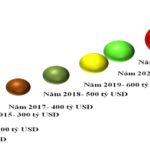
On the afternoon of December 25th, the General Department of Vietnam Customs (under the Ministry of Finance) held a ceremony to mark a significant milestone: Vietnam’s total import-export turnover reaching a staggering 900 billion USD.
Vietnam’s Import-Export Sector Hits Record-Breaking $920 Billion Milestone

Total trade turnover is projected to surpass $900 billion by the end of 2025, propelling Vietnam into the ranks of the world’s top 15 trading powerhouses.
Prime Street-Front Properties for Rent in Hanoi’s ‘Golden Land’ Struggle to Attract Tenants as Year-End Approaches

Once hailed as the “golden land” of Hanoi, where prime storefronts commanded monthly rents of tens, even hundreds of millions of dong, these streets now paint a starkly different picture. As the year-end peak season approaches, a growing number of shops stand vacant, their “For Rent” signs a testament to the shifting tides of commerce.