










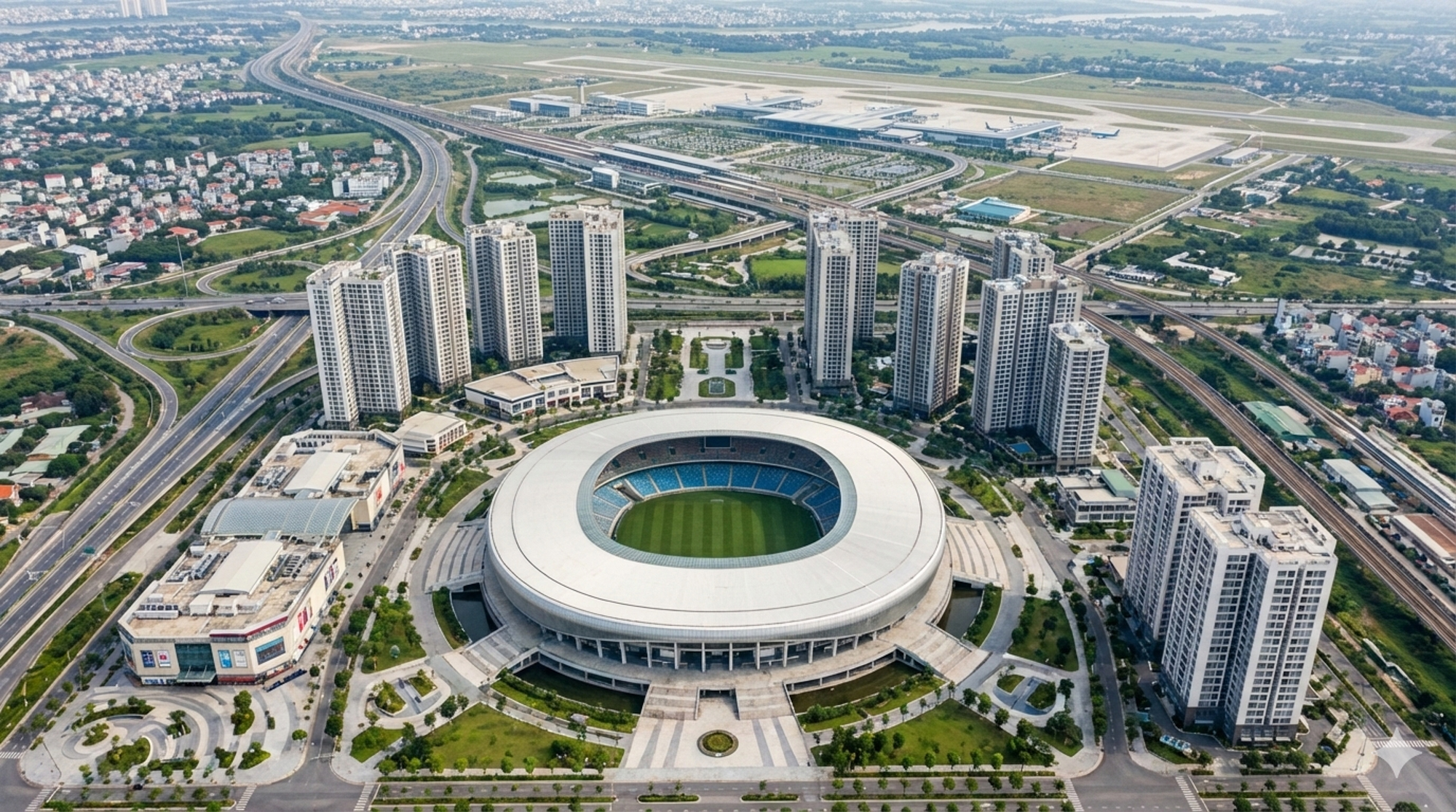
Following the wave of highways, ring roads, and airports, large-scale stadiums are emerging as a new class of infrastructure. Unlike earlier phases, when stadiums were primarily welfare-oriented, current projects are embedded in economic, urban, and national branding strategies.
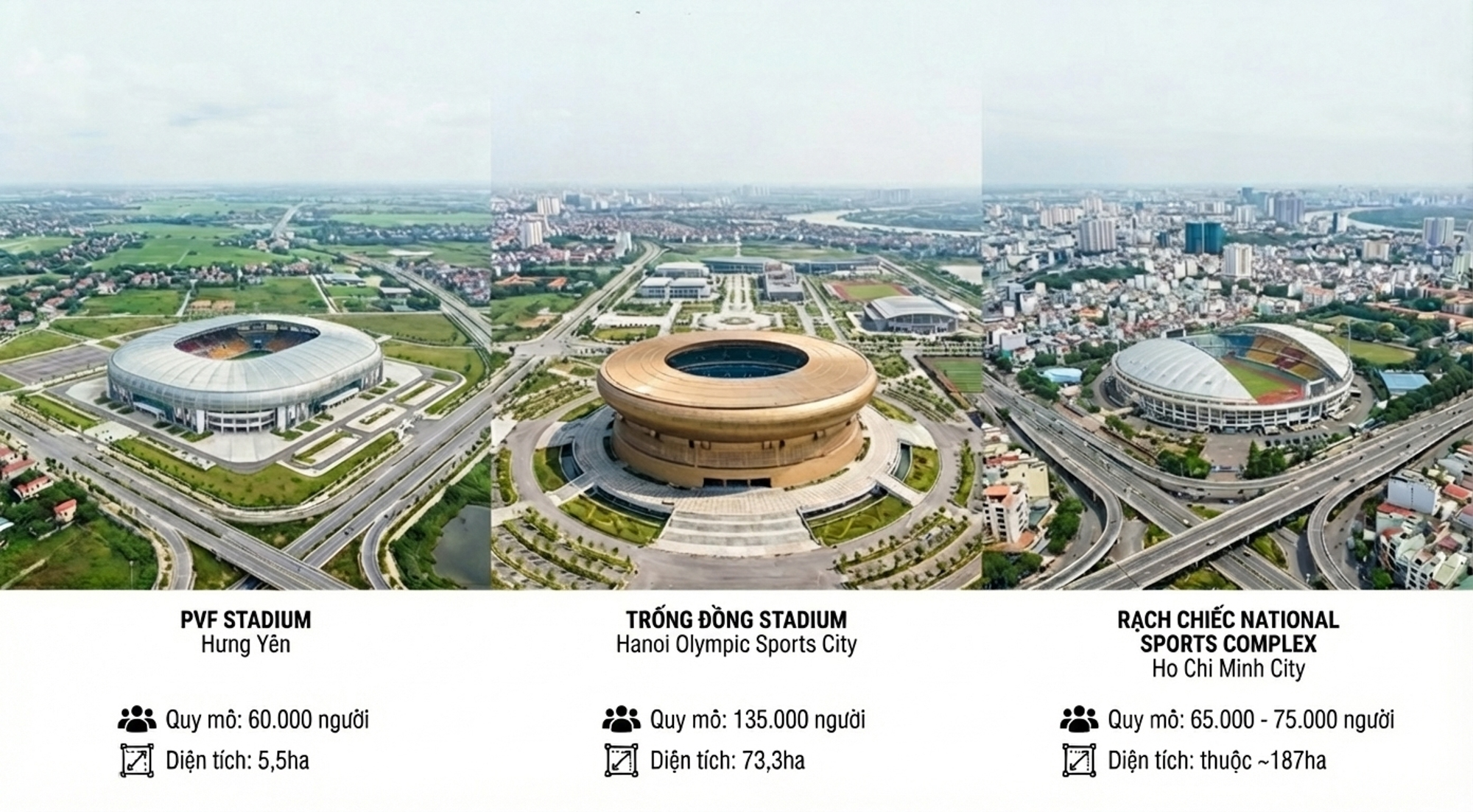
Prominent among these are three stadiums: PVF Stadium (Hung Yen) with a 60,000-seat capacity, funded by the Ministry of Public Security and constructed by Vingroup; the Trống Đồng Stadium within the Olympic Sports City (Hanoi), developed by Vingroup, with a 135,000-seat capacity; and the central stadium of the Rạch Chiếc National Sports Complex (Ho Chi Minh City), with a 50,000-seat capacity, proposed for investment by Sun Group.
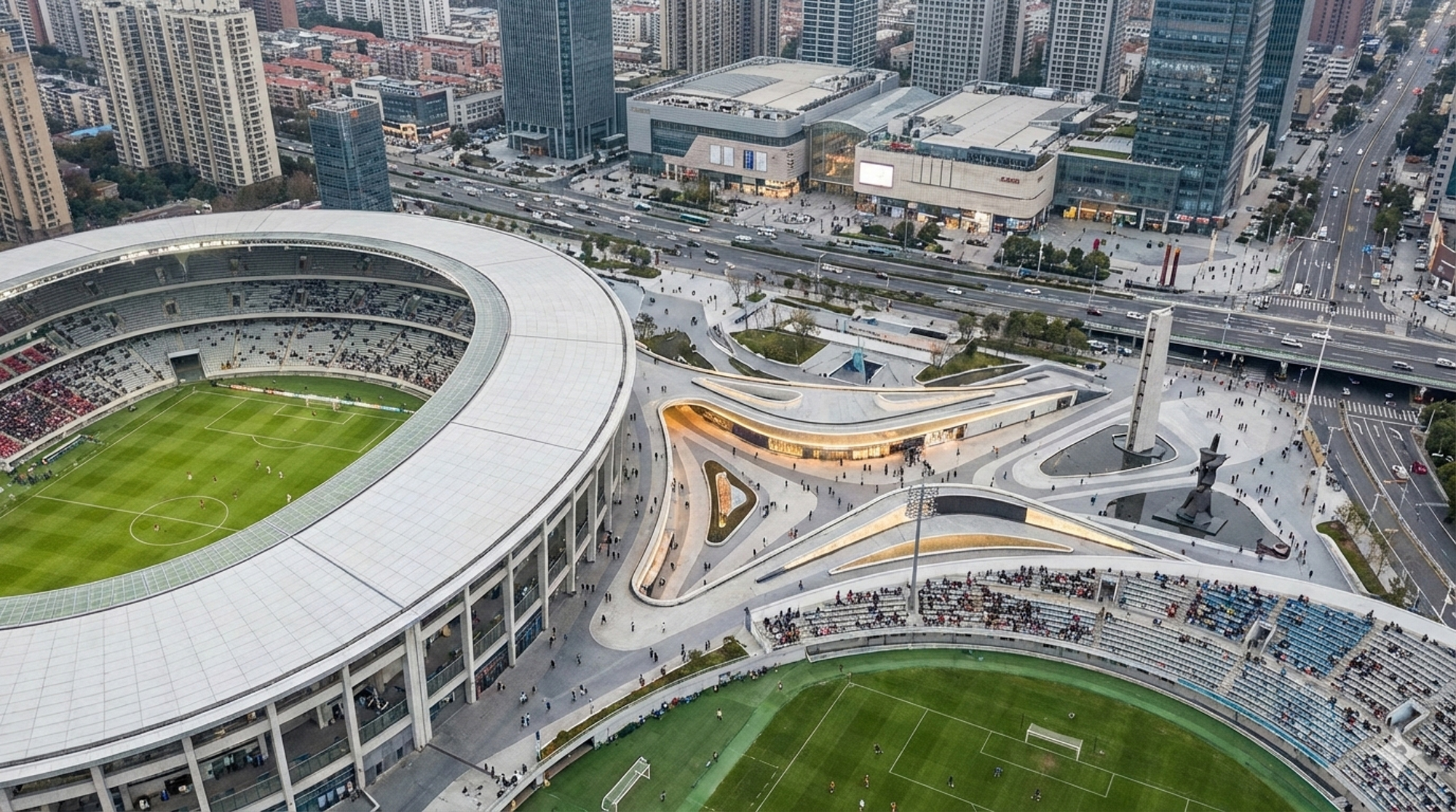
While all three stadiums are large in scale, they serve distinct purposes. PVF Stadium is designed to drive urban development in eastern Hanoi; Trống Đồng Stadium serves as an iconic symbol and brand image enhancer; and Rạch Chiếc Stadium aims to meet urban demands and ensure regular utilization.
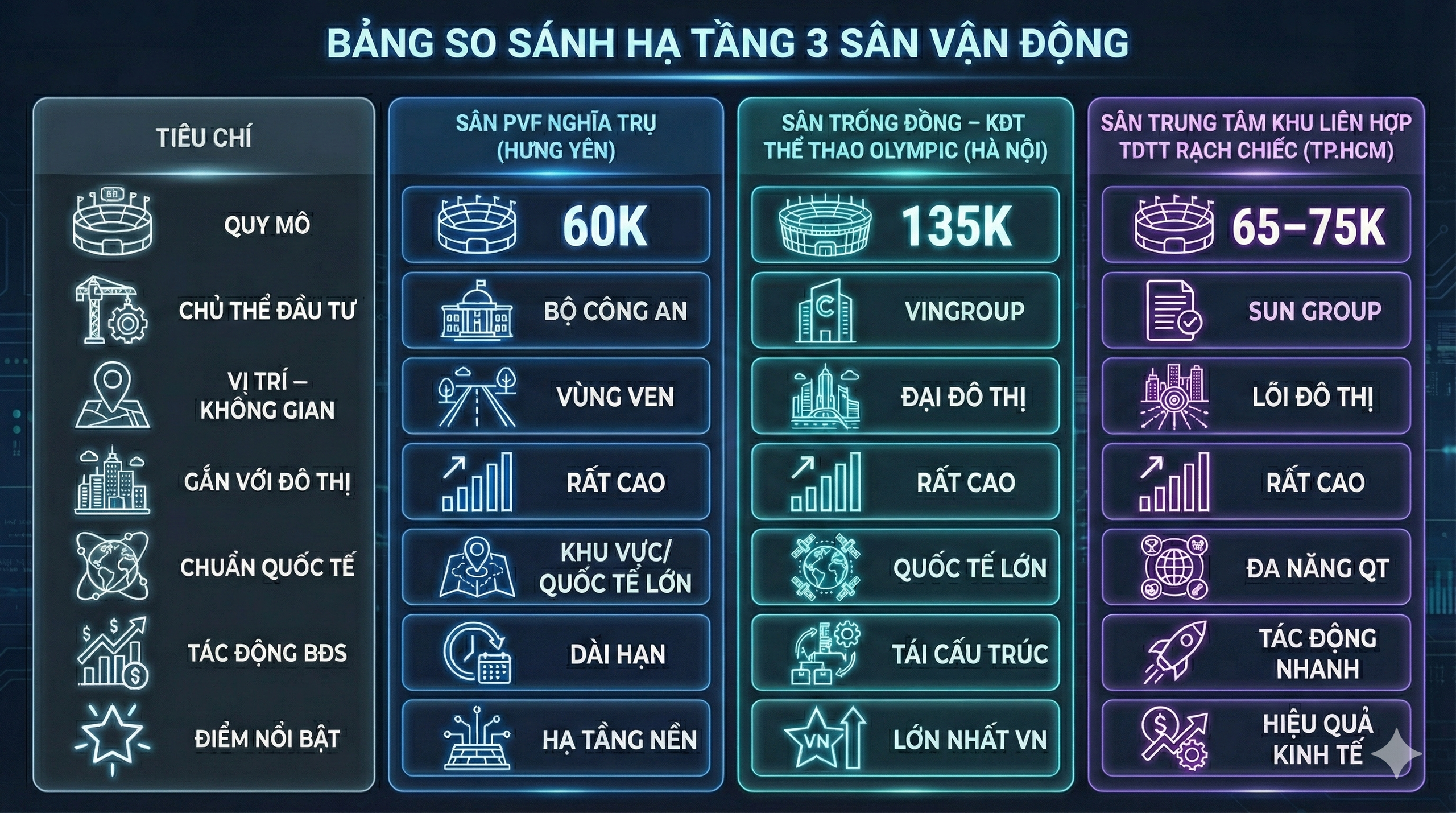
Notably, all three stadiums are equipped with state-of-the-art features, including automated roof systems covering over 50% of the seats and hybrid modular turf. PVF Stadium boasts a high-tech retractable dome; Trống Đồng Stadium features the world’s largest roof; and Rạch Chiếc Stadium integrates a national sports ecosystem. These stadiums are eligible to host events like the SEA Games/ASIAD, and Trống Đồng Stadium even meets World Cup standards.
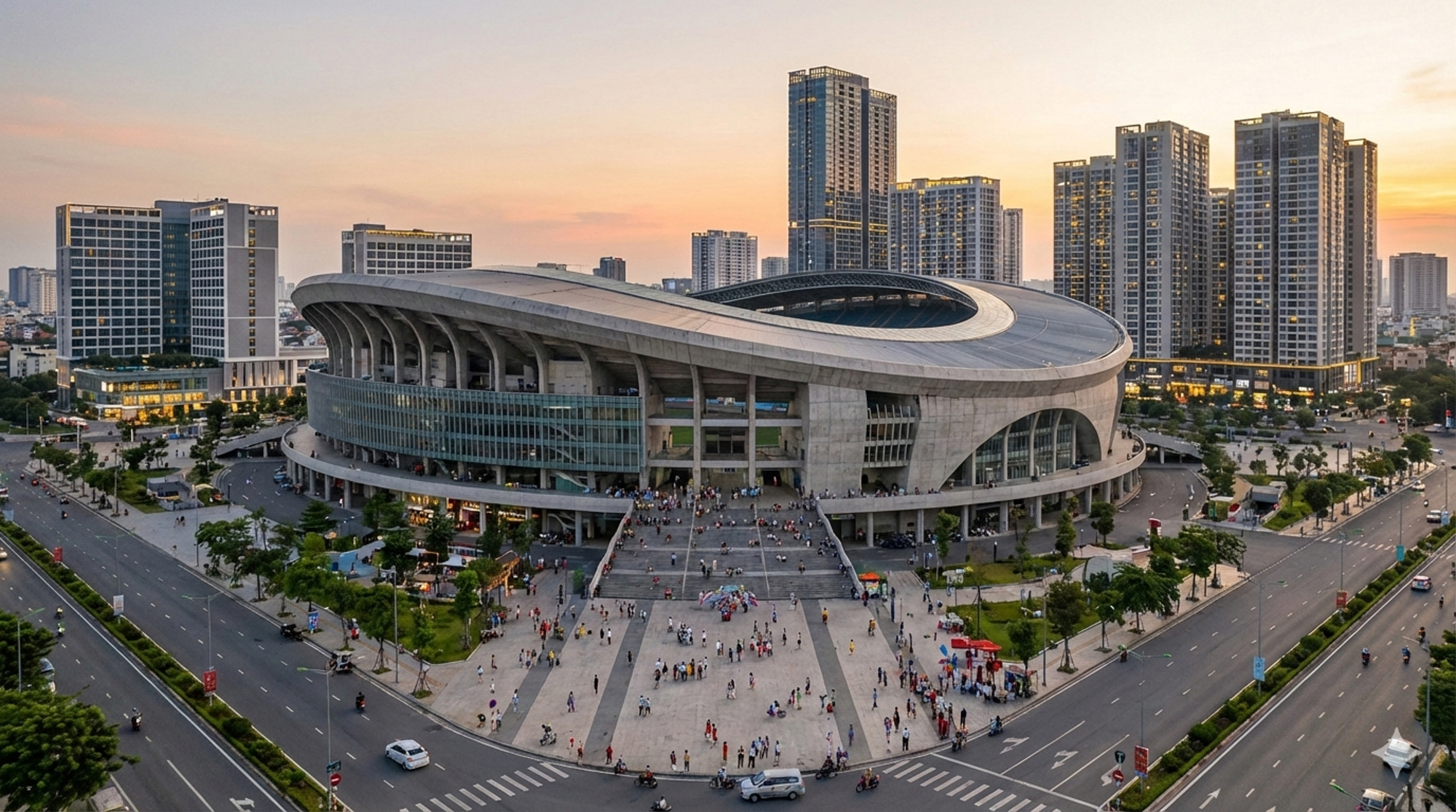
Furthermore, these new-generation stadiums operate as “economic hubs,” attracting tourism, hospitality, retail, and event hosting. International examples demonstrate that stadiums can significantly impact surrounding areas, particularly real estate.
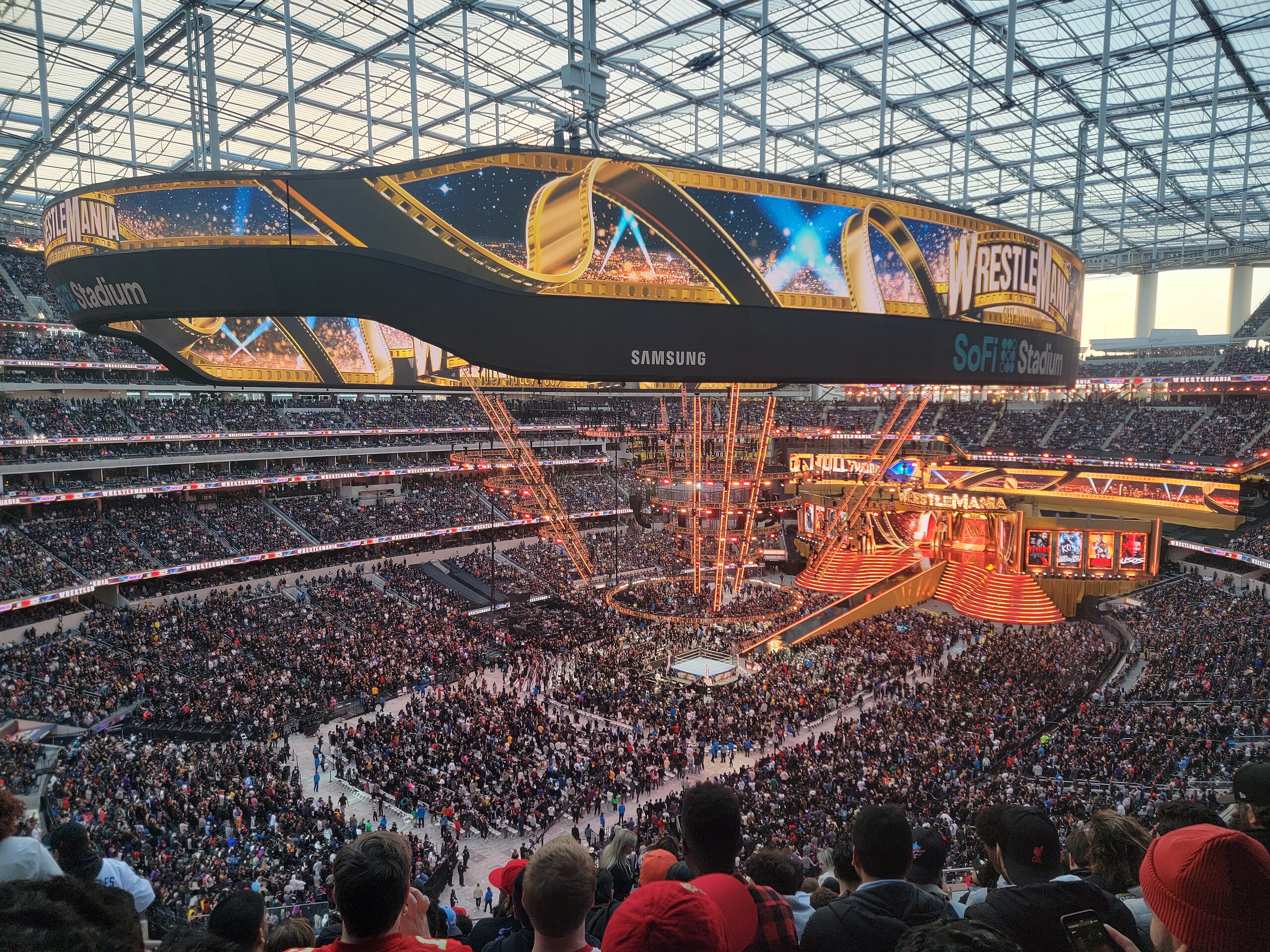
The key lies in operational strategies that generate sustainable revenue streams. Direct income comes from ticket sales for sports events, concerts, entertainment, sponsorships, and integrated retail, hospitality, and F&B ecosystems, ensuring consistent operations. Image: A packed SoFi Stadium (USA) during WWE WrestleMania 39 (2023) – Wikipedia
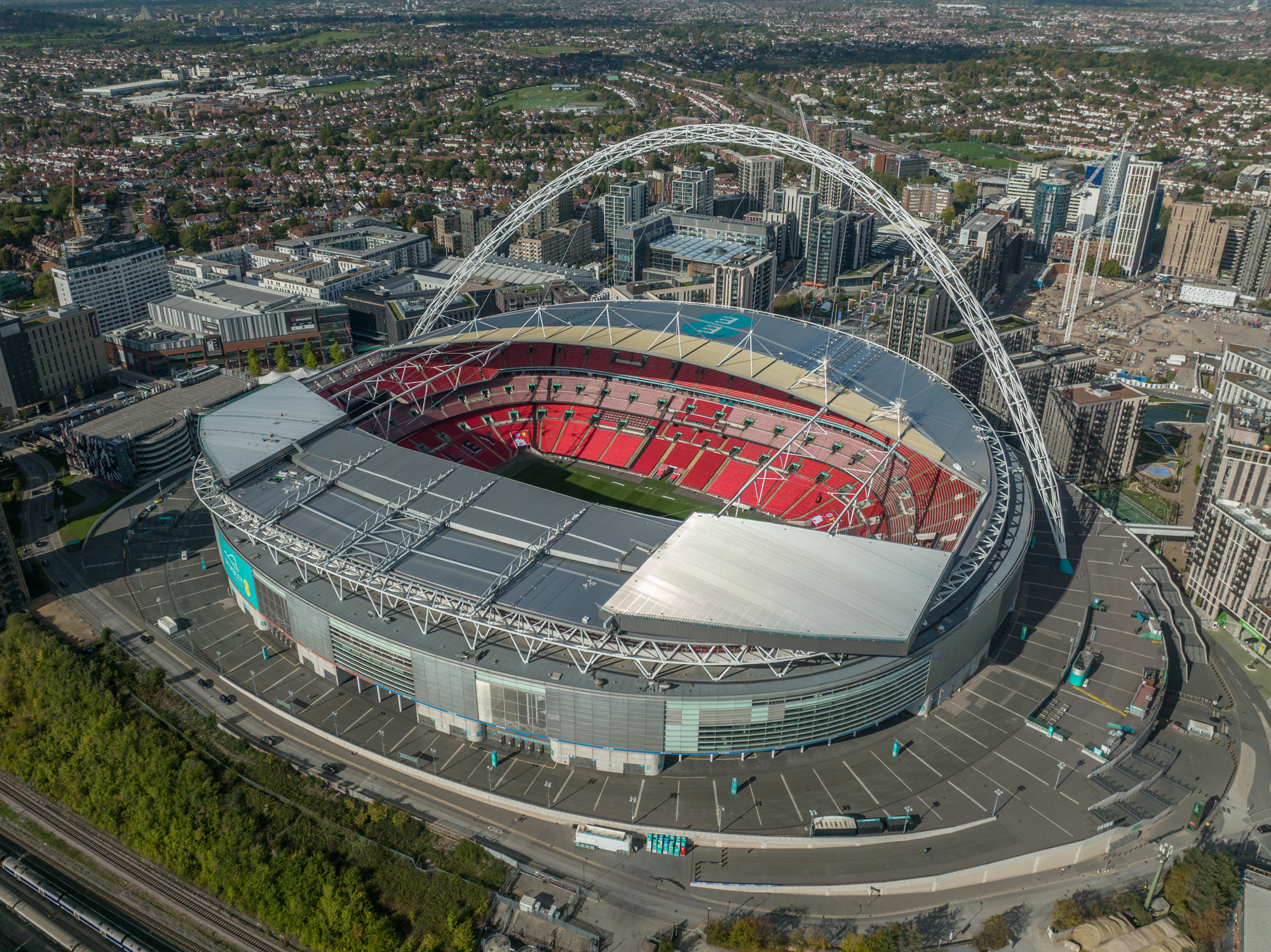
Additionally, urban revenue streams emerge as stadiums act as “value anchors,” catalyzing TOD development, satellite cities, and increasing land values in surrounding areas. In the U.S., according to data compiled by the Los Angeles Times, the median home sale price in Inglewood, home to SoFi Stadium, rose from approximately $402,000 in 2016 to around $739,000 in 2021, an 84% increase over five years. In London, the area around Wembley Stadium has also thrived due to urban restructuring centered on the national stadium. (Image: Wembley Stadium, London – Wikipedia)
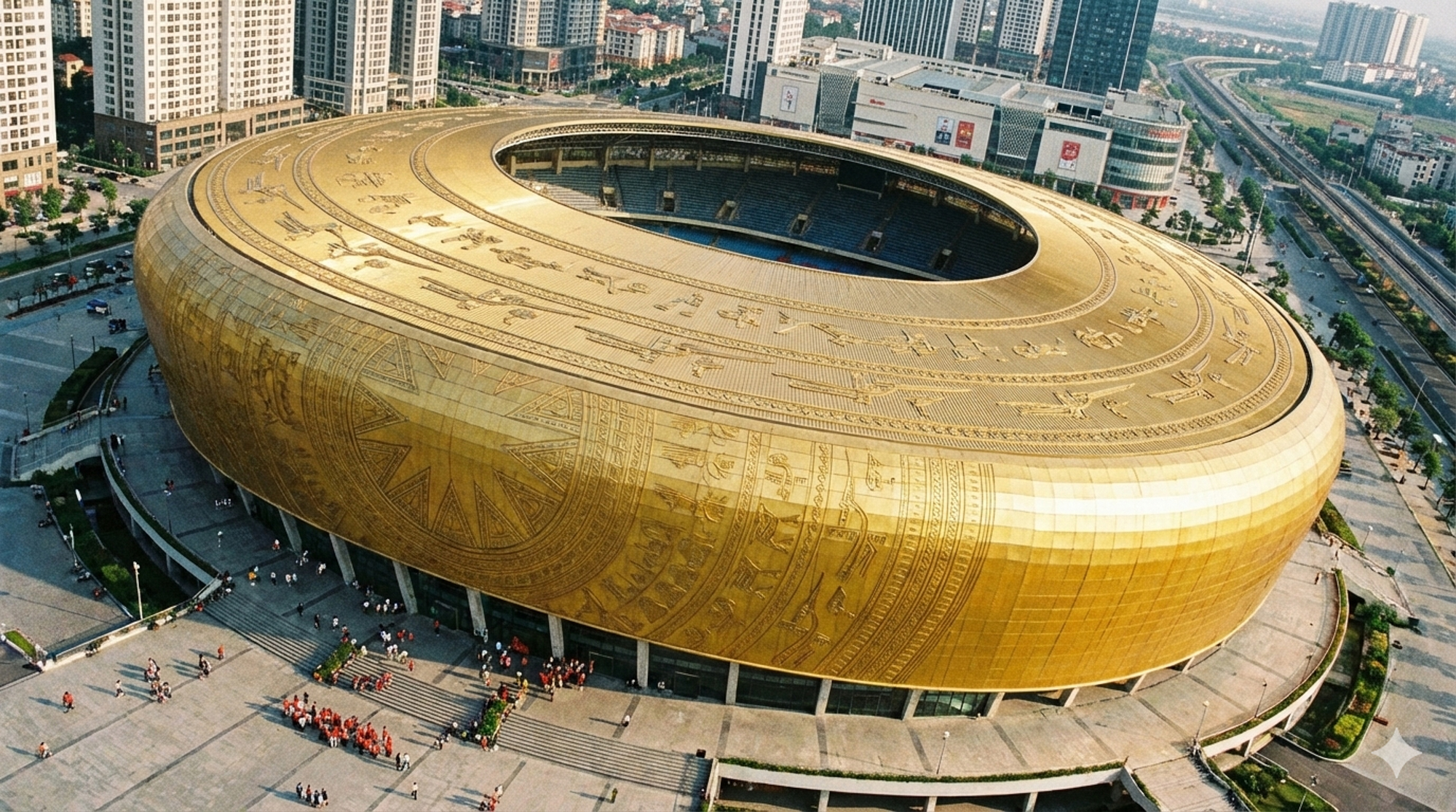
Notably, Trống Đồng Stadium (135,000 seats, over 73 hectares), more than three times the size of Mỹ Đình Stadium, will not only host competitions but also serve as the core of a nearly 10,000-hectare sports and services metropolis. Upon completion, it will be the world’s largest stadium.
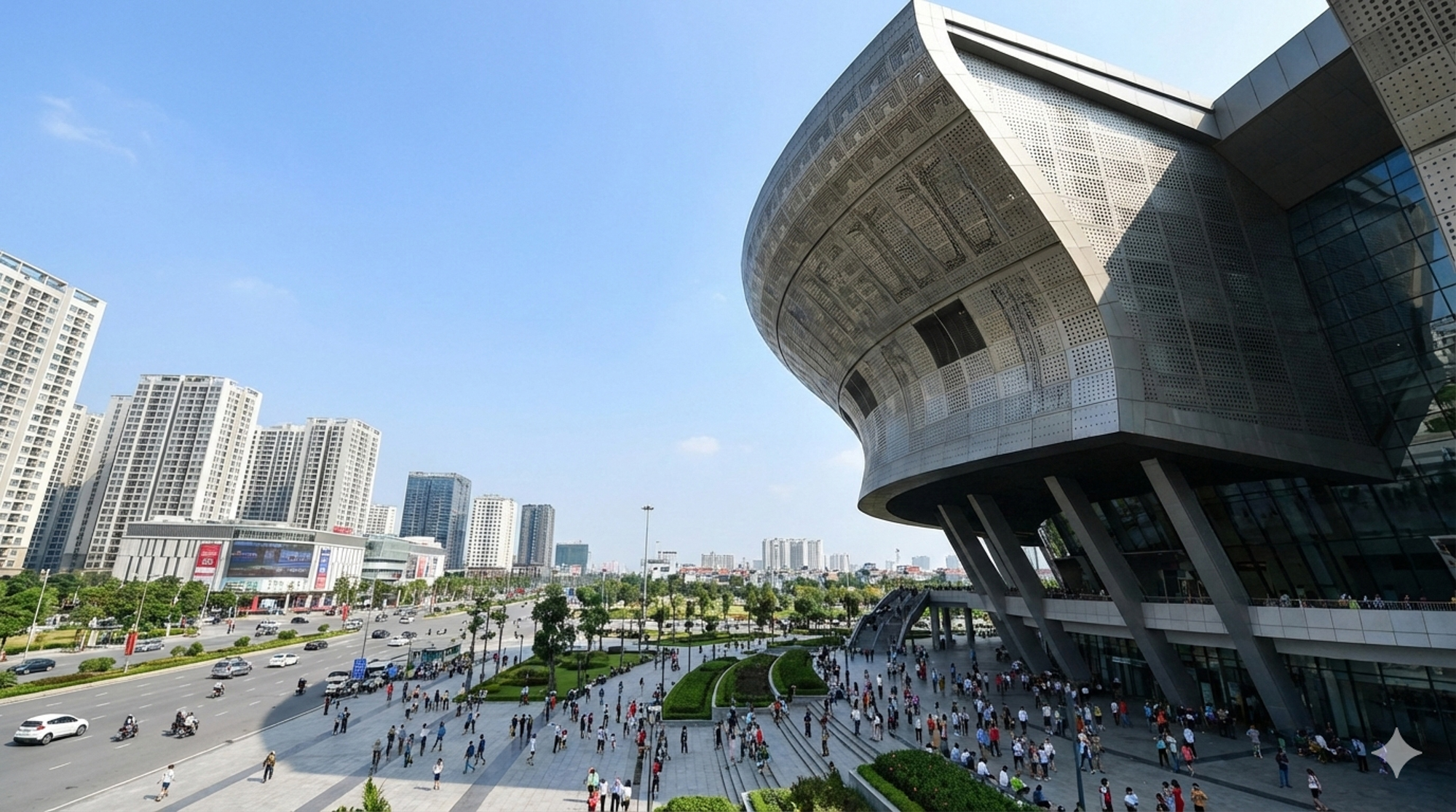
Upon completion, Trống Đồng Stadium will operate under a “stadium-city” model, similar to Wembley (UK), where the stadium becomes a year-round hub for residents, services, and activities.
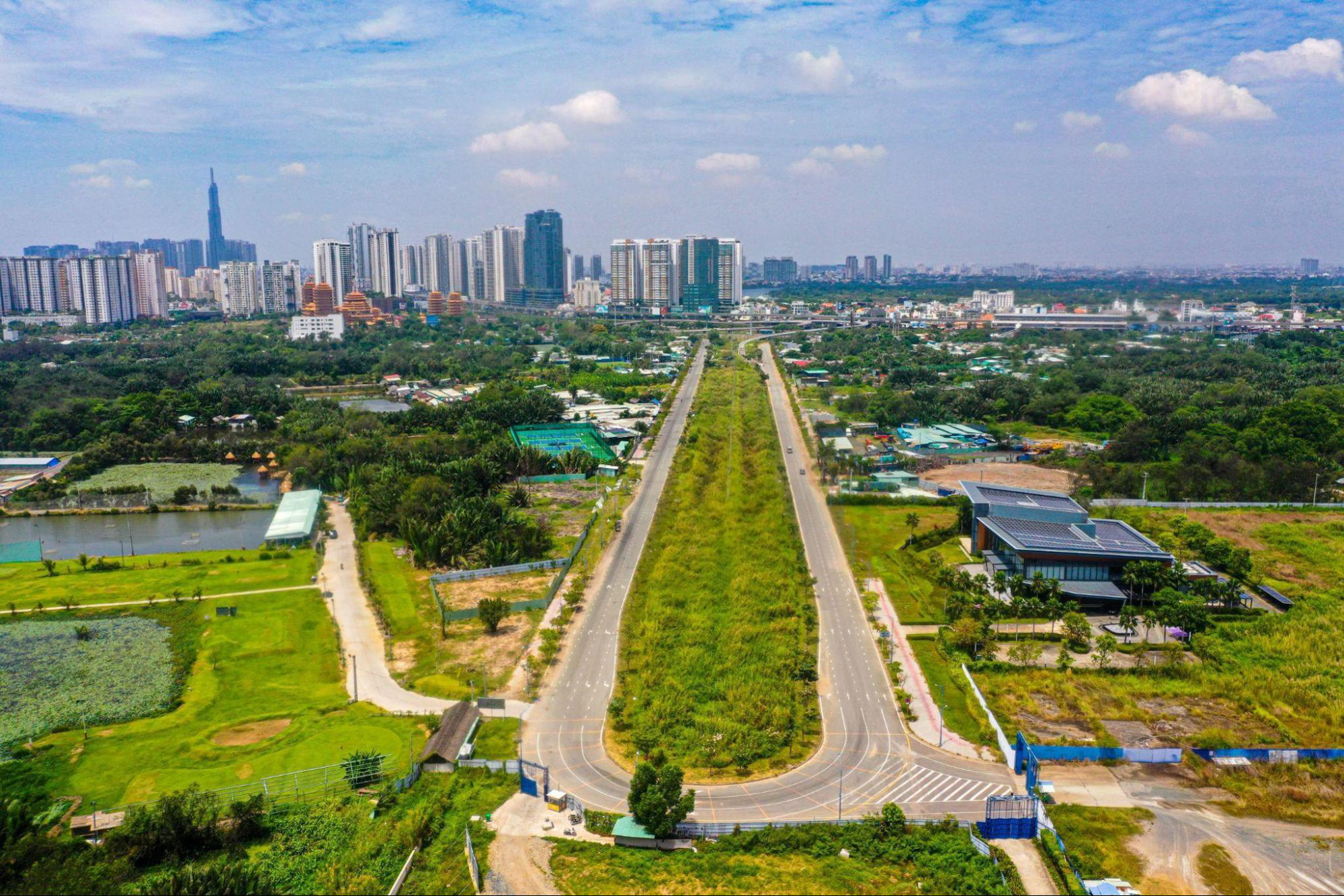
Similarly, the central stadium of the Rạch Chiếc National Sports Complex (50,000 seats) is part of a 187-hectare complex, highly regarded for its practicality. Located at the eastern gateway of Ho Chi Minh City, it is part of an emerging growth hub with major urban developments like The Global City, Vinhomes Grand Park, and Saigon Sports City…
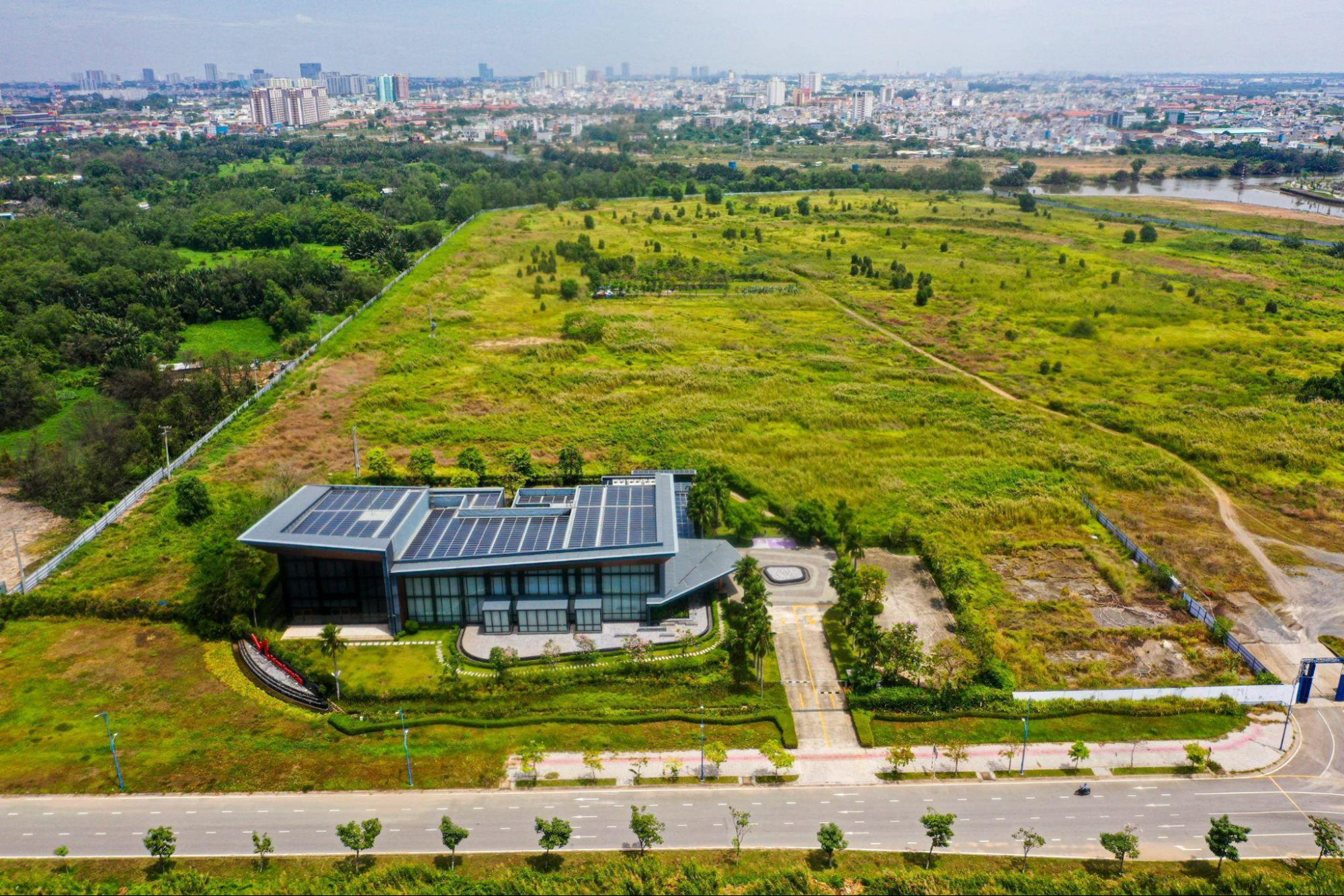
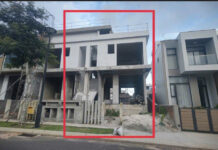
With an estimated investment of 7,000 billion VND for the main stadium, it is expected to have the highest regular utilization rate, hosting not only sports events but also large-scale concerts and entertainment for thousands of residents. The image shows the proposed stadium site.
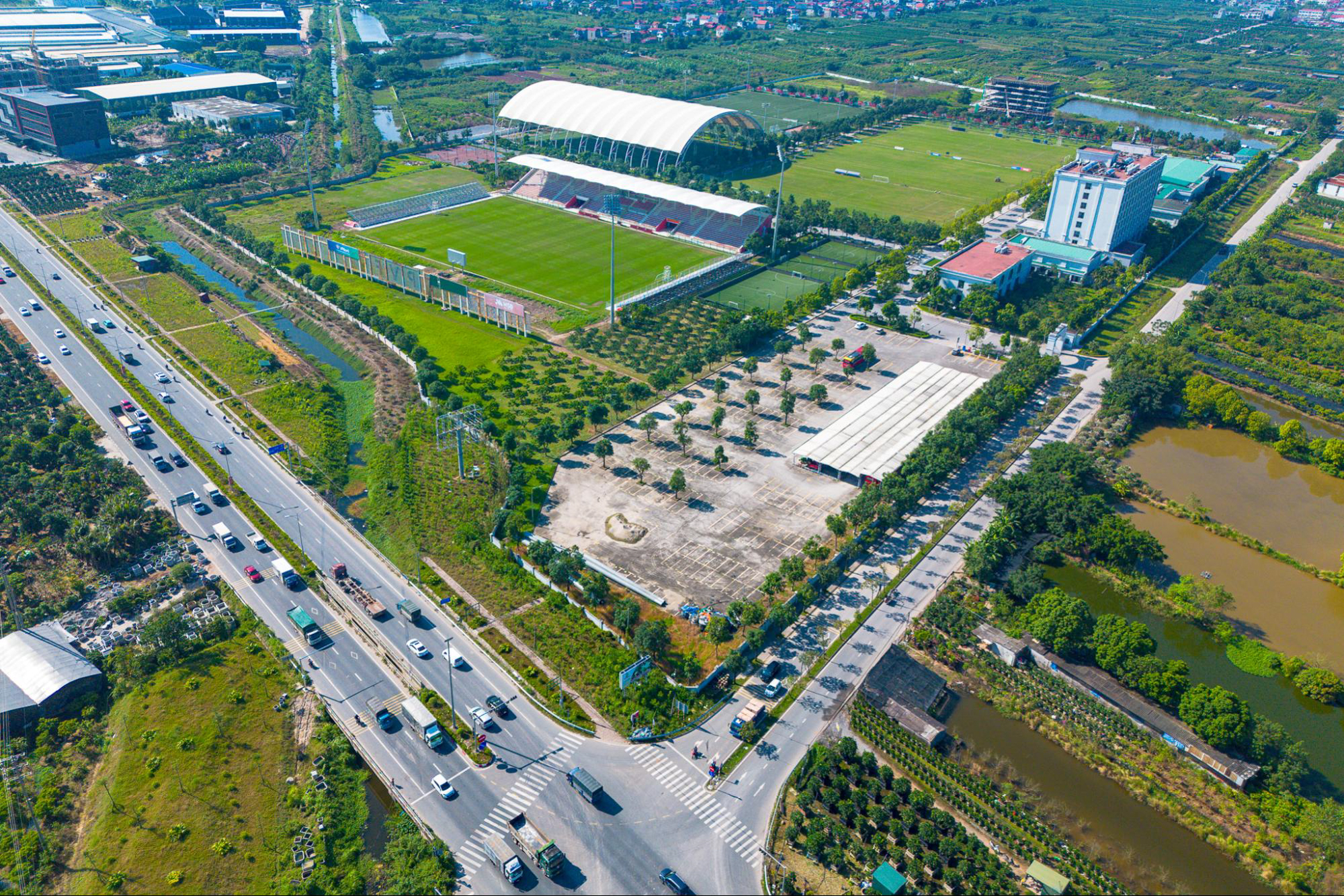
PVF Stadium (60,000 seats, 55,000 m²), funded by the Ministry of Public Security, is envisioned as foundational infrastructure capable of catalyzing development in Hanoi’s outskirts once transportation and satellite cities are completed, similar to many suburban stadiums worldwide.
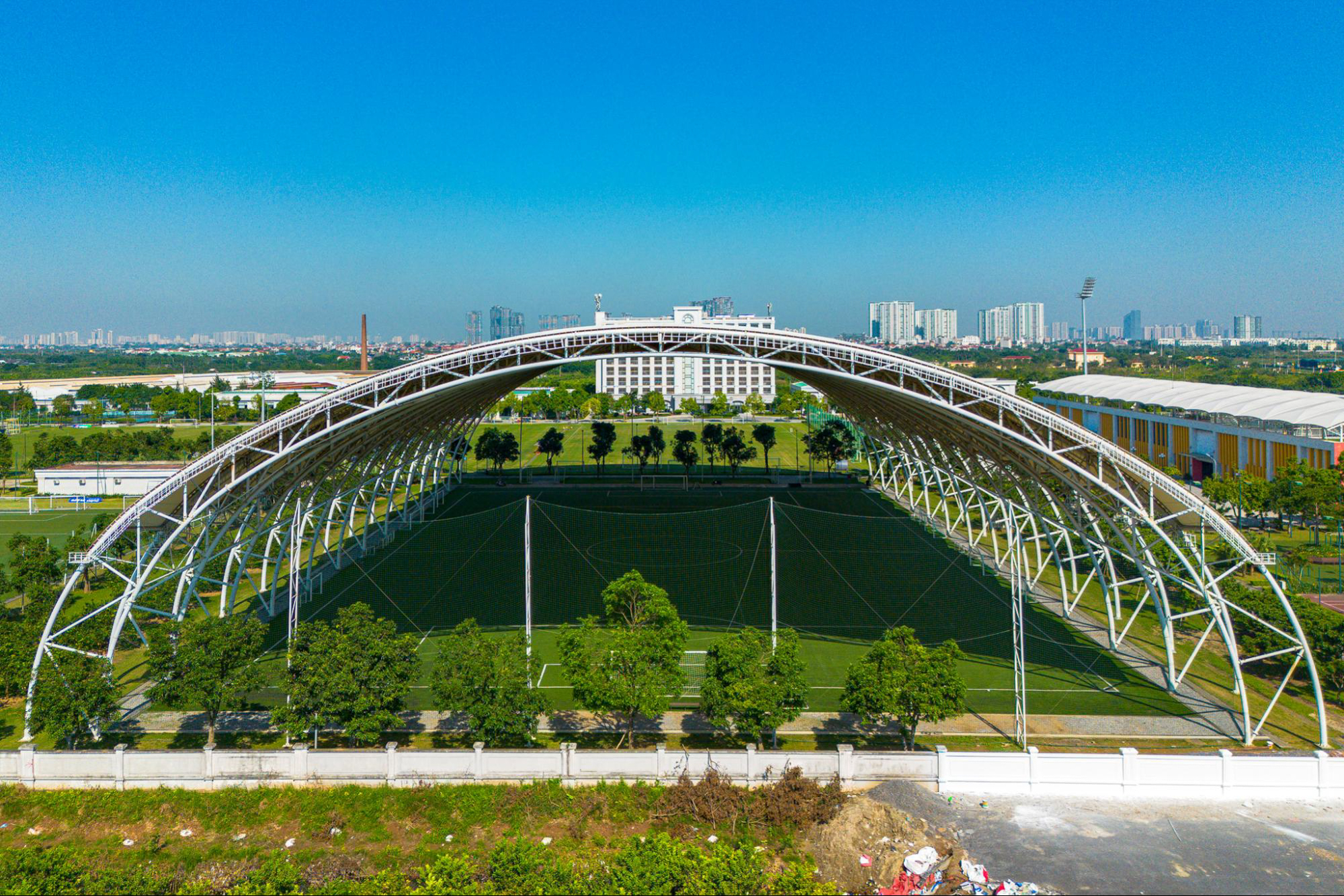
The project is located within a 92-hectare sports and services complex, part of the PVF Youth Football Training Center. In the future, this area will become a new connection point with major urban developments like Vinhomes Ocean Park 2, Vinhomes Ocean Park 3, and Ecopark.

In conclusion, these next-generation stadiums are not just sports venues but catalysts for economic growth, urban development, and national branding. Their strategic design and operation ensure they become sustainable assets, driving progress in their respective regions.
Exclusive Investment Opportunity: December 20-26, 2025 – 6 Mega Urban Projects with Over $2.1 Billion in Capital

During the week of December 20-26, 2025, four provinces attracted investment in eight projects, totaling over 54.6 trillion VND. Notably, six of these projects are urban developments, with a combined investment of more than 47.2 trillion VND. The most significant project is a nearly 24 trillion VND urban area in Dien Bien province.
Hồng An Ward: From a Transportation Hub to the Real Estate Epicenter of Western Hai Phong
Following the merger of Hai Duong and Hai Phong, the urban development structure of the Port City is being reshaped towards expanding space, polarizing functions, and forming new development hubs.
Luxury Real Estate: The Anchor Asset in the New Growth Cycle

In the new era of economic growth, luxury real estate is poised for significant expansion as the market enters a phase of repositioning between the value of living and the value of accumulation. The rise of the middle and upper classes is reshaping housing demand standards.
Contrasting Fates of Ho Chi Minh City’s Largest Land Projects: Vinhomes Surges Ahead with $1.1B Investment and Rapid Development, While Lotte Remains Stalled
While Vinhomes Can Gio spans an impressive 2,900 hectares, with land payments completed and development in full swing, Thu Thiem Eco Smart City remains stagnant at less than 8 hectares. Despite land prices exceeding 200 million VND per square meter, the project shows no signs of progress.
Proposed Addition of Five Metro Lines to Ho Chi Minh City’s Special Mechanism

The Ho Chi Minh City People’s Committee has proposed five new metro lines to the People’s Council for approval. These lines will connect the city to Long Thanh Airport, Thu Dau Mot, and Vung Tau, significantly expanding the urban rail network and fostering regional development.