


















January 1, 2026, marks a significant milestone in the toll collection roadmap for state-invested highways, including two vital routes connecting Ho Chi Minh City, Dong Nai, and Khanh Hoa: the Vinh Hao – Phan Thiet and Phan Thiet – Dau Giay highways.
Learning as We Go
The Vinh Hao – Phan Thiet highway, spanning 100.8 km through Lam Dong province, officially commenced operations on May 19, 2023. Meanwhile, the Phan Thiet – Dau Giay highway, stretching 99 km and linking Lam Dong with Dong Nai, began operations on April 29, 2023.
Both highways are part of the Eastern North-South Expressway Project (Phase 2017-2020), funded by the state budget, serving as crucial transportation arteries connecting the South Central region with the Southeast region and Ho Chi Minh City.
In an interview with Nguoi Lao Dong Newspaper, Mr. Pham Quoc Huy, Deputy Director of Project Management Unit 7 (Ministry of Construction), confirmed that these two highways are among the five routes scheduled to implement toll collection from January 1, 2026, as per the general directive. The Vinh Hao – Phan Thiet route will adopt a “0 VND” tolling model, testing the non-stop toll collection system to evaluate vehicle identification, data connectivity, and overall technical infrastructure stability.
According to Mr. Pham Quoc Huy, the official toll collection date will depend on the Ministry of Construction’s decision based on the trial operation results.
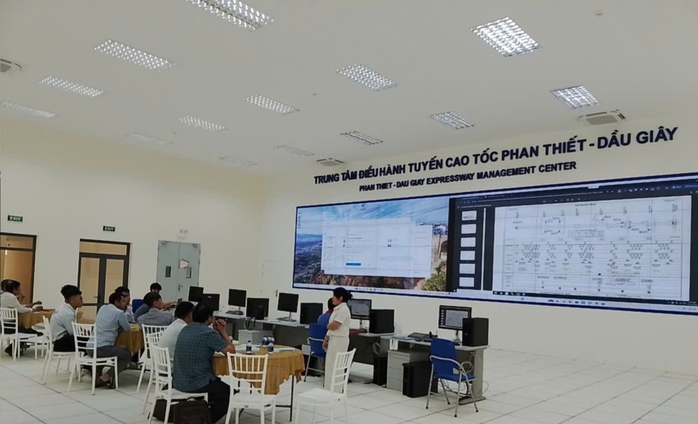
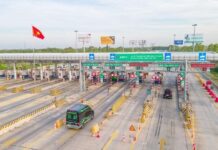
The Phan Thiet – Dau Giay highway control center is ready for toll collection from early 2026
Common Challenges
Regarding the absence of actual toll collection, Mr. Nguyen Khac Viet, Executive Director of the Vinh Hao – Phan Thiet highway project, explained that during the trial phase, the system will fully perform technical functions such as license plate recognition, load control, and vehicle tracking at entry and exit points.
Essentially, the toll collection system is ready, pending finalization of certain software and bank connectivity to ensure seamless data integration across highways.
However, Mr. Viet highlighted a significant challenge: persistent equipment theft. “Toll infrastructure has been repeatedly stolen, with the latest incident occurring yesterday. Despite apprehending three suspects earlier, theft continues,” he stated. He noted that the project has sent multiple requests to local authorities for cooperation, but theft persists, hindering stable system installation and operation.
For the Phan Thiet – Dau Giay highway, a representative from the Thang Long Project Management Board (Ministry of Construction) affirmed adherence to the official toll collection timeline. “Recently, a Ministry of Construction delegation inspected the site to assess the toll system’s readiness. The toll collection start date remains January 1, 2026, with no changes announced,” the representative stated.
This highway also faces equipment theft, including cables, lighting systems, and intelligent transportation infrastructure for toll collection.
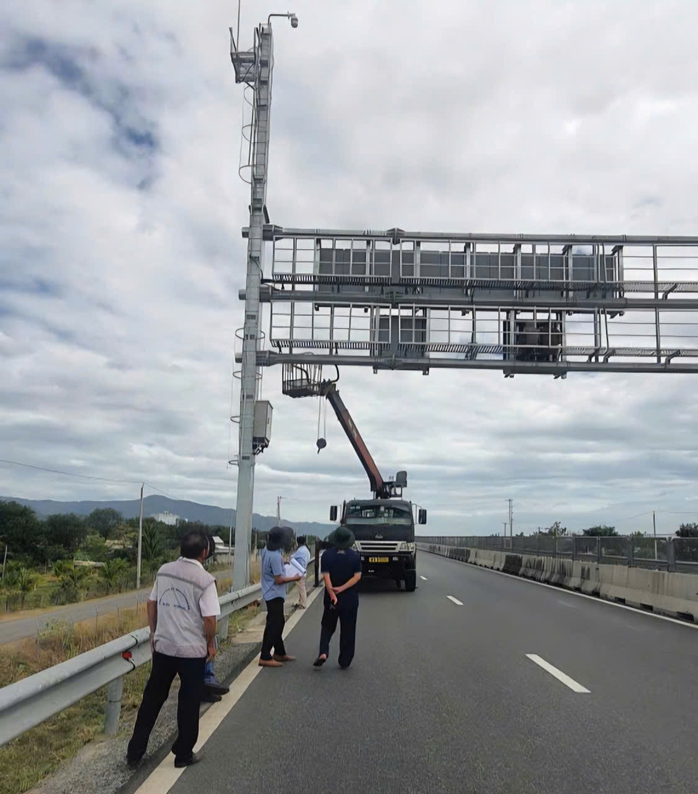
Completion of the non-stop toll collection infrastructure on the Vinh Hao – Phan Thiet highway
Fair Toll Rates
According to proposals by the Ministry of Construction, toll rates for state-invested highways are calculated per kilometer, based on each route’s technical conditions.
Management authorities of both highways assert that, compared to other toll routes, the proposed rates are not excessive. They are significantly lower than those of fully developed BOT highways, accurately reflecting the current infrastructure maturity.
For the Phan Thiet – Dau Giay highway, the proposed toll rate for group 1 vehicles is approximately 1,300 VND/km. The Vinh Hao – Phan Thiet highway has a lower rate, around 900 VND/km.
This disparity stems from differences in technical infrastructure. The Phan Thiet – Dau Giay highway features a more comprehensive design, including continuous emergency lanes, meeting higher technical standards for increased toll rates. The Vinh Hao – Phan Thiet highway lacks continuous emergency lanes, resulting in a lower proposed toll rate.
Many wonder why these highways, operational for nearly three years, are only now implementing toll collection…
Project management boards explain that the primary reason is the previous absence of a comprehensive legal framework and synchronized technical systems for non-stop toll collection on state-invested highways. The enactment of the 2024 Road Traffic Law and Decree 130/2024 provided the necessary legal basis for highway toll collection…
CII’s 9-Month Profit Plunges 78% Amid Absence of Investment Reevaluation Revenue
Net revenue declined, and the absence of a one-time financial gain caused the consolidated net profit of Ho Chi Minh City Infrastructure Investment Joint Stock Company (HOSE: CII) to plummet by 78% in the first nine months of the year.
Pilot Lane Separation and Speed Limits on the Phan Thiet – Dau Giay Expressway
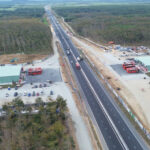
Starting October 27th, Vietnam’s Directorate for Roads will pilot a lane separation and speed adjustment scheme on the Phan Thiet – Dau Giay Expressway. Under this plan, heavy trucks exceeding 7.5 tons and passenger buses with more than 29 seats will be prohibited from using lane 1, the lane closest to the central median strip.
Ministry of Construction Finalizes Toll Collection Roadmap for Ring Road 3

The Ministry of Construction has urged Ho Chi-Minh City to develop a plan for asset utilization and prepare for the implementation of road usage fees on the Ring Road 3, in accordance with the latest regulations.
Toll Collection on North-South Expressway to Begin in January 2026
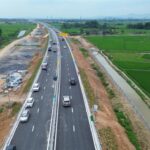
The Ministry of Construction has finalized the proposal and is set to implement toll collection across the entire North-South Expressway.
Revised Retirement Age Adjustments for Educators Under the New Law

The 2025 Education Law, effective January 1, 2026, introduces significant changes to retirement regulations for educators. Preschool teachers now have the option to retire earlier, while highly qualified educators can extend their careers by retiring at a later age.