


















At the recent seminar titled “Protecting National Financial Security in the Digital Age,” Dr. Lê Xuân Nghĩa, former Vice Chairman of the National Financial Supervisory Commission, emphasized the need to clearly define the global context when discussing financial security and cybersecurity. According to Dr. Nghĩa, the world has transitioned from “industrial capitalism” to “digital capitalism,” often referred to by international scholars as “surveillance capitalism.” While industrial capitalism generates value from factories, machinery, and labor, digital capitalism derives value from data, algorithms, digital platforms, and user behavior.
“Just as industrial capitalism once displaced the agrarian economy, digital capitalism is now digitizing the entire industrial capital framework. A defining feature of this model is its unprecedented speed of value accumulation. The oil, automotive, and steel magnates of the past pale in comparison to today’s digital tech giants, whose market capitalization can reach $4–5 trillion,” Dr. Nghĩa explained.
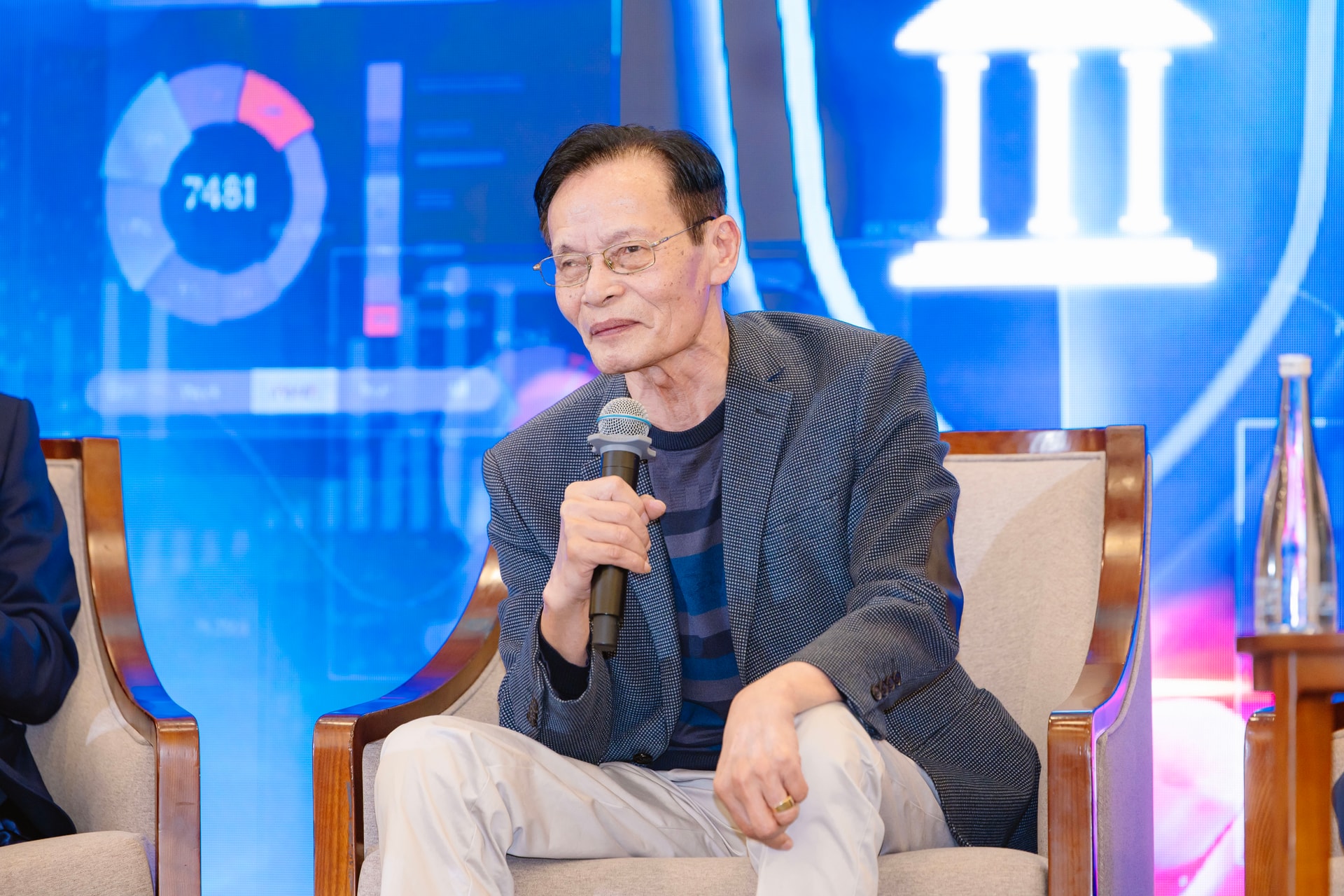
Dr. Lê Xuân Nghĩa highlights perspectives in finance and transaction activities (Photo: Financial and Monetary Market)
Beyond the scale of assets, Dr. Nghĩa identified data as the greatest risk of this era. Individuals increasingly expose their behaviors, habits, emotions, and choices online. Tech giants collect and leverage this data to influence human behavior on an unprecedented scale. He cited an example of a company claiming to possess 4,000–5,000 data points on a single American voter, enabling predictions and manipulation of political choices.
Personal data is not only harvested on social media but also through seemingly innocuous smart devices like smart TVs and interactive children’s toys. Despite promises of anonymity, Dr. Nghĩa warned that such data usage still poses risks of abuse, manipulation, and severe privacy breaches, threatening societal security.
In finance, data risks are even more critical. Digital transactions, money transfers, and payments generate detailed financial behavior data. If leaked or exploited, the consequences extend beyond financial loss to market manipulation, economic instability, and eroded public trust.
From this perspective, Dr. Nghĩa stressed that cybersecurity and financial security must be addressed within a long-term, macro context. He cautioned that cybersecurity is becoming one of the greatest threats of the digital age, prompting international scholars to question whether humanity can control “behavioral surveillance capitalism” as individuals face constant monitoring.
To tackle these challenges, Dr. Nghĩa outlined key strategic priorities for Vietnam:
First, data repositories must be treated as strategic assets, not mere technical infrastructure. They should be stored and processed in high-security zones to ensure long-term safety.
Second, cybersecurity and digital security require a professional security system. A dedicated, capable force is needed to gather, analyze, and share intelligence with international partners, enabling early risk detection and mitigation.
Finally, the UN Convention on Cybercrime, signed in Hanoi, offers Vietnam opportunities to enhance international cooperation and develop secure cybersecurity products, services, and software—a rapidly growing sector.
Dr. Lê Xuân Nghĩa concluded that with proper investment, this could emerge as a new economic sector, safeguarding national security while driving economic value.
Financial Prudence Era: Vietnamese Prioritize Safety Amidst Market Volatility

Amidst the ongoing global and domestic economic uncertainties in the final months of the year, Vietnamese individuals are increasingly prioritizing secure and transparent channels to safeguard their assets.
Prime Minister Outlines “5 Pioneers,” “5 Haves,” and “5 Have Nots” for Digital Economy and Society Development

On the morning of December 20th, Prime Minister Pham Minh Chinh chaired the 3rd National Forum on Digital Economy and Digital Society Development at the Government Office. The event centered around the theme: “Comprehensive and Inclusive Digital Economy and Society Development – Achieving Double-Digit Economic Growth Targets for 2026-2030.”
Secretary General: Hanoi is Beautiful and Hospitable, but Traffic Congestion Deters Visitors

Secretary General Tô Lâm remarked that Hanoi is a city of remarkable beauty, elegance, and hospitality. However, he noted that many are deterred from visiting due to concerns about traffic congestion.
FPT Ventures into Railway Technology, Investing $100 Million in Quantum and AI

FPT has announced a significant investment in five strategic technologies, alongside appointing a new wave of leaders to spearhead key industries.
Losing Real Money to Virtual Currency: Investors Left Penniless

Despite extensive experience in investment and technology, a seasoned investor lost their entire fortune to a fraudulent cryptocurrency exchange.