















In a highly open economy like Vietnam, macroeconomic fluctuations can have profound and widespread impacts on various economic sectors and the livelihoods of its citizens. To achieve macroeconomic stability, the role of monetary policy stands out as a cornerstone within the overall economic policy framework.
Amidst the pressures on interest rates and exchange rates in late 2025, and considering the high economic growth targets, we examine the global monetary policy trends and Vietnam’s stance. This analysis focuses on achieving macroeconomic stability and provides insights into monetary policy measures aimed at stabilizing the economy in 2026.
 Macroeconomic stability in 2026 will hinge on monetary policy aimed at controlling interest rates and exchange rates. Photo: LÊ VŨ |
The Importance of Macroeconomic Stability
Macroeconomic stability refers to maintaining a balanced economic state without significant fluctuations, avoiding issues like economic crises, high inflation, or elevated unemployment rates. The National Assembly’s resolution emphasizes “promoting growth while maintaining macroeconomic stability, controlling inflation, and ensuring major economic balances.” Thus, macroeconomic stability is a prerequisite for growth. While growth and stability can be mutually constraining, they are also interdependent and inseparable.
Stability fosters investment confidence, business operations, and foreign capital attraction, enabling sustainable growth. Conversely, pursuing high growth with unstable macroeconomic conditions, such as excessive money supply expansion, leads to inflation, erodes trust in the local currency, and increases demand for US dollars and gold. This destabilizes the foreign exchange market, raises interest rates, and increases debt burdens for businesses and individuals, ultimately hindering long-term economic growth. Prolonged instability renders growth-stimulating measures ineffective. Therefore, macroeconomic stability is crucial for sustainable economic development.
|
The State Bank of Vietnam (SBV) should shift from passive to active money supply management, based on targeted interest rates rather than liquidity demands from credit institutions. This approach would better control interbank interest rate volatility while managing credit supply through credit growth limits, ensuring controlled monetary expansion. |
Vietnam’s economy is highly open, with significant export-import volumes relative to GDP, and heavily credit-dependent, with large credit-to-GDP ratios. Adverse exchange rate and interest rate movements significantly impact the current account and credit quality. This can lead to current account deficits, rising non-performing loans, reduced investment, lower incomes, decreased consumption, and weakened GDP growth. As an emerging economy, Vietnam is vulnerable to financial market instability from significant exchange rate and interest rate fluctuations, potentially triggering capital outflows, currency depreciation, and inflation, risking economic crises.
This analysis focuses on exchange rates and interest rates, key macroeconomic variables, while setting aside other factors like domestic and international political changes. These variables are critical for Vietnam’s macroeconomic stability, and thus, monetary policy measures will center on managing them.
Macroeconomic Stability Amid Global Monetary Trends and High Growth Targets
As 2025 ends, global monetary policy trends show widespread easing, with the US Federal Reserve (Fed) cutting rates three times, bringing the target rate to 3.5-3.75%, the lowest in three years, and signaling cautious future reductions. As a key central bank influencer, the Fed’s actions limit the State Bank of Vietnam’s (SBV) rate-cutting room, given its policy rate alignment with the Fed. Maintaining stability remains challenging, though the Fed’s 0.75% cut this year eases some pressure amid tight exchange rate and interest rate conditions.
The 2026 GDP growth target, as per National Assembly Resolution 244/2025/QH15, is set at 10% or higher—an ambitious goal compared to previous periods and regional growth rates. The use of “strive” reflects a balance between growth ambition and stability. This target is pivotal for the 2026-2030 Socio-Economic Development Plan, marking Vietnam’s entry into a prosperous development era. Credit growth remains essential for achieving this goal. By November 27, 2025, credit growth reached 16.56%, with full-year estimates at 16-18%, outpacing deposit growth of 12-14%. This imbalance led to liquidity shortages and rising interest rates, particularly in the latter half of the year.
|
Controlled monetary expansion measures should be studied within a flexible policy framework, enabling proactive management of key macroeconomic variables like interest rates and exchange rates. |
In a growing economy targeting high expansion, interest rates need not remain low. Higher rates reflect strong capital demand, supported by robust business performance and rising incomes, ultimately driving GDP growth. Low rates are typical in weak or recessionary economies. Thus, higher rates are appropriate in a high-growth environment amid a global monetary easing cycle conclusion.
Exchange rate movements depend on international financial dynamics, domestic currency demand, and monetary policy objectives. Significant fluctuations destabilize financial markets, leading to asset sell-offs or economic crises. Macroeconomic stability assessment requires a multi-dimensional approach, considering global monetary trends, domestic growth goals, and overall macroeconomic policies. A stable environment can accommodate higher interest and exchange rates, provided they remain manageable and do not stifle investment and business activities.
Monetary Policy Measures for 2026 Macroeconomic Stability
As discussed, 2026 macroeconomic stability measures focus on monetary policy to control interest rates and exchange rates.
|
Macroeconomic stability in 2026 will hinge on monetary policy aimed at controlling interest rates and exchange rates. Photo: LÊ VŨ |
Exchange Rate Stabilization
Throughout 2025, the exchange rate trended upward despite the US dollar’s global weakness. The SBV intervened through forward currency sales, raised OMO lending rates, and implemented gold market cooling measures. The rise was driven by high dollar demand, tight bank liquidity, and the SBV’s low-interest-rate policy to boost growth, reducing demand for the Vietnamese dong. Domestic factors dominated exchange rate dynamics in 2025.
Positively, the Fed’s rate cuts and high dong interest rates increased the dong’s attractiveness relative to the dollar, easing exchange rate pressure. While foreign exchange supply remains adequate due to trade surpluses and FDI inflows, high dollar demand persists. Reducing this demand is key to stabilizing the exchange rate.
Measures should focus on reducing dollar demand by minimizing holding benefits. Dollar-collateralized loans, with low interest rates equivalent to dollar-dong swap rates (2-3.6% annually), encourage holding dollars for potential appreciation. The SBV should restrict dollar-collateralized lending by limiting borrowers, purposes, and monitoring usage, reducing dollar holding incentives. This mirrors the 0% dollar deposit rate policy since 2015 and gold market restrictions, treating dollars like non-interest-bearing assets.
Reducing dollar demand requires minimizing holding benefits. Allowing positive interest or cheap collateralized loans increases demand, requiring high dong rates to attract funds, potentially destabilizing financial markets and hindering growth.
Interest Rate Stabilization
Managing interest rates involves accepting higher rates within a controlled range, avoiding excessive increases that could destabilize financial markets. The SBV should increase open market operations (OMO) to stabilize interbank rates while using credit growth limits to control money supply and prevent inflation and speculative asset bubbles.
OMO remains the most flexible monetary tool. Average daily OMO lending in 2025 was VND 91 trillion, indicating significant market liquidity support. The SBV could extend OMO operations to longer terms, such as one-year repos against government bonds at target rates, using stable bond holdings as collateral.
This approach shifts OMO from short-term liquidity management to a longer-term tool, better controlling interbank rate volatility. The SBV can neutralize excess liquidity through bond issuance at target rates, managing rates within a controlled band. This ensures stable interbank rates, supporting broader market rates and government bond yields, facilitating fiscal expansion.
This policy does not resemble yield curve control or quantitative easing but involves active, controlled bond purchases. Credit growth limits prevent inflationary pressures from excessive money supply.
Shifting to active money supply management based on target rates enhances control over interbank rates and credit supply, ensuring a stable yet flexible policy framework. Stabilizing interbank rates supports overall financial market stability and government bond market development, fostering macroeconomic stability.
These measures address “policy instability amidst stable macroeconomics.” While macroeconomic stability is key to sustainable growth, policy unpredictability can disrupt markets. Controlled monetary expansion within a flexible framework enables proactive management of interest rates and exchange rates, reducing policy-induced uncertainty.
Mai Ka
– 19:00 28/12/2025
National Financial and Monetary Policy Advisory Council Recommends Government Against Expanding Monetary Policy in 2026

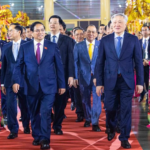
On the afternoon of December 26th, Deputy Prime Minister Ho Duc Phoc, Chairman of the National Financial and Monetary Policy Advisory Council, presided over the Council’s meeting.
What Drives the Record-Breaking $900 Billion Milestone in Import-Export Trade?

Vietnam’s total import-export turnover has officially surpassed the $900 billion mark, reaching an all-time high. This remarkable growth is primarily driven by the significant contributions of foreign direct investment (FDI) enterprises.
Deputy Minister of Construction: ‘Real Estate Market to See Positive Developments in 2026’

A wave of resolved bottlenecks in real estate projects, coupled with the development of affordably priced housing, is expected to boost supply and drive positive change in the real estate market for 2026.
Why People Are Rushing to Deposit Money in Banks

After lingering at record lows for an extended period, the financial markets are witnessing a fierce interest rate battle as the year draws to a close. Not only are private banks joining the fray, but even the “Big 4” institutions are actively participating, prompting a significant shift in idle cash held by residents.
Deputy Prime Minister Hồ Đức Phớc Chairs National Financial and Monetary Policy Advisory Council Meeting

On the afternoon of December 26th, Deputy Prime Minister Ho Duc Phoc, Chairman of the National Financial and Monetary Policy Advisory Council, presided over the Council’s meeting.