
















This is a pivotal moment as the legal framework gradually solidifies, policies begin to take effect, and capital shows signs of returning, while buyer and investor sentiment remains cautious.
Together, these factors create a multifaceted market landscape, offering both hopes for recovery and a reminder of the necessary prudence after a period of significant volatility.
Legal Framework “Steps In” Synchronously, But Delays Persist
This year, the Land Law, Housing Law, and Real Estate Business Law came into effect and were implemented in practice, hailed by experts as a “regulatory milestone” for the market. The new regulations aim to enhance land use transparency, standardize business conditions, and tighten controls on risky activities like widespread land subdivision for sale.
However, many experts argue that the impact of the new laws won’t be immediate. At a recent event, Dr. Can Van Luc, Chief Economist at BIDV and a member of the Prime Minister’s Policy Advisory Council, pointed out that the market’s biggest challenge over the years has been “implementation delays.”
The rollout of new regulations depends on guiding decrees, circulars, and coordinated efforts among local authorities. This explains why, despite the laws taking effect, supply in the first half of the year hasn’t significantly improved.
Recently, the National Assembly adopted Resolution No., outlining mechanisms and policies to address difficulties and obstacles in implementing the Land Law. These include expanding state land reclamation cases, applying a unified land price table, reducing land use fees when converting to residential land, and relaxing conditions for housing and urban projects, thereby creating more room to unblock market bottlenecks in the coming period.
Social Housing: A Rare Bright Spot in 2025
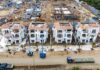
Amid numerous challenges, social housing has emerged as the segment with the most noticeable progress. According to the Ministry of Construction, by the end of 2025, the country completed over 102,600 social housing units, surpassing the government’s target.
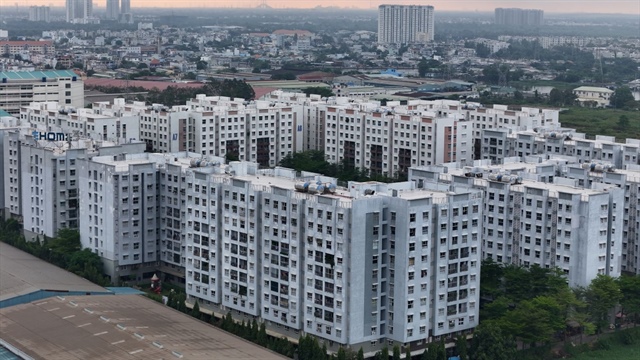
Social housing is one of the bright spots in the real estate sector in 2025. Photo: Le Vu |
Experts attribute this result to a shift in policy mindset, as the government moves from “encouragement” to “setting targets and taking responsibility.” Pilot decrees for special social housing mechanisms and the establishment of the National Housing Fund are expected to address immediate challenges and lay a long-term foundation for affordable housing.
Despite positive quantitative results, social housing still faces practical access challenges. Most completed projects in 2025 are located in suburban areas, where transportation infrastructure and public services are not yet synchronized, increasing living and commuting costs for buyers.
Additionally, access to preferential loans remains a significant barrier. Complex approval procedures, stringent income verification requirements, and lengthy disbursement times make it difficult for low-income and informal workers to meet conditions. In some projects, the emergence of intermediary brokers for housing slots highlights policy allocation and access inefficiencies.
For developers, low profit margins and lengthy investment procedures make social housing less attractive. Experts suggest shifting focus from quantity to quality, project location, practical accessibility for residents, and administrative procedure transparency and reform.
Apartments “Less Scarce,” But Prices Remain Out of Reach
2025 saw a notable market paradox: apartment supply improved compared to 2022-2023, but prices continued to soar, increasingly outpacing buyers’ purchasing power.
According to the Vietnam Association of Realtors (VARS), apartment prices in Hanoi and Ho Chi Minh City remained at record highs, primarily due to new supply concentrating in high-end and luxury segments, while mid-range and affordable options became scarcer.
Market reports show that, despite a strong increase in new apartment launches in 2025, over 70% of supply in the two major cities was priced above VND 60 million/m², with many projects exceeding VND 100 million/m². This has led to a market situation that is “less quantity-scarce but severely imbalanced in structure,” as real demand remains unmet.
At a recent event, Dr. Can Van Luc, Chief Economist at BIDV, attributed the sharp rise in property prices from 2019 to 2025 to a combination of factors, including prolonged legal obstacles stifling supply, rising input and financial costs, and developers prioritizing high-end projects for profit optimization.
Speculation, price manipulation, and a lack of strong tax tools to regulate the market have also contributed to the price surge. In the first 11 months of 2025, apartment prices in Hanoi and Ho Chi Minh City rose by over 20% on average, far outpacing income growth.
Consequently, the housing challenge has become increasingly daunting, especially for young people and urban workers. With average incomes of VND 10-12 million/month, owning commercial apartments in major cities is nearly impossible for most buyers, particularly as mortgage interest rates trend upward.
Inventory – A Persistent Bottleneck for Real Estate Developers
Despite some recovery signs in 2025, inventory pressure remains a significant challenge for many real estate developers. The number of unsold properties in projects was approximately 26,717 in Q3-2025, according to local reports submitted to the Ministry of Construction.
Data from VietstockFinance shows that the total inventory of 104 listed real estate companies on HOSE, HNX, and UpCom reached nearly VND 499 trillion by the end of September 2025, a 26% increase from the beginning of the year.
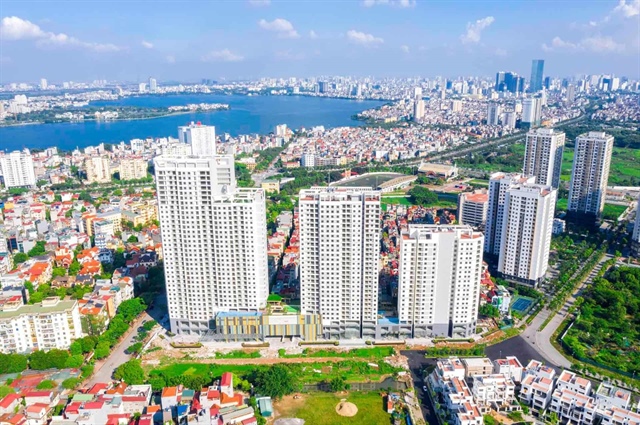 Social housing is one of the bright spots in the real estate sector in 2025. Photo: Le Vu |
Experts note that the current large inventory is partly a “legacy” of the market’s overheated phase, when project portfolios heavily favored mid- to high-end segments, investment cycles were long, and reliance on loans was high. Additionally, some inventory reflects a strategy of holding stock in anticipation of improved liquidity and legal issue resolution, rather than aggressively selling in a weak demand context.
As real demand shifts toward affordable housing, the absorption capacity for existing inventory becomes limited, prolonging cash flow pressure on developers. In response, many have delayed project timelines, restructured portfolios, or adjusted sales strategies to improve capital turnover and reduce financial burdens.
While the bond and credit markets showed signs of revival in 2025, capital remains tightly controlled, favoring projects with complete legal frameworks and clear sales potential. This makes it difficult for large, low-liquidity inventory projects to access new funding.
Addressing this “inventory clot” will be a prolonged process, requiring developers to restructure more aggressively and policies strong enough to restore the market’s focus on meeting real housing needs.
Mega-Projects and Urban Structure Reshaping
2025 marked a wave of large-scale urban area groundbreakings in localities like Hanoi, Quang Ninh, Khanh Hoa, and Ho Chi Minh City. These mega-projects, ranging from hundreds to over 1,000 hectares with investments totaling billions of USD, are developed as integrated urban models linked to key infrastructure and amenities.
This trend indicates that Vietnam’s real estate sector is entering a development phase based on scale and long-term vision, moving away from small, fragmented projects.
According to Dr. Nguyen Van Dinh, Vice Chairman of the Vietnam Real Estate Association (VARS), the emergence of mega-projects is an inevitable step in deepening urbanization.
Beyond increasing supply, these large-scale urban areas aim to create modern living spaces meeting international standards, attracting domestic and foreign investment.
Notably, the mega-urban wave is increasingly linked to urban rail development and Transit-Oriented Development (TOD) models.
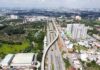
In the past year, Hanoi launched two key metro lines: Nam Thang Long – Tran Hung Dao and Van Cao – Hoa Lac. Ho Chi Minh City started the Ben Thanh – Can Gio line and is preparing to implement metro line 2 (Ben Thanh – Tham Luong). According to approved plans, thousands of hectares of TOD zones will develop along these lines.
Connecting mega-projects with TOD is expected to open new urban development spaces, helping to decentralize populations from city centers, reduce infrastructure and housing price pressures, and lay the foundation for long-term multi-centered urban models and economic corridors.
Binh Duong
– 10:00 29/12/2025
Revolutionizing Affordable Housing: Testing Social Housing Models Along High-Speed Rail Networks

The innovative vertical integration of transportation infrastructure and housing is poised to revolutionize urban development. By seamlessly merging these elements, this model promises to address the critical issue of limited urban land, significantly reduce investment costs, and accelerate construction timelines, offering a sustainable solution for modern cities.
FLC to Launch Affordable Housing Units by Former Chairman Trinh Van Quyet, Averaging 19 Million VND per Square Meter

Discover your dream home at FLC Tropical City Ha Long! The developer is now accepting applications for social housing from January 28 to February 28, 2026, with anticipated handover of units in Q3 2026. Don’t miss this opportunity to own a piece of paradise. Apply today!
Government Inspectorate’s Recommendations for the Golden Hills City Da Nang Project

The Government Inspectorate has recently concluded its inspection of projects facing challenges in Da Nang, including the Golden Hills City project. The Inspectorate has issued several recommendations to address the issues identified within this specific development.
Skyrocketing Home Prices Force Young Adults to Rethink Housing Solutions
As the supply of apartments continues to surge with high-rise condominiums densely lining major thoroughfares in Ho Chi Minh City, skyrocketing housing prices far outpace income levels, compelling young residents to rethink their traditional living arrangements.
Homie City: Where Livability Meets Investment Potential

Awarded the prestigious “Most Livable Project 2025,” Homie City transcends mere living spaces, embodying a visionary approach to long-term investment value. It stands as a testament to real estate innovation, prioritizing genuine residential needs as the cornerstone of sustainable profitability.