


















Illustrative Image
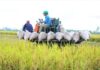
Cambodia exported 801,643 tons of milled rice to international markets in the first 11 months of 2025, a 39% increase compared to the same period last year (575,562 tons), according to a press release by the Cambodia Rice Federation (CRF) on December 25.
Revenue from milled rice exports during this period reached $526.47 million, a 27% rise from $413.9 million in the same period of 2024. A total of 65 Cambodian rice export companies shipped rice to 72 countries and territories, with China remaining one of the primary import markets.
In terms of product breakdown, 65.15% of the exported rice was fragrant rice, 16.07% was broken rice, 14.79% was white rice, 2.07% was parboiled rice, 1.46% was organic rice, and 0.46% consisted of other rice varieties.
Mr. Penn Sovicheat, Deputy Minister of Commerce and Spokesperson, stated that trade agreements such as the RCEP and the Cambodia-China Free Trade Agreement have provided a solid foundation for Cambodia’s agricultural exports, particularly rice and high-quality fruits like bananas, mangoes, longans, pepper, and durian. These products are exported to China with preferential tariffs, enhancing their competitiveness in the international market.
Recently, the Ministry of Agriculture, Forestry, and Fisheries held a working meeting with a Philippine business delegation to explore the potential for direct rice purchases from Cambodia. The meeting, chaired by Minister Dith Tina, was conducted in close collaboration and with direct support from the agricultural ministries of both countries.
The Philippine delegation was led by Mr. Joseph Rudolf Lo, Chairman and CEO of Food Terminal Incorporated. The company is seeking options to directly procure Cambodian rice for the Philippine market, creating an additional export channel for Cambodian farmers.
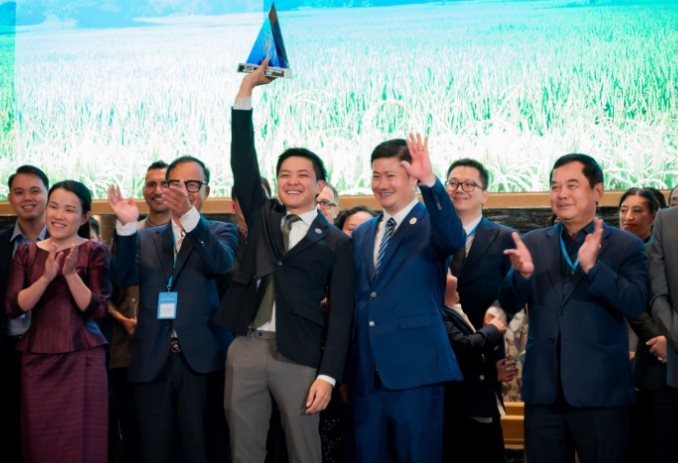
In 2025, Cambodia continued to solidify its reputation for premium fragrant rice as the “Angkor Jasmine” brand won the “World’s Best Rice” title for the seventh consecutive year at the 2025 World Rice Conference, held in Phnom Penh from November 7 to 9. Experts praised Cambodian fragrant rice for its distinctive aroma, tenderness, and flavor, which consistently impress international judges and consumers.
However, the International Rice Research Institute (IRRI) warned that major rice exporters are competing by significantly reducing prices to maintain market share and clear inventories. In a context of oversupply, companies that cut production early may gain an advantage, while those that reduce output later risk facing sharper price declines, potentially leading to the lowest rice prices in years.
Thai Rice Prices Surge to Near Four-Month High
In Asia, Thai rice prices surged to their highest level in nearly four months amid concerns over supply disruptions caused by flooding.
Prime Minister: Vietnam Fully Supports and Implements Commitments Under the RCEP Agreement

Vietnam’s Prime Minister emphasizes the country’s commitment to the RCEP agreement, viewing it as a vital “bridge” that enables economies at various development stages to mutually benefit, foster self-growth, and strive for shared prosperity.
3 Years of RCEP: Asserting the Role in an Open Economy
The Regional Comprehensive Economic Partnership (RCEP) is an ambitious free trade agreement between 15 countries, spanning from the vibrant markets of East and Southeast Asia to the economic powerhouses of Australia and New Zealand. This dynamic partnership brings together 10 member states of the Association of Southeast Asian Nations (ASEAN) alongside China, Japan, South Korea, Australia, and New Zealand.
The Neighbor Sells National Specialties Worth Nearly $3 Billion, Vietnam 6.5 Times More
“Intriguingly, Vietnam also partakes in a reciprocal trade relationship with its neighboring countries, importing unique produce and goods that enrich its own cultural tapestry.”