













The Department of Agriculture and Environment of Ho Chi Minh City has recently submitted an official dispatch to the Ministry of Agriculture and Environment, providing feedback on the draft decree detailing and guiding certain articles of the National Assembly’s regulations. These regulations aim to address challenges and obstacles in implementing the Land Law.
Challenges in Applying Land Price Tables
In the dispatch, the department proposes adding specific cases where land prices should be applied based on the potential development of projects according to land use structure and construction planning. This includes projects with multiple purposes and the formation of internal roads within the project area.
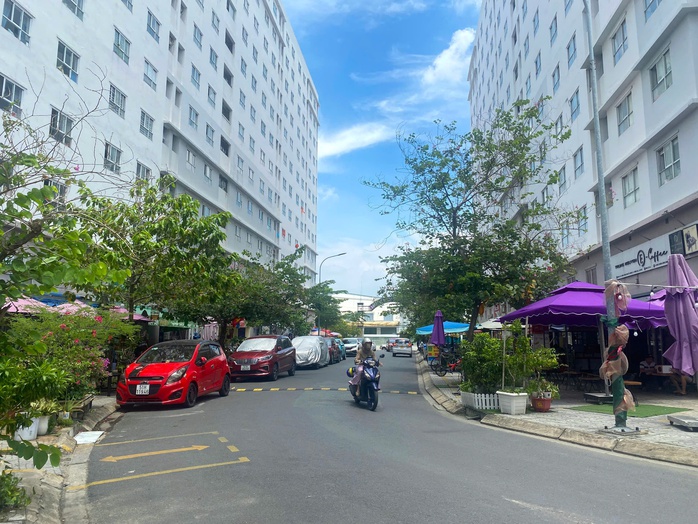
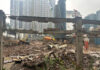
The Department of Agriculture and Environment of Ho Chi Minh City suggests solutions to prevent soaring housing prices.
Additionally, the proposal includes projects with a minimum area of 2 hectares in Hanoi and Ho Chi Minh City, 5 hectares in centrally governed cities, and 10 hectares in provinces. It also covers projects with unique characteristics that cannot be determined using land price tables or adjustment coefficients set by provincial People’s Councils.
The department explains that within a single project, there are often multiple purposes, and new roads may be formed according to construction planning. At the time of land price determination, these roads do not yet exist, making it impossible to include them in the land price table. The mixed-use nature of such projects also prevents the application of price tables multiplied by adjustment coefficients.
Furthermore, projects require significant costs and time for implementation. Due to complexities in applying relevant legal regulations and differing interpretations among competent authorities, project deployment often faces delays.
As a result, land price adjustment coefficients cannot account for these factors, leading to excessively high land prices.
Driving Prices to Avoid Losses
The department cites an example of a 1-hectare plot on Nguyen Xien Street (former Thu Duc City), with a land price of 56.6 million VND per square meter and an adjustment coefficient of approximately 1.4, resulting in a price of around 80 million VND per square meter.
If this adjusted land price is applied, land reclamation, allocation, and changes in land use purposes would all be based on the 80 million VND per square meter rate.
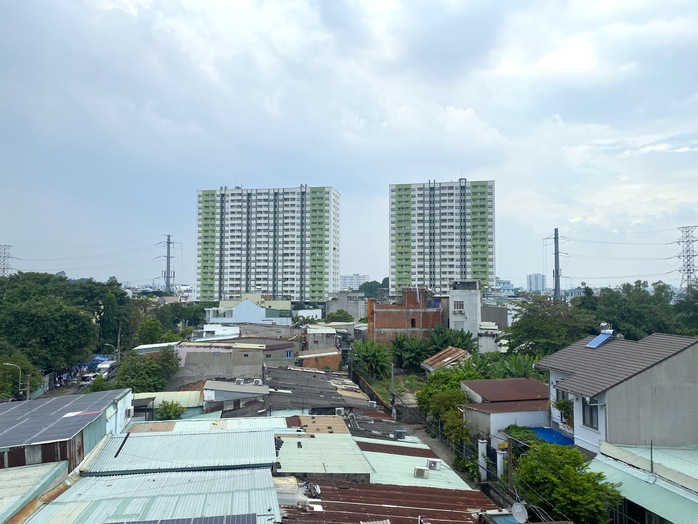
If land price tables multiplied by adjustment coefficients are applied, businesses must raise housing prices to avoid losses.
Consider a high-rise residential project with a land area of 10,000 square meters and a land use coefficient of 7. The current apartment price is 50 million VND per square meter.
With a two-year project duration, after deducting costs for sales, management, loan interest, construction, and other expenses, the surplus value is approximately 35 million VND.
However, based on the adjusted land price of 80 million VND per square meter, businesses would need to set selling prices above 70 million VND per square meter to avoid losses.
Similarly, another example is a 1-hectare plot on Dang Cong Binh Street (former Hoc Mon District), with a land price of 18.5 million VND per square meter and an adjustment coefficient of approximately 2, resulting in a price of around 37 million VND per square meter.
For a residential project with a land area of 10,000 square meters and a land use coefficient of 7, the apartment price is 40 million VND per square meter.
Calculations show a surplus value of approximately 9 million VND, while the adjusted land price is 37 million VND per square meter. To avoid losses, businesses would need to set selling prices above 70 million VND per square meter.
Based on these analyses, the Department of Agriculture and Environment concludes that determining land prices by multiplying price tables with adjustment coefficients is inappropriate. Careful and thorough research is needed to analyze the economic impacts of such applications.
After reviewing over 300 pilot projects under Resolution No. 171/2024 (piloting commercial housing projects through land use rights agreements), the department found that most projects are under 2 hectares. Therefore, allowing provincial People’s Councils to set specific land pricing regulations in accordance with the Land Law would better align with local realities.
“Supply Shortages and Price Gouging: How New Brokerage Models Are Driving Up Costs”

David Jackson, Managing Director of Avison Young Vietnam, highlights a concerning trend in the market. He notes that many brokerage firms are purchasing large volumes of properties directly from developers and then redistributing them. This concentration of inventory in the hands of a few distributors can artificially inflate prices and create a false sense of scarcity.
HoREA Deems 30-50% Conversion Fee to Residential Land as Excessive
The HoREA highlights that collecting land-use conversion fees at a rate of 30-50%, amidst soaring residential land prices and anticipated declines in agricultural land values, imposes significant financial strain on households seeking to transition land use.
Deputy Prime Minister Urges Caution in Implementing Land Price Tables and Adjustment Coefficients

Deputy Prime Minister Trần Hồng Hà emphasized that, in the absence of comprehensive market data and a realistic land price table, it is imperative to strictly adhere to the specific land valuation methods outlined in the Land Law.
Four Scenarios Where Compensation is Not Granted When the State Reclaims Land from 2026
In Resolution 254, effective from 2026, the National Assembly outlines cases where no land compensation is granted when the State reclaims land, addressing challenges in the implementation of the Land Law.
Vietnam’s Real Estate Market Boasts Nearly 3,300 Projects with a Combined Investment of $320 Billion
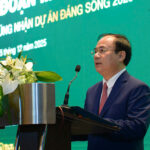
Deputy Minister of Construction Nguyễn Văn Sinh revealed that nationwide, there are 3,297 projects encompassing 5.9 million units with a total investment value of 7.42 quadrillion Vietnamese dong.