



















As major cities like Hanoi and Ho Chi Minh City move towards restricting fossil fuel-powered motorbikes, the electric motorbike market is poised for explosive growth in the near future.
Similar to electric cars, the primary concern for electric motorbike users is battery charging. Consequently, battery swapping stations are emerging as a preferred solution, championed by manufacturers as an optimal approach for two-wheelers.
VinFast stands out as a leader in this domain, with plans to deploy 150,000 battery swapping stations nationwide. The initiative began with 1,000 stations in October 2025, expanding to 50,000 by year-end.
In Hanoi, VinFast’s swapping stations are already operational on major streets such as Tran Khanh Du, Kim Ma, and Tran Dai Nghia. Strategically placed in high-traffic areas like wide sidewalks and near bus stops, these stations are easily accessible.
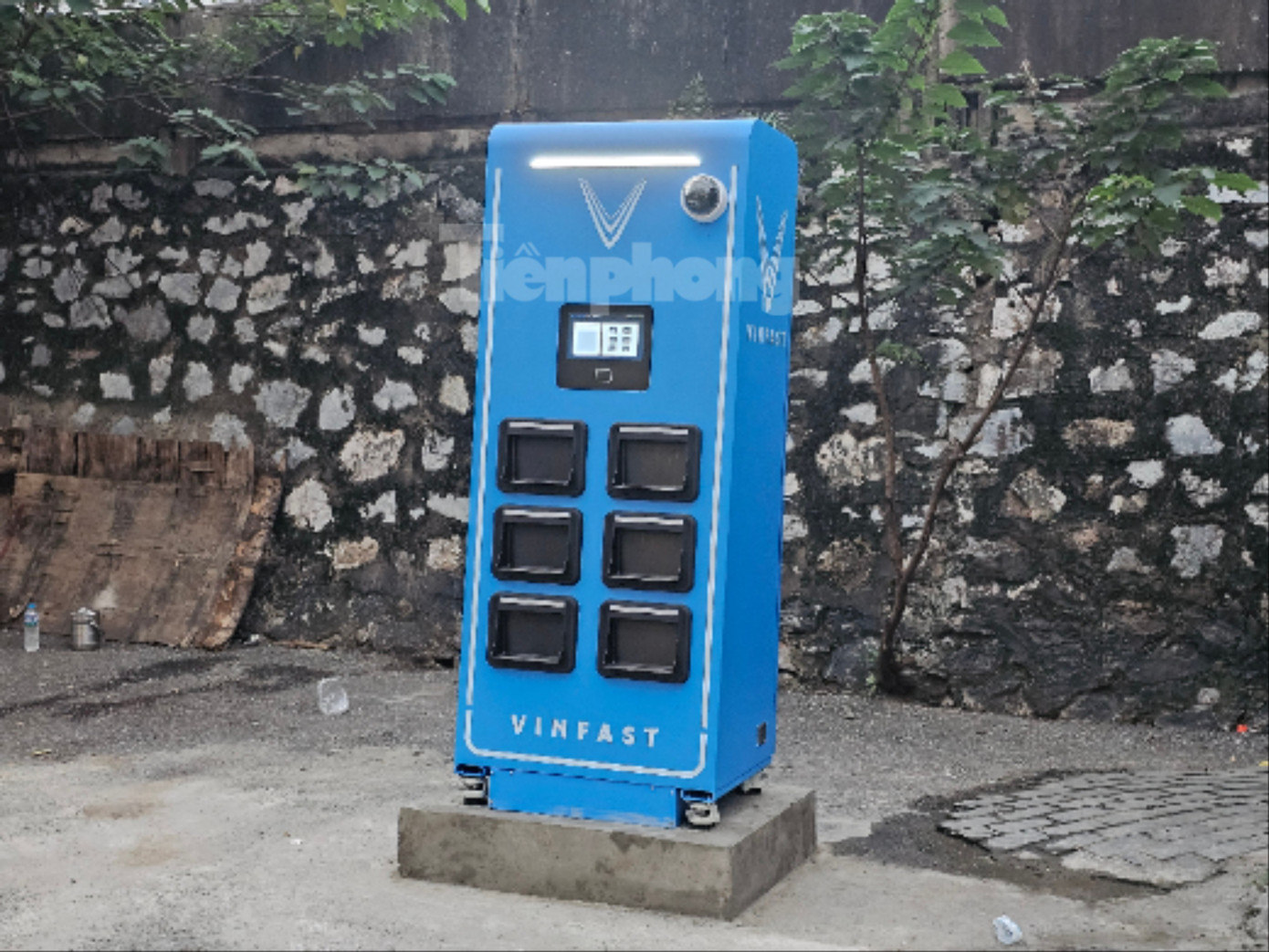
VinFast’s battery swapping station on Tran Khanh Du Street, Hanoi. Photo: Le Tuan
Through V-Green, VinFast has also partnered with electronics retailers like The Gioi Di Dong and FPT Shop to install swapping stations. However, these stations are currently only connected to the power grid, with battery swapping functionality pending the launch of VinFast’s electric motorbikes in early 2026.
This isn’t VinFast’s first foray into battery swapping. In late 2018, the company piloted a similar system for its Impes, Ludo, and Klara S models at supermarkets and convenience stores. The program was discontinued after a few years due to underwhelming performance.
Selex Motor has been operating a battery swapping network since April 2023, with 90 stations nationwide. However, its brand recognition remains limited, as its electric motorbikes primarily target delivery drivers.
Most recently, Honda Vietnam unveiled the Honda Power Pack Exchanger e: at an event in Ho Chi Minh City. The system is slated to launch in early 2026 at authorized Honda dealerships (HEAD).
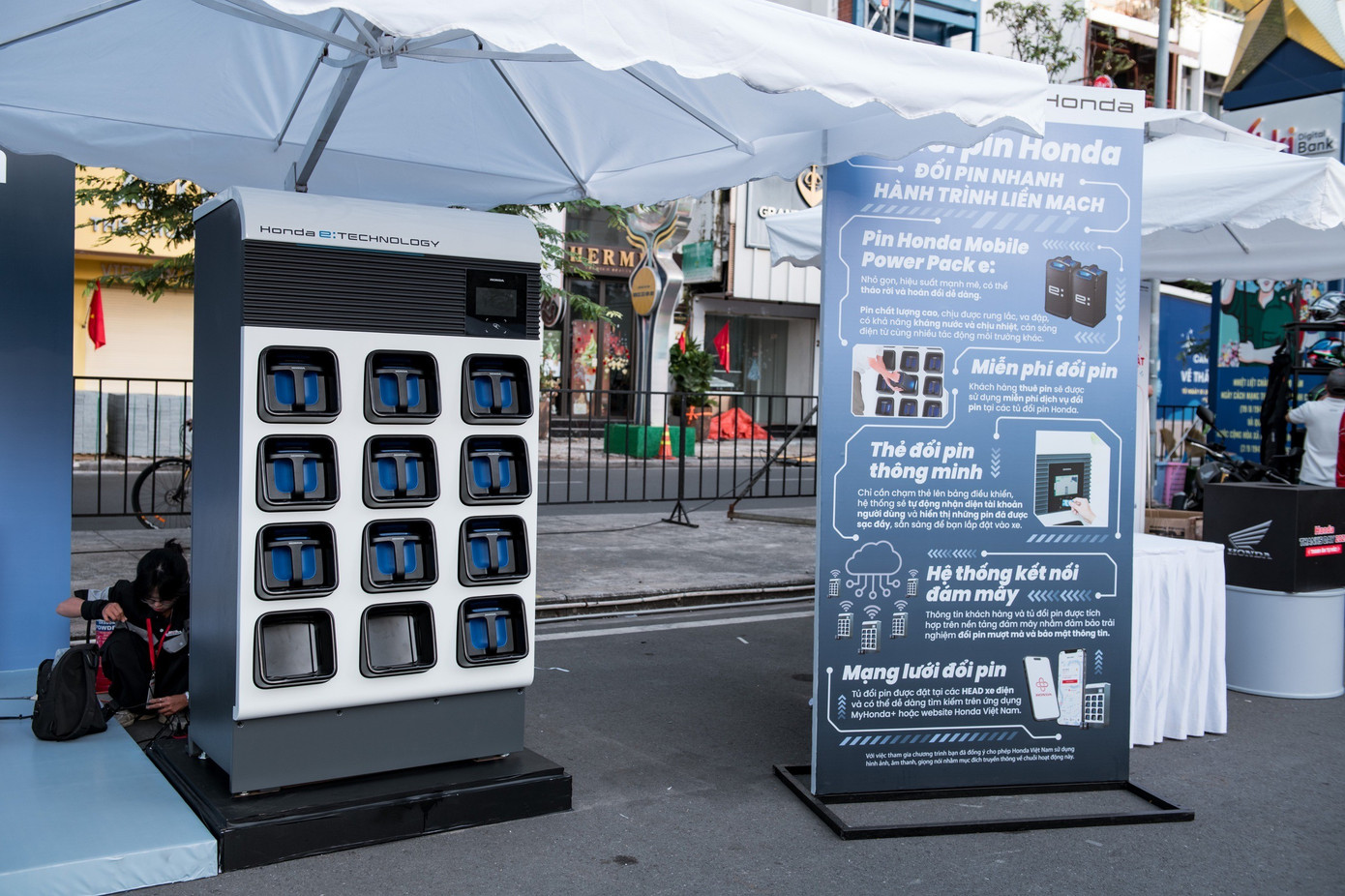
Honda Power Pack Exchanger e: showcased in Ho Chi Minh City in mid-December. Photo: Honda Vietnam
Honda Vietnam currently offers swappable battery electric vehicles, including the CUV e: (available for lease since July 2025) and the Benly e: delivery bike, adopted by Vietnam Post and Lotteria since 2021.
For the CUV e:, battery swapping services are available at 19 HEAD locations in Hanoi, Ho Chi Minh City, and Da Nang. However, these dealerships currently use standard single chargers instead of swapping stations.
TMT Motors announced in July 2025 its entry into the electric motorbike market, including plans for a public charging and swapping network. Details remain undisclosed.
Experts highlight the convenience of battery swapping, eliminating the need for parking or lengthy charging times associated with traditional methods.
A well-distributed network of swapping stations could alleviate range anxiety, allowing users to swap batteries in minutes—comparable to refueling time.
For sustainable operation, standardization of battery design is crucial to ensure compatibility across different electric motorbikes. This requires collaboration among manufacturers and tech firms to develop universally compatible batteries.
VinFast Set to Make a Bold Move in India Next Year with New Vehicle Lineup from VF 3 to VF 9

Following the success of VF 6 and VF 7, VinFast is set to make a bold move in the Indian market with the anticipated launch of its powerhouse lineup in 2026. This includes the “people’s car” VF 3, the 7-seater Limo Green MPV, and the flagship VF 9 SUV, poised to redefine automotive excellence.
VinFast Showcases Full Electric Vehicle Lineup at Vietnam Mobility Show: EC Van, Minio Green, and 20 Million VND Vouchers for On-Site Purchases

Welcome to VinFast’s showcase, where innovation meets sustainability. Explore our cutting-edge range of electric cars, motorcycles, buses, and revolutionary battery swapping and charging solutions, all available on the market today.
Vietnam’s 2025 Entry-Level Motorcycle Market Buzz: Scooters Dominate, with Major Players Launching Gas-Electric Combos Across Segments

As major cities move towards restricting gasoline-powered vehicles, this segment remains a focus for many manufacturers, who continue to invest and expand their offerings in 2025, alongside the growing diversity of electric vehicle models.
Japanese Automotive Expert: VinFast Elevates Vietnam’s Future Global Standing

In the eyes of veteran Japanese automotive journalist and Japan Car of the Year judge, Shimizu Kazuo, VinFast stands as a landmark of Vietnam’s emerging industrial prowess.
Vietnamese Billionaire Pham Nhat Vuong’s Car Brand Secures Triple International Awards, VF7 Claims Double Victory

VinFast’s recognition at three prestigious Indian awards in late 2025 underscores the Vietnamese brand’s acclaim among industry experts.