











Hanoi Proposes Land Pricing in Accordance with the Land Law
On the afternoon of December 29th, Deputy Prime Minister Tran Hong Ha chaired a meeting to review the draft decrees guiding the implementation of Resolution No. 254/2025 issued by the National Assembly. This resolution addresses mechanisms and policies to resolve challenges in the execution of the Land Law, land use fees, and land rental costs.
During the meeting, the Ministry of Agriculture and Environment presented the details of the draft decree, which elaborates on and guides specific articles of Resolution 254. These details were incorporated following the meeting held on the afternoon of December 25th.
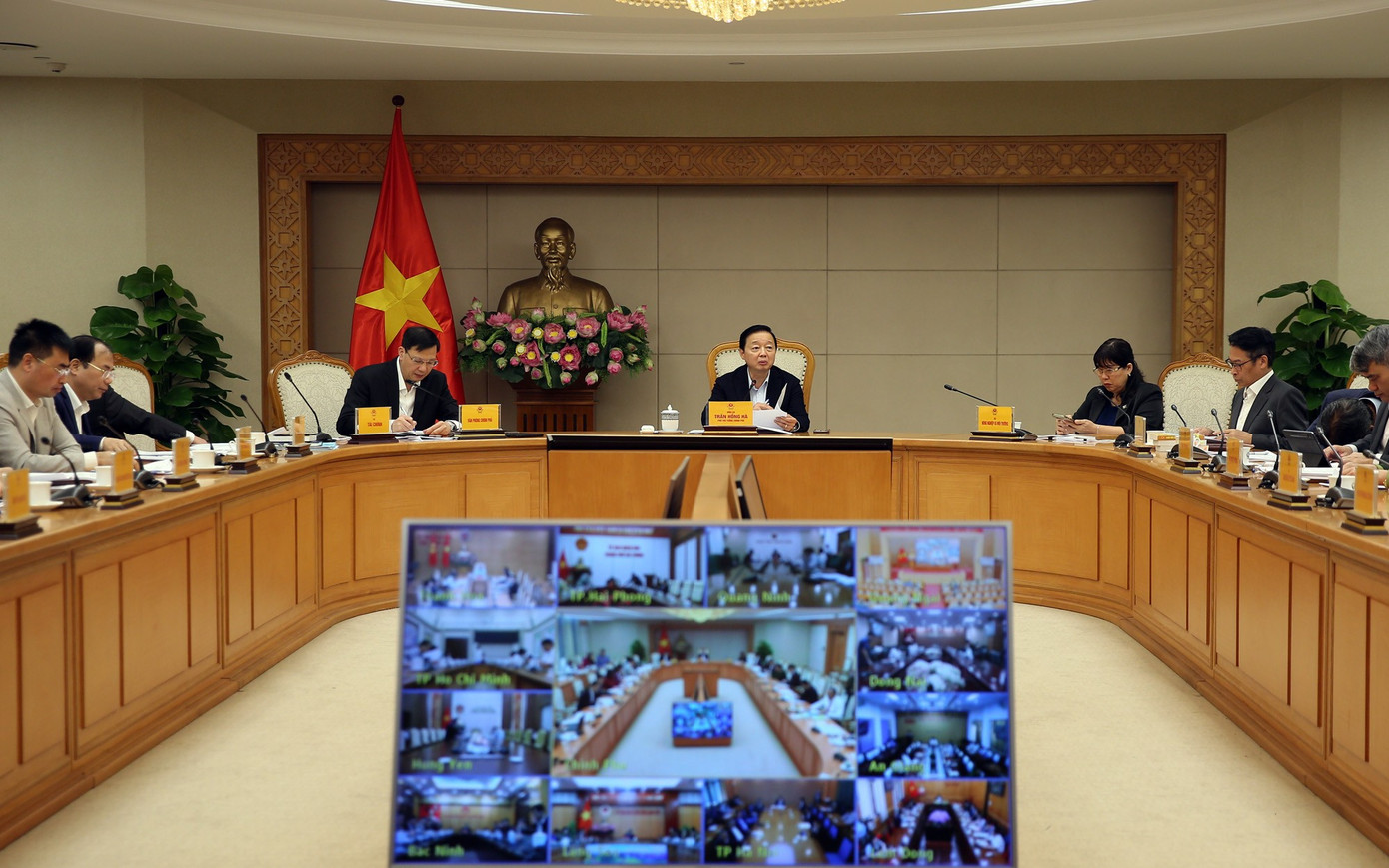
Deputy Prime Minister chairs the meeting on December 29th. Photo: VGP
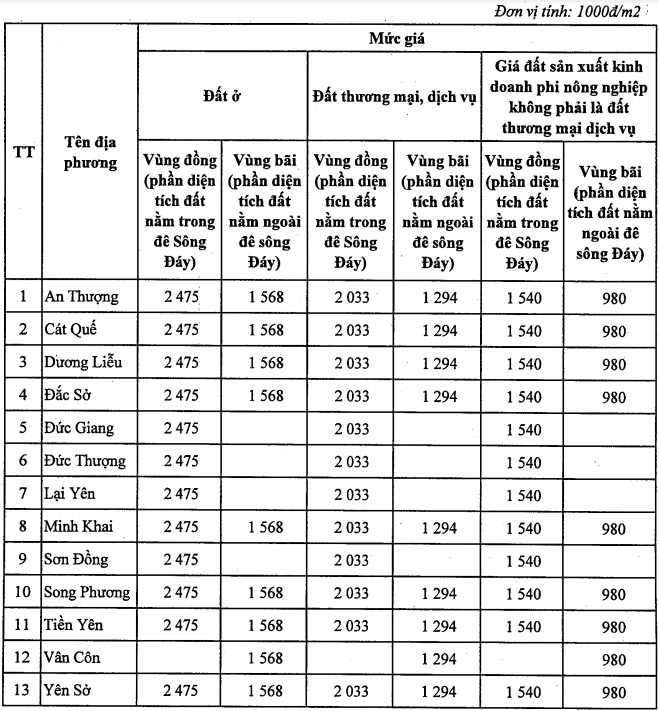
Regarding land pricing, the draft decree retains the established land valuation methods, proposing the use of land price tables and adjustment coefficients.
For cases where land price tables and adjustment coefficients are inapplicable, the Ministry outlined specific land valuation methods aligned with Resolution 254. This includes projects involving land reclamation, projects with land reclamation components, and scenarios lacking sufficient data.
At the meeting, Vice Chairman of the Hanoi People’s Committee Nguyen Xuan Luu advocated for maintaining land valuation methods as per the Land Law. He emphasized that each plot of land has distinct planning parameters, such as land use coefficients and building heights, which directly influence its value and investment strategies.
For unique localities like Hanoi and Ho Chi Minh City, where projects are predominantly mixed-use, Hanoi’s leadership suggested that land valuation based on area is currently appropriate. They also proposed differentiating between inner-city and suburban areas with varying area thresholds.
No New Methods Without Proper Basis
Concerning the application of land price tables, the Deputy Prime Minister mandated clear quantification, avoiding qualitative criteria. He stressed that qualitative criteria would hinder local implementation.
The government directed the Vietnam Real Estate Association to collaborate with the Ministry of Natural Resources and Environment in developing specific quantitative criteria. Examples include projects of 20 hectares or more in provinces and cities, and 30 hectares or more in Hanoi and Ho Chi Minh City.
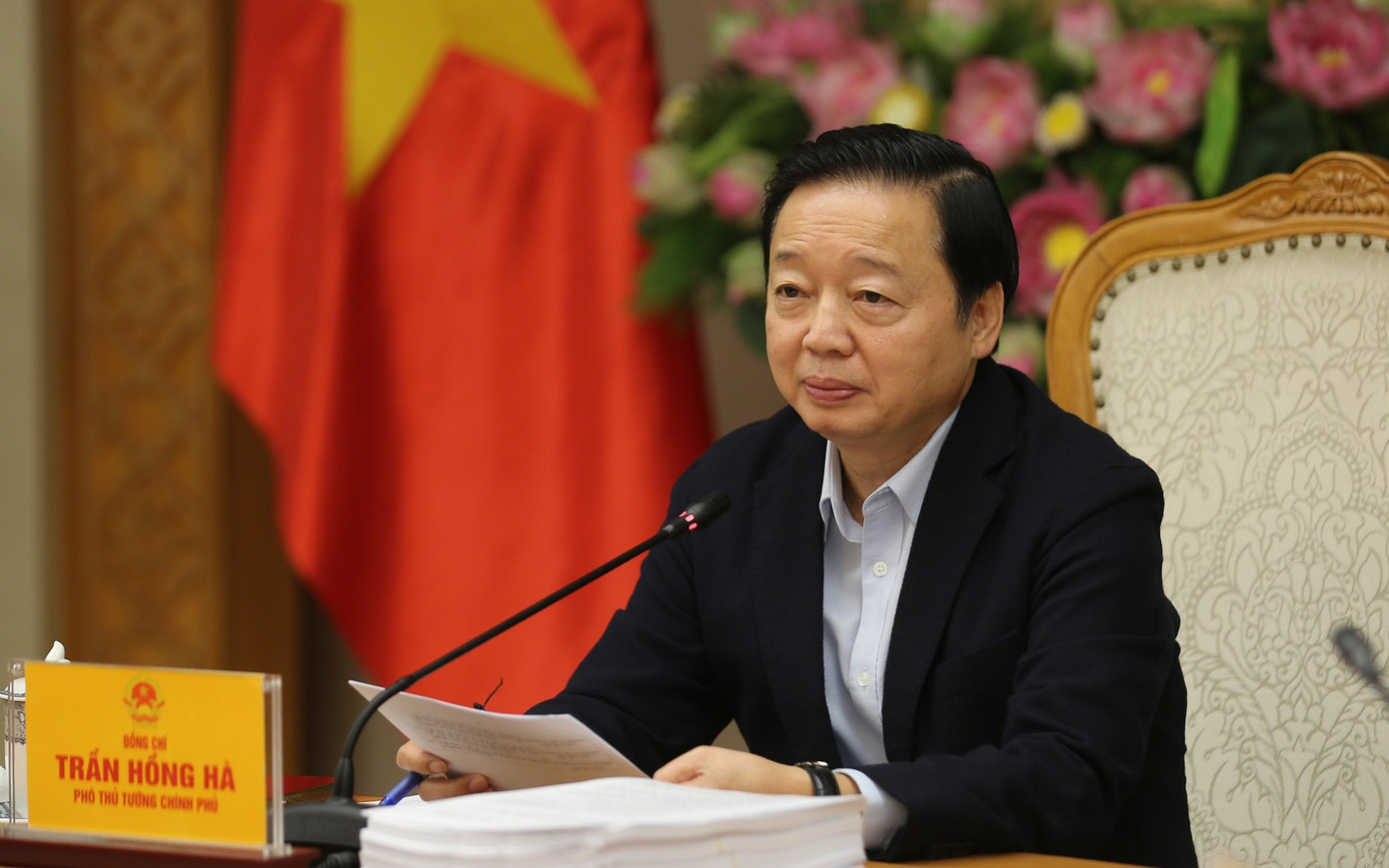
Deputy Prime Minister Tran Hong Ha speaks. Photo: VGP
In land valuation, the Deputy Prime Minister underscored that only scientifically and legally grounded methods with clear procedures and complete data should be specified.
Where sufficient data exists, land price tables and adjustment coefficients should be applied. In data-deficient areas, specific land valuation methods outlined in the 2024 Land Law must be used, without introducing new coefficients or methods without a proper basis or standards.
Regarding the recovery of remaining agreed-upon land areas in projects where investors have secured 75% of the area and 75% of land users’ consent, the Deputy Prime Minister agreed on the calculation method. He emphasized that common land use rights require unanimous agreement from all entitled parties, including spousal consent in households, to minimize disputes and complaints.
If investors fail to achieve 100% agreement, the state will recover the remaining area. Harmonization between investor and state compensation mechanisms is required to ensure fair treatment of citizens and accurate cost inclusion in total investment.
The Deputy Prime Minister stressed that the decree must closely align with Resolution 254, with simplified, transparent administrative procedures targeting the right entities to ensure effective implementation. This will support businesses and citizens while maintaining stable budget revenues.
Ho Chi Minh City: Strategies to Mitigate Rising Housing Costs
The application of specific land prices or land price tables multiplied by land price adjustment coefficients significantly impacts property values.
Deputy Prime Minister Urges Swift Issuance of Two Decrees to Resolve Challenges in Implementing the Land Law
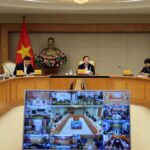
On the afternoon of December 29th, Deputy Prime Minister Tran Hong Ha chaired a meeting with ministries, sectors, and real estate business associations. The meeting focused on reviewing and finalizing draft decrees to implement National Assembly Resolution No. 254/2025/QH15. This resolution outlines mechanisms and policies to address challenges and obstacles in the implementation of the Land Law, including land use fees and land rent calculations. The meeting was held online, connecting with representatives from provinces and cities nationwide.
How Will Ho Chi Minh City’s 2026 Land Price List Impact Residents and Investors?

The newly introduced land price list is poised to deliver significant benefits to residents, investors, and Ho Chi Minh City’s land management policies, while exerting minimal impact on the real estate market.
Blaze Engulfs Geleximco Townhouse Complex on Le Trong Tan Street, Hanoi

On the afternoon of December 28th, a fire broke out in the row of townhouses adjacent to the Geleximco area on Le Trong Tan Street, Duong Noi, Hanoi.
Attention Hanoi Residents: Full List of 75 Unauthorized Markets and Informal Trading Spots to Be Cleared Next Month
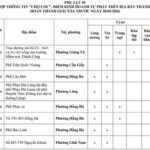
Here are 75 unauthorized street markets, categorized as Group 1, which illegally occupy roadways, sidewalks, and public spaces, creating significant traffic safety hazards and disrupting urban order. These hotspots have sparked widespread public concern. According to the outlined plan, the clearance of Group 1 is scheduled for completion by January 30, 2026.