












In an interview with Bao Nguoi Lao Dong, Mr. Dao Quang Duong, Head of the Land Economy Department at the Ho Chi Minh City Department of Agriculture and Environment, shared positive updates regarding various projects in the city, primarily residential complexes.
Clearing the Path for 100 Projects

Mr. Dao Quang Duong, Head of the Land Economy Department, Ho Chi Minh City Department of Agriculture and Environment.
Last week, the Ho Chi Minh City Department of Agriculture and Environment attended a meeting in Hanoi to provide feedback on the draft decree detailing and guiding certain provisions of Resolution 254/2025 of the National Assembly. This resolution outlines mechanisms and policies to address challenges in implementing the Land Law.
The drafting agency has accepted the department’s proposal regarding land use fees as stipulated in Article 63 of Decree 102/2024.
“In the draft decree implementing Resolution 254/2025, the Ministry of Agriculture and Environment has incorporated the city’s recommendations. This will soon resolve long-standing issues for projects allocated land under the 2003 Land Law,” Mr. Duong stated.
Specifically, instead of mandating the land price adjustment factor method, multiple options are now available: the comparative method, income method, and surplus method for determining land prices.
“Importantly, if the land price determined by these methods is lower than the land price table, the land price table will be used,” Mr. Duong emphasized.
Balancing Interests
In Ho Chi Minh City, approximately 100 files fall under Article 63 of Decree 102/2024, requiring specific land price determinations.
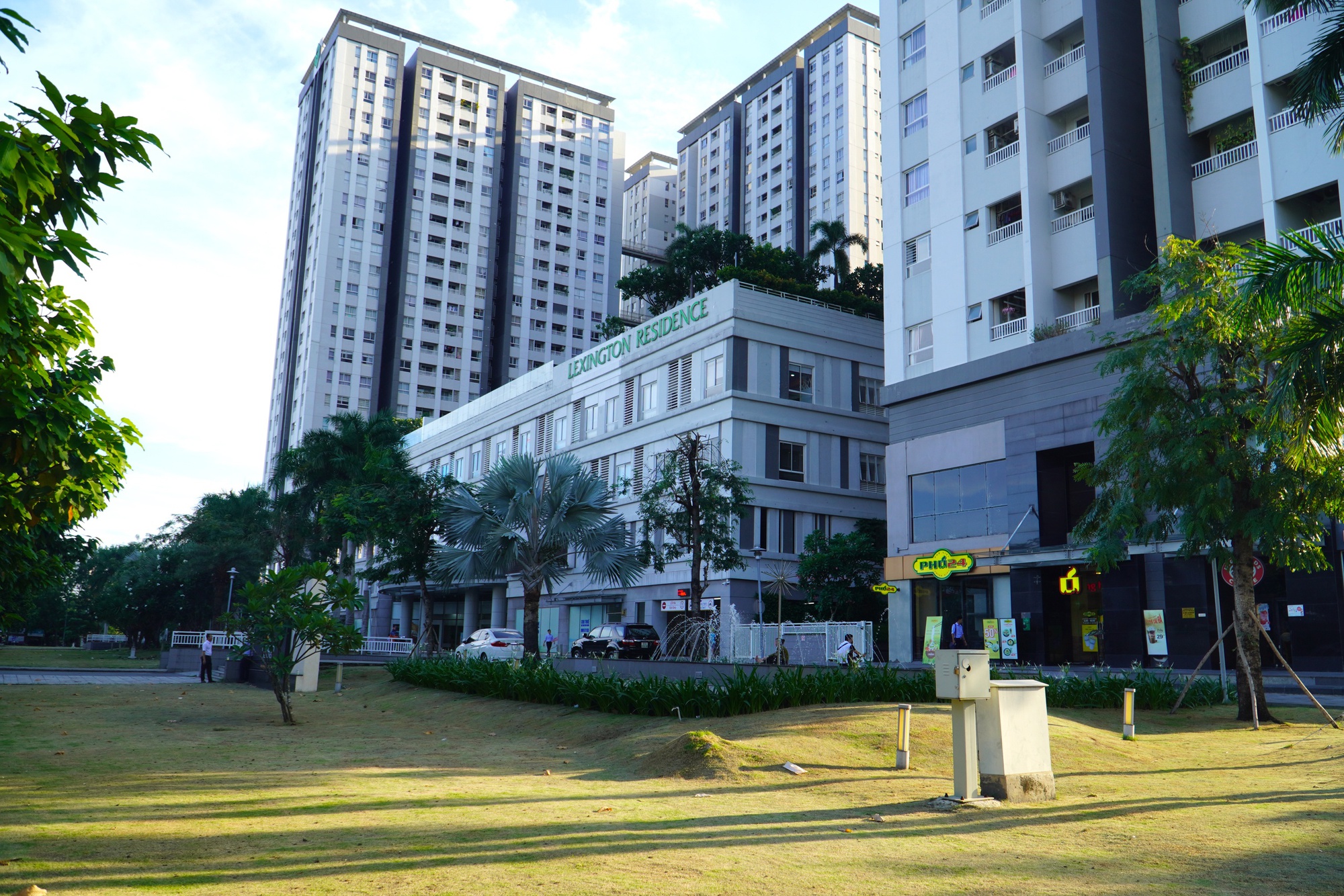
Residents of Lexington Residence on Mai Chi Tho Avenue have not received their land-use certificates as the developer has not fulfilled financial obligations (only interim payments) and is subject to additional financial requirements.
For cases where the decree does not specify land price adjustment factors at the time of determination, specific land pricing methods will be applied to establish these factors.
However, the Department of Agriculture and Environment notes that determining land prices for past periods (before the 2013 Land Law) poses significant challenges due to the difficulty in collecting historical data, making the process nearly impossible.
Therefore, the department proposes that for cases requiring the land price adjustment factor method, the land price table issued by the Provincial People’s Committee at the time of land allocation, lease, or change of land use should be applied, multiplied by the land price adjustment factor issued by the Provincial People’s Committee in 2015.
Additionally, land users must pay a supplement of 3.6% per year on the land use fee, calculated based on the current regulations for the period not yet accounted for.
According to the Department of Agriculture and Environment, this calculation method ensures alignment with market prices, balances the interests of the state and investors, prevents budget losses, avoids resource wastage, and protects the legal rights and interests of investors and citizens. This approach will expedite project completion, increase housing availability, and accelerate the issuance of land-use certificates and property ownership documents.
Why Apartments Along National Highway 13 Are Becoming the New Residential Choice for Young People in Ho Chi Minh City

For years, owning a home in the heart of Ho Chi Minh City has been a dream for many young professionals. However, the widening gap between income and property prices has made this goal increasingly elusive, forcing buyers to seek more practical housing solutions.
Tan Hoang Minh Hotel Accrues Nearly VND 316 Billion in Unpaid Taxes

Tân Hoàng Minh Hotel has been listed among taxpayers with outstanding tax debts and other state budget dues, with a total debt of nearly 316 billion VND as of November 2025.
“Riding the Offshore Wave”: A Sustainable Strategy Attracting Northern Investors to the South

Amidst the surging wave of southward investment, the strategy of “offshore wave-catching”—selecting suburban projects with transparent legal frameworks and proximity to key infrastructure—has become a favored approach among investors.
Billion-Dollar Real Estate and Tourism Projects in Khanh Hoa Province Face Violations

The Government Inspectorate has recently unveiled its findings from an audit of seven large-scale real estate and tourism projects in Khanh Hoa province, with combined investments totaling trillions of Vietnamese dong. The audit exposed numerous critical violations in investor selection, land management and utilization, financial obligation determination, planning adjustments, and project implementation, posing significant risks of substantial losses to the state budget.
National Highway 13 Investor Bidding: Which Real Estate Projects Stand to Gain Directly?

Infrastructure not only expands urban spaces but also redistributes populations, capital, and economic activities. Real estate projects along key infrastructure routes directly benefit from urban population decentralization, thereby enhancing investment value.