However, the landscape is rapidly shifting as the Olympic Sports City officially commences, marking a new era of development for the southern region of Hanoi.
The South is no longer a “lowland,” but a preferred choice
Urban development history shows that no area can sustain growth without significant “development hubs” to attract people and capital. Southern Hanoi boasts vast land resources and favorable regional connectivity, yet it has long lacked a core project. The emergence of the 925 trillion VND Olympic Sports City is a pivotal moment. Spanning over 9,000 hectares, it’s envisioned as an international sports, urban, and event complex, not only addressing housing needs but also redefining the South’s role in Hanoi’s long-term urban development.
In previous cycles, similar mega-projects have created a ripple effect, driving three key flows: population migration, commercial growth, and investment influx. These factors establish a new baseline for property values in surrounding areas.
TOD Model Combined with “Mega-Urban”: A Formula for Robust Growth
The Olympic Sports City stands out not only for its scale but also its timing. It coincides with strategic national infrastructure projects like the North-South high-speed railway, Ngoc Hoi Station Complex, ring roads, and long-term Metro networks. The synergy between a mega-urban project and public transport infrastructure underpins the TOD (Transit-Oriented Development) model, successfully implemented in many developed nations.
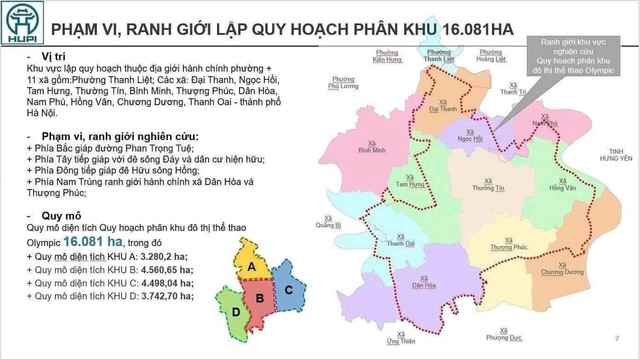
The Olympic Sports City is centrally located at the intersection of Ring Road 3.5, Ring Road 4, National Highway 1A, Phap Van-Cau Gie Expressway, and adjacent to the Ngoc Hoi Station Complex.
Globally, the TOD model, when paired with a strong development hub, often creates “maximum growth zones,” where economy, population, and real estate enter a 15–20-year growth cycle. Hong Kong and Singapore exemplify successful TOD implementation in their rapid and sustainable development journeys.
As the new centerpiece of southern Hanoi, Vinhomes Olympic not only creates an urban destination but also reshapes mobility, population distribution, and economic activity across the region. With infrastructure activation, commerce and services will follow, ushering in a new development phase for southern real estate, far surpassing previous stages in scale and depth.
A New Landscape is Emerging in Southern Hanoi
A hallmark of real estate cycles is the market’s anticipation of infrastructure completion. This trend is evident in southern Hanoi, where projects within the new infrastructure radius are seeing high liquidity from early stages, reflecting market confidence in long-term growth. For instance, Him Lam Boulevard, launched in late 2024 and located 2 km from the Ngoc Hoi Station Complex, saw nearly full absorption in a short period. The developer promptly initiated subsequent phases, underscoring strong belief in the region’s mid- to long-term demand and growth prospects.
According to planning experts, the combination of a large-scale mega-urban project, strategic transport infrastructure, and abundant land resources sets the stage for southern Hanoi’s new growth cycle, akin to what eastern Ho Chi Minh City and western Hanoi experienced previously. The difference lies in this cycle being driven by multiple factors simultaneously: TOD, high-speed rail, inter-regional ring roads, and an internationally significant development hub. This fosters expectations of faster and more sustainable growth, with southern real estate playing an increasingly vital role in the capital’s urban structure. As infrastructure pieces fall into place, what was once a “lowland” will become a key growth driver for Hanoi’s real estate market in the coming decade.
Soaring Real Estate Searches in Northeast Ho Chi Minh City: Tens of Thousands of Listings Still Fall Short of Demand

Amidst the influx of tens of thousands of properties hitting the market, is the real estate landscape of Binh Duong apartments (formerly known), particularly along National Highway 13 (now part of Northeast Ho Chi Minh City), reaching saturation? As the demand for properties in this area has doubled over the past two years, what truly underpins the resilience and future growth of this market in the upcoming phase?
A Retrospective Glance at Ho Chi Minh City’s Real Estate Landscape in 2025
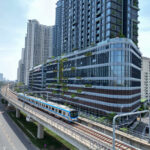
For Ho Chi Minh City’s real estate market to achieve sustainable growth, experts emphasize the need to significantly boost the supply of affordable housing while actively curbing the escalating trend in property prices.
Diamond Boulevard: Luxury Living at $1,500/m² with Full Furnishing on QL13

Amidst the soaring prices of apartments in Northeast Ho Chi Minh City, reaching nearly 70 million VND/m², Diamond Boulevard stands out with an exceptional starting price of just 36 million VND/m²—the most competitive rate along the National Highway 13 corridor. Strategically located adjacent to the C7 metro station on the Thu Dau Mot – Ho Chi Minh City line, this project offers unparalleled investment and rental potential, fueled by its prime transportation infrastructure and the growing demand for leasing opportunities.
Bustling Construction Sites on the Eve of the New Year
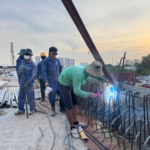
In the heart of Ho Chi Minh City, two major construction sites are buzzing with activity as workers race against time to ensure smooth traffic flow, especially during peak hours. With a sense of urgency, the projects are progressing at a rapid pace, aiming to minimize disruptions and provide a seamless travel experience for commuters.
“Supply Shortages and Price Gouging: How New Brokerage Models Are Driving Up Costs”
David Jackson, Managing Director of Avison Young Vietnam, highlights a concerning trend in the market. He notes that many brokerage firms are purchasing large volumes of properties directly from developers and then redistributing them. This concentration of inventory in the hands of a few distributors can artificially inflate prices and create a false sense of scarcity.