











 |
In discussions about development, economic growth is often seen as the central measure. This can lead to a simplistic view: a nation’s progress is closely tied to material values, the ability to generate wealth, and the pace of production expansion at all costs. As a result, non-material values are overlooked, and the diversity of value metrics is forgotten. A sustainably developing nation requires more than growth; it needs a society that appreciates various value metrics and a state capable of organizing this diversity into a resource for development. This is the foundation of inclusive institutions, a concept highlighted by the 2024 Nobel laureates in Economics as the cornerstone of a prosperous nation.
A society that values only money and material wealth often distorts how individuals and professions are evaluated. When success is defined by financial income and profit generation, fields like education, healthcare, arts, fundamental scientific research, and community care are either marginalized or stripped of their inherent dignity. This not only creates social disparities and fractures but also weakens long-term development momentum. Teachers, doctors, artists, scientists, and social workers all contribute to the quality of life, trust, and cohesion—core elements of a strong nation.
|
A nation can grow wealthy by focusing on economic gains, but only with inclusive institutions and a multi-valued society can that wealth become ethical, profound, and sustainable across generations. |
Respecting the diversity of value metrics is the first step toward restoring balance. A multi-valued society does not place money as the sole standard. It acknowledges that some contributions, though not immediately profitable, lay the foundation for long-term prosperity: community health, universal education, creative culture, gender equality, environmental safety, and care for the vulnerable. When multiple values are recognized, policy discussions broaden, as the state must consider the interests of various population groups, not just those with significant economic influence.
Multi-valuedness is not just an ideal; it directly impacts development structures. In a society that allows for multiple value metrics, young people can pursue careers based on their abilities and passions rather than chasing the highest income. Diverse groups are encouraged to contribute, and the economy has the opportunity to diversify instead of being skewed toward high-profit but high-risk, short-term industries.
However, multi-valuedness is only sustainable when society has an appropriate operational framework. This relates to the concept of inclusive institutions. If a multi-valued society is the “content,” inclusive institutions are the “form” that helps this content manifest in reality. Inclusive institutions enable the voices of all groups—rich or poor, strong or weak—to influence decision-making. They require the state to be transparent, accountable, and ensure that power is not concentrated in economically privileged groups.
Unlike extractive institutions, inclusive institutions expand access to resources for many. When education systems are strong, healthcare is accessible, policies are fair across regions, and business environments are transparent, people’s ability to contribute increases significantly. Development then becomes a widespread process, not just the achievement of initially advantaged groups.
Inclusive institutions are precisely what can protect and nurture value diversity, preventing economic metrics from overshadowing everything else.
To move closer to this model, policymakers play a crucial role. Economic and social decisions must shift from a “priority for rapid growth” mindset to “growth based on improving quality of life.” This requires expanding the development indicator system: alongside GDP, there must be indices for education, healthcare, equality, environmental safety, and institutional quality. When metrics change, budget priorities and policy designs also change. The state then not only promotes the economy but also maintains a balance of values.
Education is another area needing significant change. When schools emphasize only grades, achievements, and the income of “hot” professions, society reproduces a skewed value system. Conversely, if education encourages diverse abilities and fosters community responsibility, younger generations will develop a more holistic mindset. This is the most enduring foundation for a multi-valued society to emerge from within.
A family story can illustrate this. In a household with multiple children, each pursues a different path: one might be in business, another teaching, another in the arts, another in medicine, and there might even be a child with disabilities or dependencies. The family remains stable only when every voice is respected. If parents listen only to the child who earns the most, the family struggles to maintain harmony and integrity. At the national level, this principle is even clearer. A prosperous nation is one where every citizen feels valued and has the opportunity to contribute.
A nation can grow wealthy by focusing on economic gains, but only with inclusive institutions and a multi-valued society can that wealth become ethical, profound, and sustainable across generations.
Lê Vĩnh Triển
– 07:00 05/01/2026
VinSmart Shifts Partial Production from Hanoi to Hai Phong, Capital’s Index Declines
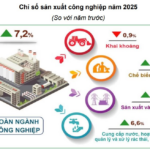
VinSmart, a subsidiary of Vingroup, inaugurated the first phase of its state-of-the-art electronics manufacturing complex in Hanoi’s Hoa Lac Hi-Tech Park in November 2019.
Ho Chi Minh City to Establish Urban Railway Corporation

Speaking at the Ho Chi Minh City teleconference, Vice Chairman of the City People’s Committee Nguyen Cong Vinh announced the establishment of the Urban Railway Corporation by Ho Chi Minh City.
Kobler Unveils Eco-Friendly Material Solutions at Architecture for Health Seminar

The Vietnam Association of Architects proudly presents the Autumn Encounter 2025 Seminar, themed “Architecture for Health,” taking place from December 26th to 28th, 2025, in Phu Tho Province. This prestigious event brings together a diverse array of delegates, including representatives from central and local agencies, renowned experts, scientists, and architects from both Vietnam and around the globe.
Stocks Poised for Steady Growth in 2026
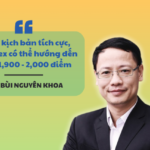
According to Mr. Bui Nguyen Khoa, Deputy Director of the Analysis and Research Center at BIDV Securities (BSC, HOSE: BSI), in a positive scenario, the VN-Index could target the 1,900 – 2,000 point range by 2026, alongside expectations of returning foreign capital inflows and a new wave of listings.
Can Tho Remains Determined to Develop the Tran De Port
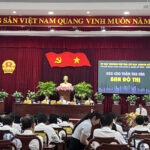
Nestled along the coastal region connected to the Tran De International Seaport, the Tran De Economic Zone is poised to become a transformative hub in Can Tho. Spanning over 40,000 hectares, this visionary development is strategically designed to integrate multiple functional zones, driving economic growth and regional connectivity.