Implementation of New Land Price List
According to the 2024 Land Law, the old land price list under the 2013 Land Law will officially expire on December 31, 2025.
Starting in 2026, a new land pricing mechanism will be implemented, featuring fundamental changes in data construction and updates.
A notable innovation is that the land price list will be annually constructed and adjusted, rather than every five years as previously done.
Land prices will be determined in detail for each location and plot based on market principles. This approach aims to address the disparity between government and actual market prices, eliminating the long-standing “dual pricing” mechanism.
70% Reduction in Fees for Converting Agricultural Land to Residential
Alongside changes to the land price list, a policy of significant interest to citizens is the reduction in financial obligations when changing land use purposes.
Under Resolution 254/2025/QH15 issued by the National Assembly regarding mechanisms and policies to address challenges in implementing the Land Law (effective from January 1, 2026), land users converting land from gardens, ponds, or agricultural use to residential will benefit from substantial incentives.
Specifically, individuals will only pay 30% of the land use fee difference for areas within the allocated residential land limit; and 50% for areas exceeding the limit but not more than once the local limit. Compared to current regulations, this represents a 70% reduction.
However, these incentives apply only in specific cases: gardens, ponds, or agricultural land within the same plot as residential land when land use rights are recognized; or land originally gardens or ponds attached to residential land but separated due to transfer or cadastral mapping before July 1, 2014. Each household or individual may benefit from this policy once per plot.
For conversions exceeding the residential land limit, users must still pay 100% of the land use fee difference for the excess area.
Land Recovery Upon 75% Agreement
The Resolution also introduces three scenarios where the state may recover land for economic and social development in the national and public interest:
Implementation of projects within free trade zones or international financial centers.
When over 75% of the land area and over 75% of land users agree to transfer land use rights after the expiration period, the Provincial People’s Council may consider recovering the remaining land to allocate or lease to investors.
Creation of land funds for payment under Build-Transfer (BT) contracts, or leasing land for continued production and business to organizations whose land is recovered by the state.
Dương Dương
Ultimate Guide to Changing Land Use Rights Certificate Registered Under Family Name
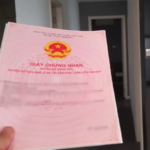
Under the new provisions of the 2024 Land Law, the process of exchanging Land Use Right Certificates for family households has been streamlined. Now, family members can mutually agree on the exchange without requiring confirmation from any authorized agency.
How Will Ho Chi Minh City’s 2026 Land Price List Impact Residents and Investors?

The newly introduced land price list is poised to deliver significant benefits to residents, investors, and Ho Chi Minh City’s land management policies, while exerting minimal impact on the real estate market.
Ho Chi Minh City Chairman Addresses New Land Price List: ‘Easing the Burden on Citizens’

Our newly crafted pricing table is meticulously designed to be both considerate of the public’s financial capacity and balanced in aligning the interests of the state and businesses.
New Land Price List Details to Take Effect in Ho Chi Minh City Starting January 1, 2026

Land prices in Ho Chi Minh City (HCMC) are set to surge with the new pricing scheme taking effect from January 1, 2026. In the former HCMC area, residential land values will see adjustments ranging from 1 to 1.65 times the rates established in 2024. Meanwhile, in the old Binh Duong region, prices peak at 89.6 million VND/m² and bottom out at 1.3 million VND/m². The former Ba Ria – Vung Tau area will experience a significant uptick, with multipliers ranging from 1.7 to over 4 times the current rates.
Ho Chi Minh City Unveils New Land Price List for 2026, Peaking at VND 687 Million per Square Meter
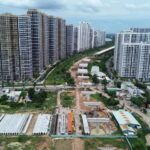
According to the Ho Chi Minh City People’s Council’s report on land price tables effective from 2026, the three streets Dong Khoi, Nguyen Hue, and Le Loi will have the highest rates, reaching up to 687 million VND per square meter.