













Illustrative image
National Highway 13 Enters Bidding Phase for Investor Selection
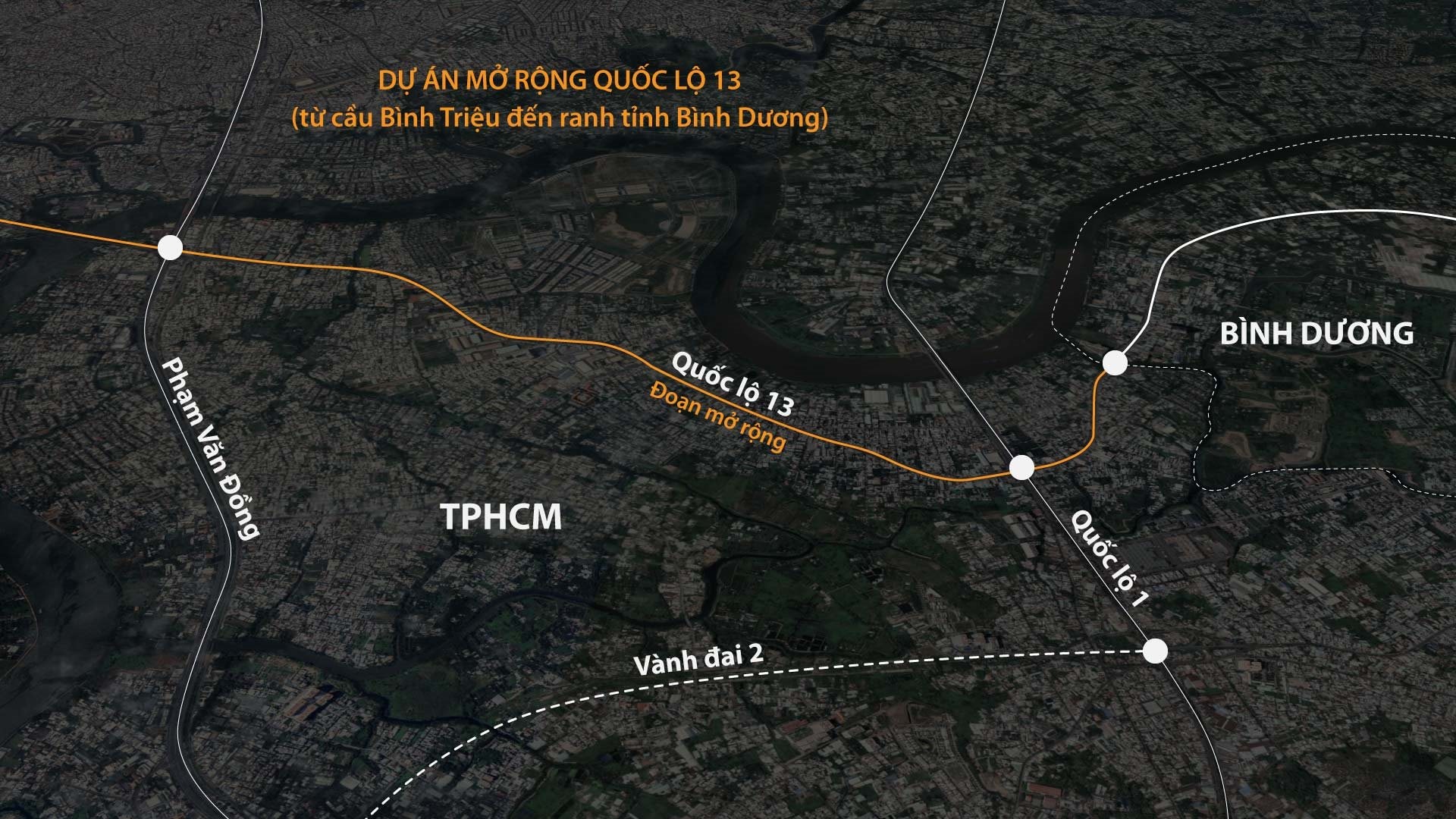
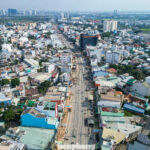
It’s no coincidence that National Highway 13 in Ho Chi Minh City has been a hot topic recently. Especially since the announcement of the 6km segment from Binh Trieu Bridge to Vinh Binh Bridge being expanded to 60 meters with 10 lanes, the real estate market in the northeastern region of Ho Chi Minh City has shown positive momentum.
This vital artery connects the northeastern part of Ho Chi Minh City directly to Hang Xanh area and the old city center, while also linking to Pham Van Dong and Ring Road 2, forming a critical transportation axis between Ho Chi Minh City and the southeastern provinces.
According to the Department of Construction, the city will conduct bidding to select investors for the project in the first and second quarters of 2026. Once the contractor is chosen, construction will commence in the fourth quarter of 2026 and is expected to be completed within two years.
The expansion project of National Highway 13 has a total investment of nearly VND 21 trillion, with the city’s budget contributing over VND 14.6 trillion for Component 1 (compensation, support, and resettlement). The remaining VND 6.281 trillion will be arranged by the investor for Component 2 (upgrading and expansion).
National Highway 13 is a vital artery connecting the northeastern part of Ho Chi Minh City directly to Hang Xanh area and the old city center.
Alongside the upgrade of National Highway 13, Ho Chi Minh City is considering the construction of Binh Trieu 3 Bridge (between the two existing bridges) and the expansion of Xô Viết Nghệ Tĩnh and Đinh Bộ Lĩnh streets via an elevated road connecting directly to Dien Bien Phu Street, creating a seamless traffic flow from the northeastern region to the old city center.
Additionally, Metro Line 2 (Thu Dau Mot – Ho Chi Minh City) is among the nine new urban railway lines prioritized for early completion by 2035, serving as a significant catalyst for the real estate market in the northeastern region post-merger.
The project passes through Thu Dau Mot, Binh Hoa Ward, Lai Thieu Ward, and other areas, with a capacity to transport 30,000 to 40,000 passengers per direction per hour. It will provide easy access to the city center and other urban areas along the railway. In the future, residents from the northeastern region will only need 15-20 minutes to reach the city center, enjoying all the modern amenities of the bustling downtown area.
It’s evident that post-merger, the northeastern region of Ho Chi Minh City along National Highway 13 has witnessed continuous urban infrastructure upgrades. With metro projects, national highways, and ring roads worth tens of trillions of dong in the pipeline, these developments are set to boost the economy, industry, and real estate prices.
In a detailed report on “TOD Model in Ho Chi Minh City: Future Development Trends,” CBRE Vietnam highlights that properties within TOD-influenced areas typically command higher values compared to other regions. Wherever infrastructure expands, real estate prices rise—a trend clearly evident in the market over the past decade.
Real Estate Anticipates Price Surge Cycle
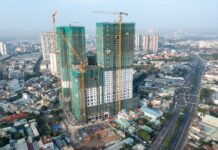
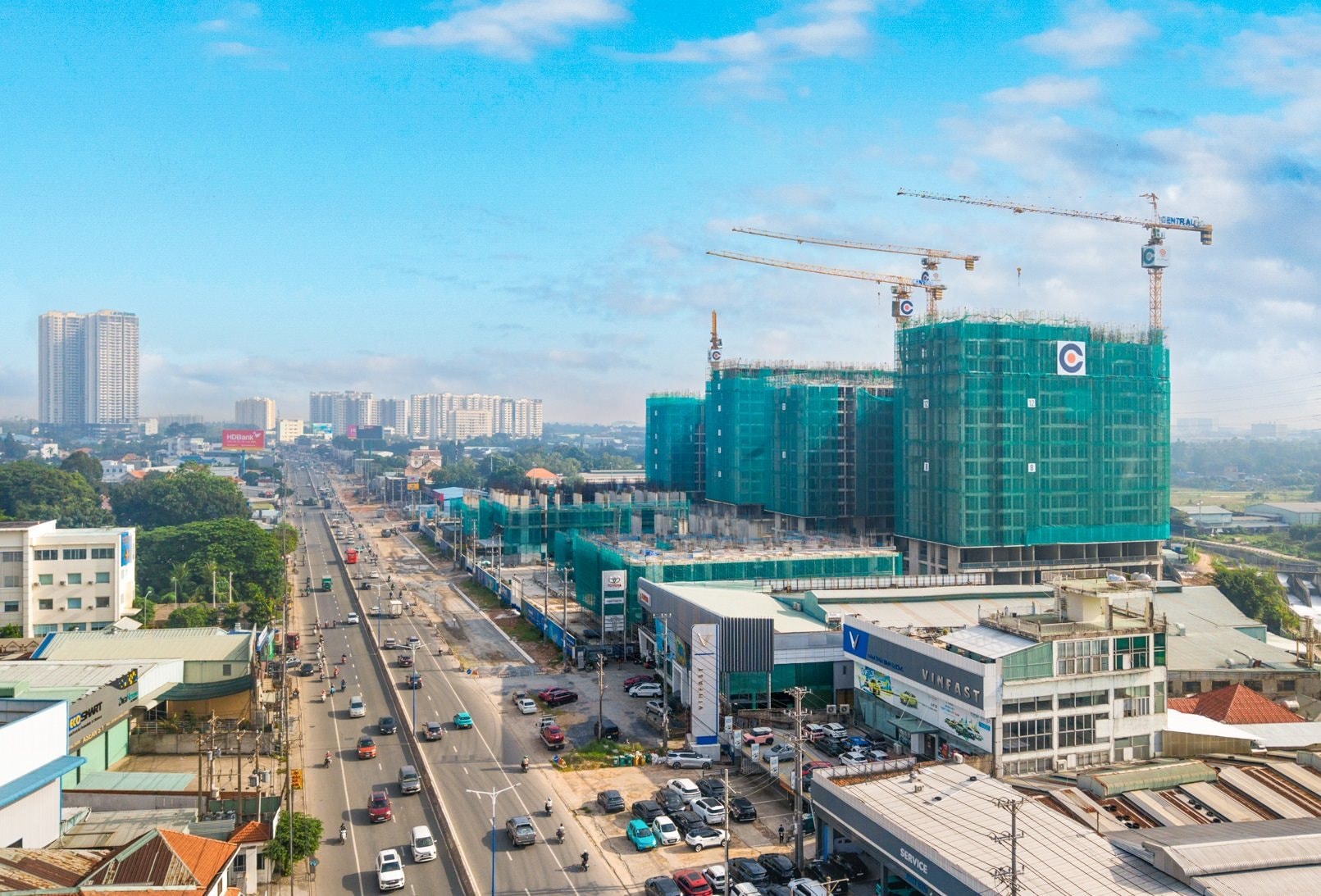
Recent observations show that along National Highway 13, apartment projects have been bustling with activity, many achieving strong demand through successful launches, becoming highlights in Ho Chi Minh City’s new real estate market.
Notably, apartment prices in the area have set new records, with some projects rumored to reach VND 50-75 million per square meter. This upward trend in prices is driven by the merger planning and accelerated infrastructure development, particularly in areas bordering the old city center like Binh Hoa Ward and Lai Thieu Ward (formerly part of Thuan An).
Prominent projects along National Highway 13 include La Pura by Phat Dat, Landmark Binh Duong by Phu Cuong Group, Midori Park The Glory by Becamex Tokyu, Green Skyline by TBS Group, and the Diamond Sky subdivision of Van Phuc City. These projects have garnered significant interest due to the region’s infrastructure advancements.
Among them, La Pura, following the success of its previous phases, recently announced a new tower with prices starting from VND 75 million per square meter, attracting considerable market attention.
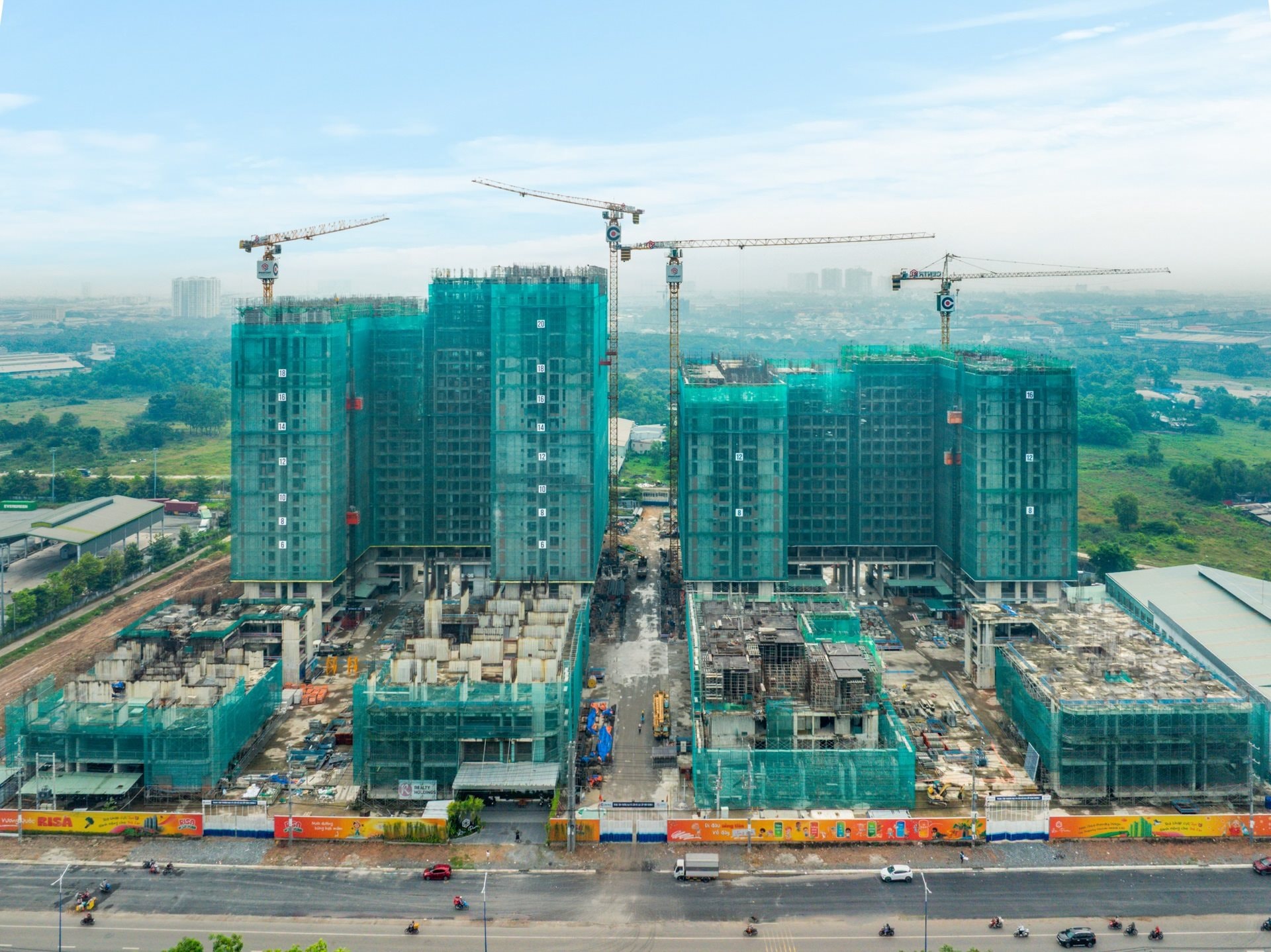
Several projects along National Highway 13 are accelerating construction for launch in early 2026.
Thanks to its prime location along National Highway 13 and the planned Metro Line 2 station in front, La Pura is one of the few projects directly benefiting from the northeastern region’s infrastructure development roadmap. Additionally, the ongoing expansion of the highway segment in front of the project, combined with the gateway to the city center by early 2026, offers a “double advantage” for the project. Given these infrastructure factors, La Pura’s future price appreciation potential is clear.
Market observations in the northeastern region of Ho Chi Minh City indicate that subsequent launches are expected to see price increases of 7-13% compared to previous phases. This upward price trend is projected to continue in the future.
The Ho Chi Minh City People’s Council has approved a draft resolution issuing the first land price table, effective from January 1, 2026. The land coefficient will increase by up to 8.1 times, with a minimum increase of 1.56 times. In the old Ho Chi Minh City, most road land prices remain unchanged from the table in Decision 79/2024. Meanwhile, in the former Binh Duong (now the eastern and northeastern regions of Ho Chi Minh City), the new table is expected to see a significant increase of 50-70%.
Rising land prices will significantly impact apartment, commercial, and service real estate values in the coming years. Particularly, the northeastern region of Ho Chi Minh City (along National Highway 13), where property prices are currently “disparate” and less than half those of the old city center, will have substantial opportunities from 2026 onward.
Mr. Dinh Minh Tuan, Director of Batdongsan.com.vn in the Southern region, emphasizes that the development of ring roads and metro lines has been a major catalyst, completely transforming real estate values.
He believes that the city center is no longer the sole focal point. Infrastructure has created new “development hubs” in Thu Duc, Di An, Thuan An, Thu Dau Mot, and Nha Be, marking the most significant urban expansion phase to date. Notably, along ring roads and metro lines, housing supply in the northeastern region has surged, with apartments driving urban expansion faster than ever, alongside the growth of services, commerce, and infrastructure.
According to Mr. Tuan, areas previously considered “outskirts” bordering Ho Chi Minh City are gradually becoming part of the expanded urban space. Real estate values in these areas are being redefined, not merely due to their proximity to the city center, but because these markets are assuming genuine urban functions such as large-scale residential areas, industrial centers, logistics hubs, and commercial services, with increasingly dense populations.
A clear indication of this shift is the significant increase in housing supply in the expanded Ho Chi Minh City area (new Ho Chi Minh City and bordering regions) in 2025, leading the overall market supply. This trend is expected to continue in 2026, as buyers become less constrained by administrative boundaries and focus more on connectivity, travel time, and quality of life within an integrated urban space.
The Director of Batdongsan.com.vn notes that for Ho Chi Minh City and the Southern region, infrastructure is playing a pivotal role in redistributing populations and capital. Areas with good connectivity, reasonable travel times, and still “affordable” prices are becoming natural destinations for young people, businesses, and new economic activities.
“As populations grow, demand for housing, jobs, commerce, and services increases, sustainably driving real estate values rather than relying on speculative information or planning rumors,” Mr. Tuan emphasizes.
Establishing the Steering Committee for the Implementation of the North-South High-Speed Railway Project

The Ministry of Construction has established a Steering Committee to finalize special mechanisms and a detailed timeline, laying the groundwork for the commencement of the North-South high-speed railway project by the end of this year.
A Retrospective Glance at Ho Chi Minh City’s Real Estate Landscape in 2025
For Ho Chi Minh City’s real estate market to achieve sustainable growth, experts emphasize the need to significantly boost the supply of affordable housing while actively curbing the escalating trend in property prices.
Flexible Work, Flexible Life: Redefining the Standard for Global Business Living

Ho Chi Minh City’s dynamic housing market, exemplified by innovative projects like The Privé, underscores how the rise of flexible work is redefining modern living standards.
An Phú Intersection, Ho Chi Minh City’s Eastern Gateway, Jam-Packed Ahead of New Year Holiday
As the final workday of the year drew to a close on the afternoon of December 31st, a mass exodus began from Ho Chi Minh City. Residents eagerly departed, either heading home for the holidays or embarking on New Year’s getaways. This sudden surge in traffic quickly congested the city’s gateways, particularly those leading east, as vehicles bottlenecked in a rush to escape the urban sprawl.
Transforming Ho Chi Minh City’s Eastern Gateway: A $87 Million Road Expansion Project Unveiled
The upgrade and expansion of Nguyen Thi Dinh Road in Cat Lai Ward, Ho Chi Minh City, with an investment of over 2,000 billion VND, is poised to enhance connectivity, alleviate congestion, and create a seamless link between the existing urban area and major transportation hubs such as Cat Lai Port and Phu Huu Port.