









The Ho Chi Minh City Business Association (HUBA) has recently reported to the Ho Chi Minh City People’s Committee on the business performance during the fourth quarter of 2025. The year 2025 marked a significant turnaround for the economy, with GDP reaching an unprecedented high of USD 510 billion and a growth rate exceeding 8%. At this pace, Vietnam is poised to become the third-largest economy in ASEAN by 2030.
The most substantial contribution to GDP growth came from the import-export sector. The 2025 trade turnover hit a record high of USD 920 billion, a 17% increase compared to the previous year. This achievement places Vietnam among the top 25 global economies in terms of trade value.
Textile Enterprises Face Dissolution Near Tet
Despite the overall economic achievements, HUBA highlights that several sectors continue to face challenges, particularly labor-intensive traditional industries.
The textile industry, for instance, remains adversely affected by reduced demand due to the COVID-19 pandemic. Trade wars have disrupted supply chains, leading to order cancellations, while fluctuating raw material prices and logistics costs have increased production expenses.
Additionally, customers now demand faster delivery times and higher quality, yet processing prices have decreased. Stricter regulations on product traceability have further complicated matters, forcing many companies to scale back production and reduce their workforce.
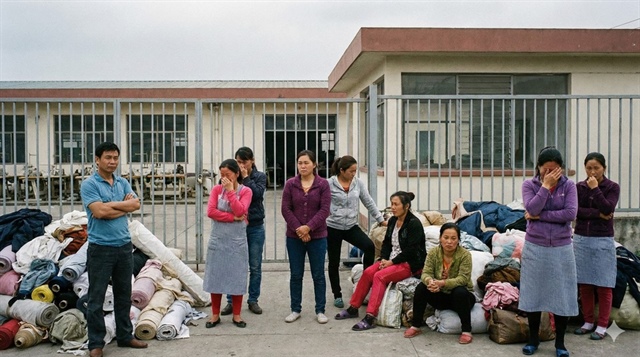
Some businesses have even faced dissolution or bankruptcy as Tet approaches, leaving thousands of workers in dire straits, as seen in a recent case in Binh Duong province.
Traditional retail is also in a critical state, with many shops, stalls, and traditional markets remaining closed due to the rise of e-commerce and reduced consumer spending.
Moreover, small traders are struggling with new regulations on informal economies, counterfeit goods, invoicing requirements, tax declarations, and inventory control. These changes have made them hesitant to continue their businesses due to fears of legal risks.
According to HUBA’s survey, businesses face multifaceted challenges. Fifty-six percent report increased raw material costs, while 50% face a shortage of new orders and labor recruitment difficulties. Forty percent struggle with declining consumer demand and lack of operating capital, with tax and fee issues affecting 28% and rising land rents impacting 11%.
 |
Proposals to Ease Tax and Invoice Management
In response to these challenges, HUBA has proposed tax policy adjustments. Many businesses express concerns about the tightened tax management policies, particularly the transition from lump-sum tax to tax declaration, which has increased paperwork and costs.
Small businesses seek timely support from tax authorities, especially regarding electronic invoicing, which remains unclear in practice.
Issues related to inventory, input invoices, and informal purchases lack official guidance, causing confusion among taxpayers.
HUBA also reiterates previous proposals, such as suspending travel for tax debtors only with clear evidence of notification, ensuring transparency and legal protection for business representatives.
Regarding business registration revocation, HUBA suggests this measure be applied only after a court’s final judgment to prevent unnecessary harm to businesses.
 |
HUBA proposes extending the invoice issuance deadline to three working days after goods delivery or service provision, as taxes are still declared and paid periodically.
While the Ho Chi Minh City Public Administrative Service Center has improved procedures, some departments and local authorities still process files slowly. Tax debt verification can take over a year due to outdated systems and personnel changes.
HUBA recommends establishing a specialized inspection team to standardize administrative procedures across all 38 service centers and local authorities, ensuring faster resolution of complex procedures.
|
Proposals for Tax and Capital Policy Relaxation By the end of 2025, total credit reached over VND 18.4 quadrillion, a 17.87% increase from the previous year, reflecting the government and banks’ efforts to support economic growth. However, real estate speculation and passive investment models have diverted capital from production sectors, despite banks’ efforts to channel credit into manufacturing and trade. The exchange rate fluctuated significantly in 2025, from VND 25,400 to VND 26,400 per USD, impacting importers and businesses with foreign currency debts. Businesses urge the State Bank to implement policies facilitating access to affordable capital for small and micro-enterprises, crucial for startup support and business sustainability. Many small businesses lack collateral, relying on agricultural land with low valuation. Flexible asset appraisal mechanisms are needed to address capital shortages, especially during economic recovery. |
TÚ UYÊN
– 15:10 07/01/2026
Ho Chi Minh City Outlines Three Growth Scenarios for 2026, Targeting Up to 10% Expansion

The Ho Chi Minh City government has outlined three ambitious growth scenarios for 2026. The most optimistic scenario targets a 10% growth rate, contingent on favorable conditions and the early implementation of the revised Resolution 98 mechanism. This scenario also aims to achieve a total budget revenue exceeding 805 trillion VND.
Ho Chi Minh City Discusses 7 Key Agendas, Including New 26-Story Administrative Center

At the 3rd conference of the Ho Chi Minh City Party Committee Executive Board, seven critical topics were discussed, including adjustments to the Can Gio sea-crossing road planning and the development of a new 26-story administrative center.
Ho Chi Minh City to Launch Multiple Major Projects in 2026

In 2026, Ho Chi Minh City will embark on the construction of several landmark projects, including the Convention and Performance Center, the Unity Monument, and the Thu Thiem 4 Bridge, as announced by the city’s Party Secretary, Tran Luu Quang.
Year-End Surge in Hanoi and Ho Chi Minh City Condo Markets: Setting New Records in Supply and Transactions
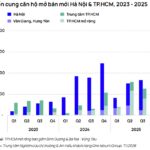
It is forecasted that the supply of apartments in both Hanoi and Ho Chi Minh City will continue to rise in 2026.
Billion-Dollar Undersea Tunnel: Vingroup Proposes Ambitious Link Between Can Gio and Vung Tau
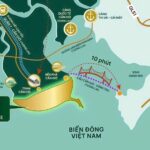
The Cần Giờ – Vũng Tàu expressway will feature a groundbreaking marine segment, utilizing a bridge for seamless travel and an underwater tunnel for waterway passage, employing technology akin to the Thủ Thiêm Tunnel.