








On January 8th, the Propaganda and Mobilization Department of Ho Chi Minh City (HCMC) held the January 2026 Communicator Conference.
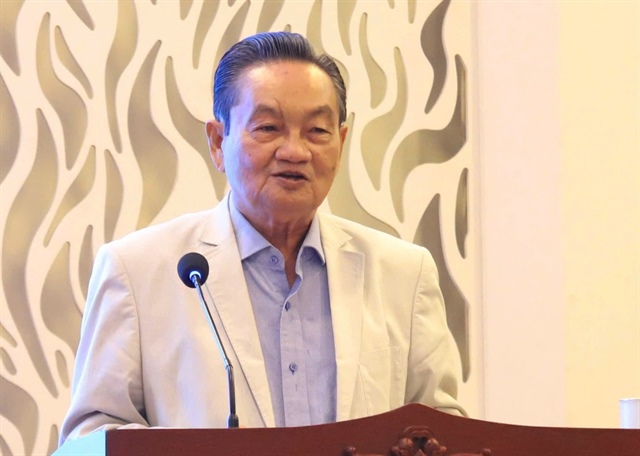
During the event, delegates listened to Dr. Tran Du Lich, Chairman of the Advisory Council for the Implementation of National Assembly Resolution 98, present the topic “National Assembly Resolution 260/2025 on amending and supplementing certain provisions of Resolution 98 on piloting special mechanisms and policies for HCMC’s development.”
“Upgrading” to Remove Bottlenecks
According to Dr. Tran Du Lich, the National Assembly’s adoption of Resolution 260 (amending and supplementing Resolution 98) is a necessary “upgrade” for HCMC to break through in the new era. He stated that after more than two years of implementation, Resolution 98 has completed 36 out of 44 tasks, significantly contributing to the city’s recovery post-COVID-19 pandemic. Notably, policies within the resolution, such as the mechanism for additional income allowances for city officials and employees, and the decentralization and empowerment of Thu Duc City, have quickly taken effect.
 |
However, Dr. Lich pointed out that the implementation still faces bottlenecks. Some decentralized contents lack decisiveness, requiring the city to await opinions from ministries and sectors. Many aspects related to science and technology, innovation, and digital transformation are not yet attractive enough to investors.
Additionally, several contents of Resolution 98 have been legalized through laws such as the Land Law and the Investment Law. These developments necessitate a new, stronger institutional framework for HCMC’s growth.
Emphasizing that Resolution 260 complements and enhances Resolution 98 rather than replacing it entirely, Dr. Tran Du Lich outlined key reasons for upgrading Resolution 98.
Firstly, following its consolidation, with a population exceeding 14 million and an area of 6,772 km², contributing a quarter of the nation’s GDP, HCMC holds significant strategic advantages, including international seaports, a modern financial and industrial center. Therefore, this opportunity must be seized to accelerate the city’s development as directed by the Central Committee.
Secondly, Dr. Lich emphasized that to propel the nation into a new era, institutional reforms must be intensified. “HCMC is best positioned to move swiftly with the spirit of the city for the nation and the nation for the city,” he said, citing that every additional percentage point in HCMC’s GRDP growth contributes 0.25% to the nation’s GDP growth. The mechanisms in Resolution 260 aim to leverage the city’s role in the new development phase, at least for the next decade.
“Without achieving double-digit growth in the coming years, the goal of becoming a developed country by 2045 will be extremely challenging, making it difficult to escape the middle-income trap,” Dr. Tran Du Lich added.
Another issue Dr. Lich addressed is that Vietnam has only 10-15 years left in its golden demographic period. Thus, this period must be utilized to develop the country, escape the middle-income trap, and avoid “aging before prospering.”
According to the expert, Resolution 260 is likened to a “high-speed train” granting HCMC significant authority and responsibility. “We have no time to wait. Resolution 260 represents the political determination for HCMC to truly become a locomotive, maximizing the advantages of a megacity,” Dr. Tran Du Lich affirmed.
A Revolution in Management Thinking
Delving into the core contents of Resolution 260, Dr. Tran Du Lich views it not merely as an amendment but as a revolution in management thinking, shifting towards local decision-making, local execution, and local accountability.
“Resolution 260 has decentralized and empowered the city in great detail, with the spirit of directly authorizing the People’s Council and People’s Committee to decide and take responsibility, replacing the previous ‘ask-and-grant’ mechanism,” he stressed.
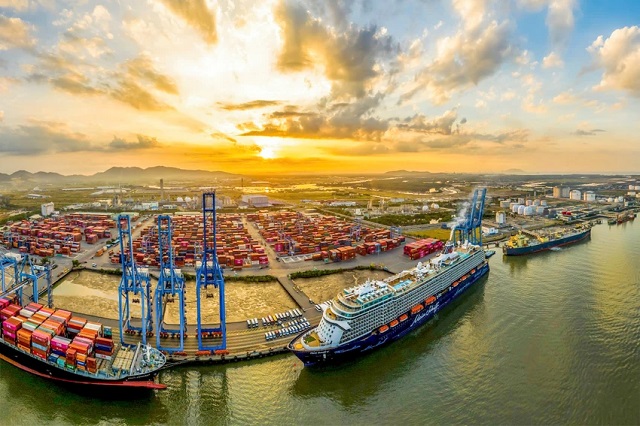
The Free Trade Zone (FTZ) in the Cai Mep – Thi Vai area is one of the important new provisions outlined in National Assembly Resolution 260. Illustration: HA THANH
|
He highlighted the first important new point of Resolution 260 as the amendment of the scope and expansion of fields attracting strategic investors, along with provisions on Free Trade Zones and issues related to science, technology, and innovation.
The City People’s Council is granted the authority to decide and supplement the list of strategic investors, facilitating the swift implementation of critical projects, attracting large capital and high technology.
According to Dr. Tran Du Lich, strategic investors must partner with the state to drive development in specific sectors. “The scale of capital, whether large or small, is important, but more crucial is the nature of the project,” Dr. Lich emphasized, citing the Rach Chiec Sports Complex project, which, once implemented, will significantly enhance societal value and the city’s infrastructure, despite potentially low profits.
The second new point concerns urban management. HCMC is authorized to approve the “Master Plan” by integrating socio-economic development planning and general planning. This eliminates overlaps and reduces approval waiting times from the Government and ministries, which could otherwise take years.
Notably, Dr. Tran Du Lich mentioned that Resolution 260 introduces the Free Trade Zone (FTZ) model in the Cai Mep – Thi Vai area. He noted that the city has spent considerable time studying FTZ models from global practices (such as Dubai and Shanghai) to adapt them to Vietnam’s context.
The FTZ in Cai Mep – Thi Vai is a multifunctional complex, encompassing export production, logistics services, and commercial service centers. Its goal is to deeply integrate into the supply chain and logistics system by leveraging the advantages of deep-sea ports and transportation.
To attract investment, Dr. Tran Du Lich stated that competition will be based on institutions, infrastructure, and HCMC’s position. Incentives such as corporate income tax exemptions and personal income tax reductions will be selectively applied to strategic investors, based on their scale and value contribution.
Dr. Tran Du Lich emphasized that HCMC serves as a “sandbox” for piloting new policies, with successful contents to be replicated nationwide. Therefore, the responsibility of the City People’s Council in implementing the provisions of Resolution 260 is immense.
He announced that, according to information, the groundbreaking ceremony for the Rach Chiec Sports Complex is scheduled for this month. “Thus, this is the first strategic investor project to materialize Resolution 260, which is a positive development for the city,” Dr. Lich said.
“The ball is now in the city’s court; we must score. The success of this endeavor depends on political determination and the implementation capacity of the apparatus,” Dr. Lich stressed.
|
How Do FTZs Operate Globally? Globally, there are thousands of free trade zones with various forms, such as special economic zones, export processing zones, and bonded warehouses. Traditionally, FTZs are linked to airports or seaports for cargo transshipment. For instance, Dubai’s FTZ is associated with the International Financial Center, applying international law (Common Law) and allowing free currency and capital flow conversion. However, Vietnam cannot fully adopt this model due to limitations in currency liberalization and capital account control to ensure national financial security. In Shanghai, the FTZ’s success stems from combining a financial and commercial center with the strength of a vast domestic market. DR. TRAN DU LICH |
NGUYEN THAO
– 13:29 08/01/2026
Revitalizing Ho Chi Minh City’s Struggling Textile and Traditional Retail Sectors

According to the Ho Chi Minh City Business Association, the textile and garment industry continues to grapple with the adverse effects of declining demand and rising production costs. As a result, numerous companies have been forced to scale back operations, with some even facing bankruptcy as the Lunar New Year approaches.
Ho Chi Minh City Outlines Three Growth Scenarios for 2026, Targeting Up to 10% Expansion

The Ho Chi Minh City government has outlined three ambitious growth scenarios for 2026. The most optimistic scenario targets a 10% growth rate, contingent on favorable conditions and the early implementation of the revised Resolution 98 mechanism. This scenario also aims to achieve a total budget revenue exceeding 805 trillion VND.
Ho Chi Minh City Discusses 7 Key Agendas, Including New 26-Story Administrative Center

At the 3rd conference of the Ho Chi Minh City Party Committee Executive Board, seven critical topics were discussed, including adjustments to the Can Gio sea-crossing road planning and the development of a new 26-story administrative center.
Ho Chi Minh City to Launch Multiple Major Projects in 2026

In 2026, Ho Chi Minh City will embark on the construction of several landmark projects, including the Convention and Performance Center, the Unity Monument, and the Thu Thiem 4 Bridge, as announced by the city’s Party Secretary, Tran Luu Quang.
Year-End Surge in Hanoi and Ho Chi Minh City Condo Markets: Setting New Records in Supply and Transactions
It is forecasted that the supply of apartments in both Hanoi and Ho Chi Minh City will continue to rise in 2026.