













Amid global stock market volatility, investors are increasingly seeking high-quality defensive assets. The shares of MCH, Masan Consumer Holdings (Masan Consumer, HOSE: MCH), have emerged as a leading FMCG symbol in Vietnam, capturing the attention of foreign investment funds.

When international funds approach a new market, they rarely start by selecting individual companies. Instead, they focus on representative stocks in key sectors with high growth potential.
Fast-moving consumer goods (FMCG) are a critical sector, especially in developing countries with growing populations and rising incomes. For instance, Hindustan Unilever Limited (HUL) in India, listed on the NSE and BSE, boasts a market cap of 5.3-5.4 trillion INR as of Q3 2025. HUL, with its diverse product portfolio and extensive distribution network, is a staple in Indian households, making it a benchmark for the country’s essential consumer sector.
Similarly, Indofood in Indonesia and Ajinomoto in Japan have become national icons, attracting significant foreign investment.
Intrinsic Value Driving Appeal
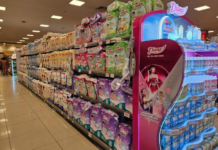
In Vietnam, MCH is positioned as the foremost representative of the FMCG sector. Its appeal to foreign investors stems from its unparalleled market penetration and decades-long brand strength. Over 23 years, MCH has built a robust consumer ecosystem with brands like Nam Ngư, Chinsu, Omachi, Kokomi, and Vinacafé, becoming integral to Vietnamese daily life. With 98% of Vietnamese households using MCH products, its consumer connection is unmatched in the region.
Beyond branding, MCH demonstrates financial prowess. A 13% annual sales growth from 2017-2024 places it among Southeast Asia’s fastest-growing consumer companies. Its 20% net profit margin and 25% EBITDA margin are among the industry’s highest, reflecting stable core profitability.
Its standout feature is its robust cash flow and capital efficiency. With a high return on assets and a fixed asset turnover of four, MCH recoups investments within a year—a rarity in any sector. This enabled it to pay $1.5 billion in dividends from 2018-2022, earning high praise from foreign funds.
In an economy marked by cyclical volatility, high capital costs, and intense competition, MCH’s stable, high cash flow makes it a compelling defensive asset for foreign portfolios.
MCH is also distinguished by its strategic business model and innovation-driven operations. Instead of broad competition, it targets large sectors, fragments them into segments, and dominates those segments. This avoids the “revenue-profit squeeze” trap, ensuring sustained profitability.
Leveraging its extensive distribution and retail network, MCH gathers real-time consumer data to refine product and distribution strategies—a rare capability in the region. This has led to thousands of successful product innovations, further enhancing its appeal to foreign investors.
Opportunity on the Horizon
MCH’s strong intrinsic value aligns with favorable global investment trends. Asset managers like Schroders highlight growing interest in non-cyclical sectors, with consumer staples being a priority. Amid concerns over high valuations, interest rates, and macroeconomic risks, defensive stocks like FMCG offer stability and sustainable cash flows for long-term portfolios.
High-quality FMCG stocks like MCH are particularly attractive, combining stability with long-term growth potential. Its dominant market position, strong cash flow, and robust business model align with foreign funds’ preferences.
In 2025, Singapore’s Temasek invested $1 billion in India’s Haldiram’s at a $10 billion valuation, underscoring foreign interest in emerging market consumer sectors. MCH’s listing on the Ho Chi Minh City Stock Exchange (HOSE) enhances its accessibility to international capital, with potential inclusion in indices like VN30 and FTSE Emerging Markets.
Compared to other Vietnamese FMCG stocks, MCH stands out with its diversified portfolio, superior distribution, and R&D capabilities, enabling rapid adaptation to consumer trends.
With its market reach, financial strength, innovation, and growth potential, MCH is poised to become Vietnam’s FMCG flagship, a must-consider for foreign long-term investment strategies.
– 06:32 08/01/2026
Urgent Health Ministry Directive: Nestlé Vietnam Ordered to Halt Sales of Two Imported Milk Products Amid Toxicity Concerns
The Food Safety Department (Ministry of Health) has officially issued a directive urging relevant authorities and businesses to immediately review and halt the sale of two Nestlé powdered milk products due to concerns over bacterial toxin contamination.
Prime Minister Urges Ministry of Finance to Pilot Crypto Asset Market Licensing for Businesses by November 15
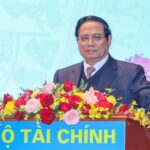
At the Financial Sector Year-End Conference on the afternoon of January 6th, Prime Minister Pham Minh Chinh not only emphasized the need to “turn the tide” in public investment disbursement but also provided specific directives to the Ministry of Finance. He urged the ministry to pilot a Sandbox mechanism for digital assets within the first half of January 2026.
Stocks Poised for Steady Growth in 2026

According to Mr. Bui Nguyen Khoa, Deputy Director of the Analysis and Research Center at BIDV Securities (BSC, HOSE: BSI), in a positive scenario, the VN-Index could target the 1,900 – 2,000 point range by 2026, alongside expectations of returning foreign capital inflows and a new wave of listings.
Establishing the Steering Committee for the Implementation of the North-South High-Speed Railway Project

The Ministry of Construction has established a Steering Committee to finalize special mechanisms and a detailed timeline, laying the groundwork for the commencement of the North-South high-speed railway project by the end of this year.
Shareholder Agreement: Indirect Recognition Through Beneficial Ownership Mechanisms

A shareholders’ agreement, by its very nature, is a “contract among owners” designed to establish a clear power structure within a company. While it plays a crucial role in corporate governance, it remains unaddressed in corporate law. Beginning in 2025, a notable shift occurred, marking a significant evolution in the role and recognition of shareholders’ agreements.