











6.5 Million Residents to Benefit
The Ho Chi Minh City Tidal Flood Control Project (Phase 1) aims to mitigate tidal flooding and proactively address climate change impacts across a 570 km² area home to approximately 6.5 million residents along the Saigon River’s right bank and the city center.
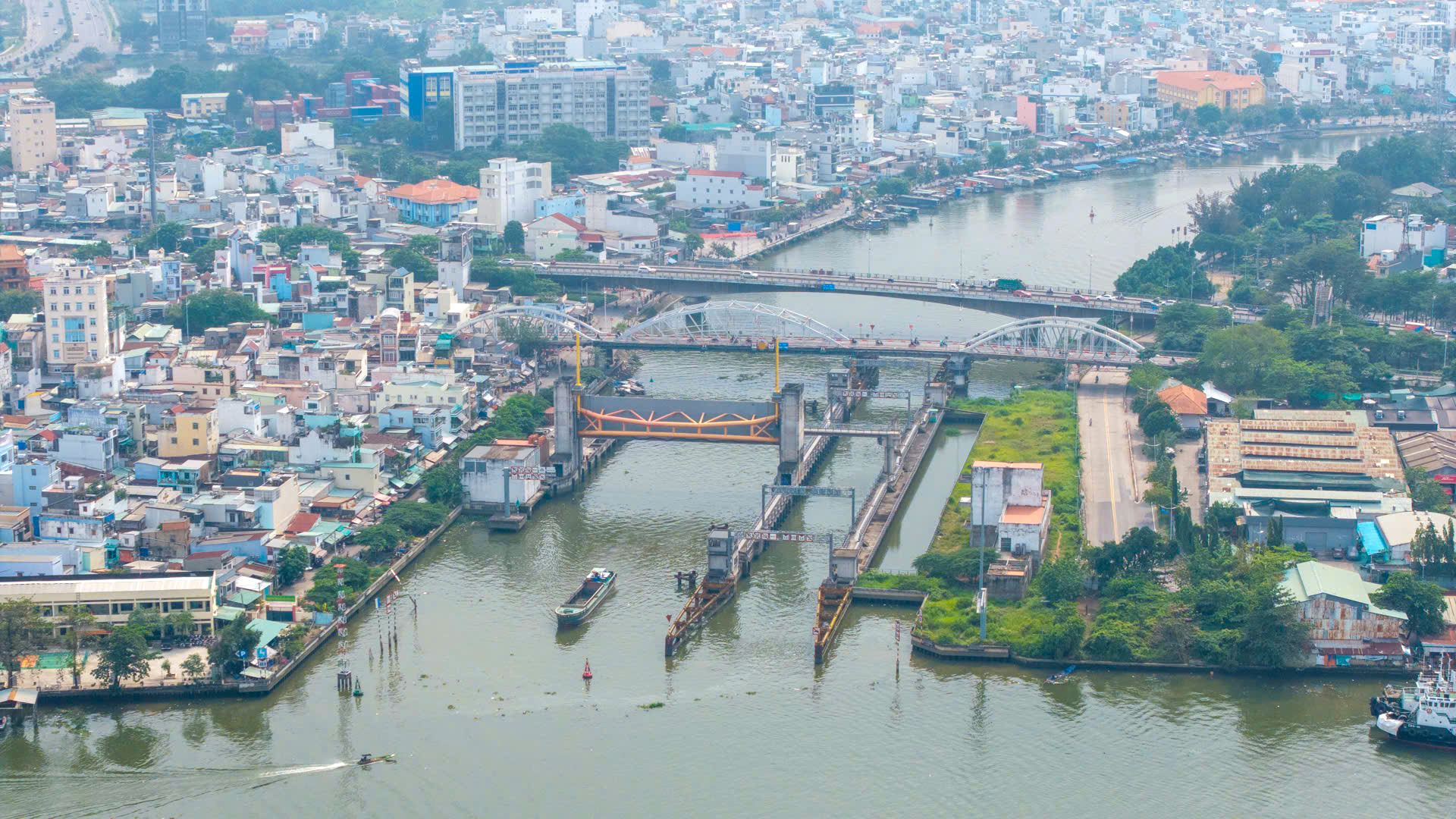
The Tan Thuan Tidal Barrier plays a critical role in preventing high tides from the river entering the Te Canal, significantly reducing flooding in southern districts.
Implemented through a Build-Transfer (BT) contract, the project has a total investment of nearly VND 10,000 billion.
The infrastructure enables proactive water level regulation in canals, enhancing drainage efficiency for urban stormwater systems.
It also supports rainwater retention during combined rainfall and high tides, while improving the landscape and water quality within the project area.
Construction includes six large tidal control barriers ranging from 40 to 160 meters wide, with bottom elevations between -3.6 and 10 meters.
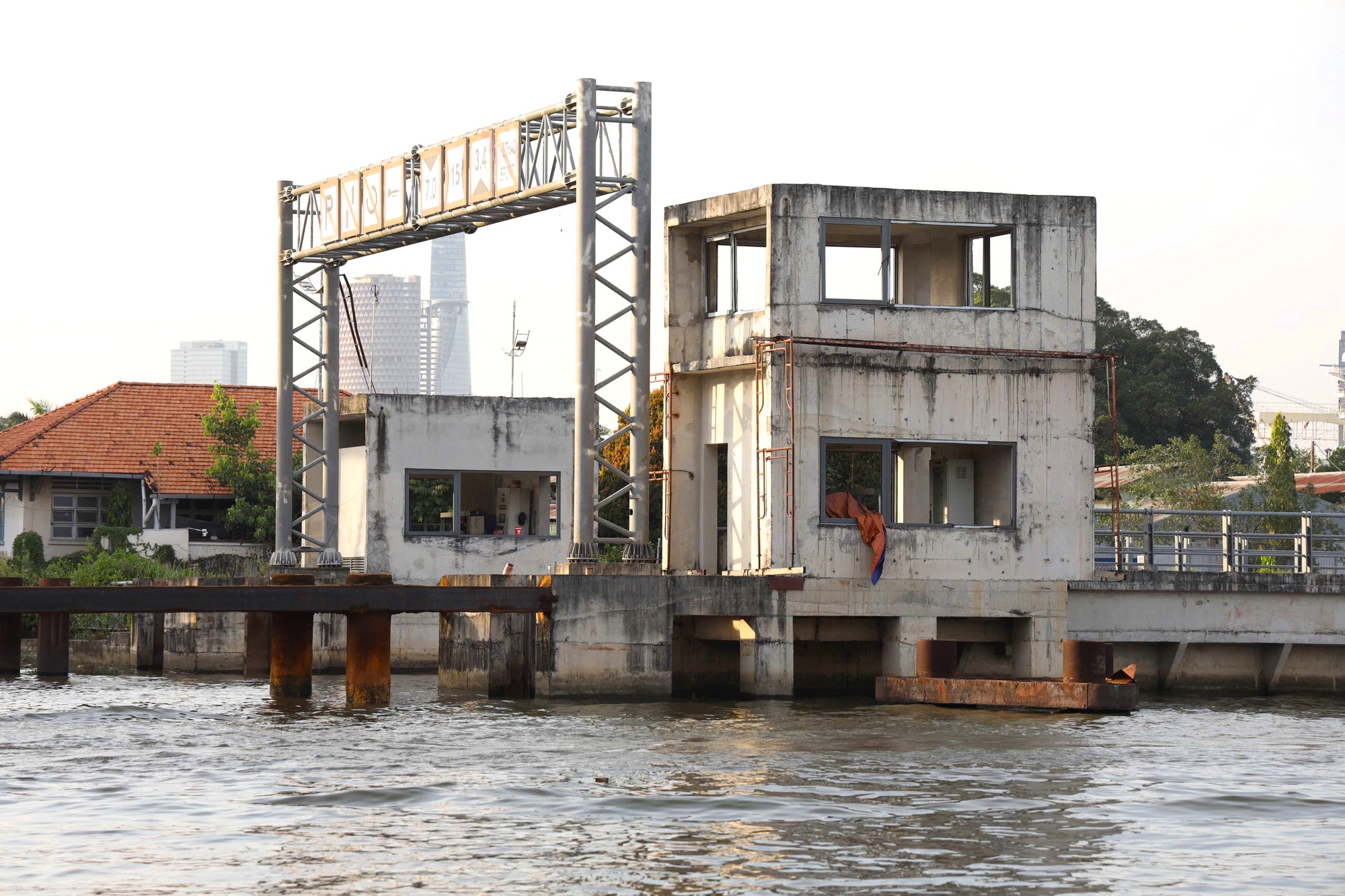
The stalled Tan Thuan Barrier construction, a testament to enduring challenges.
Phase 1 includes 6 km of riverbank protection along the Saigon River from Vam Thuat to Kinh River, 43 smaller culverts (1-10 meters wide) from Vam Thuat to Chuoi Canal, a central management facility, and a SCADA system.
Tan Thuan Tidal Barrier
Nearly a Decade of Waiting
Launched in June 2016, this mega flood control project remains incomplete after nearly a decade, leaving millions in southern districts vulnerable to worsening tidal flooding.
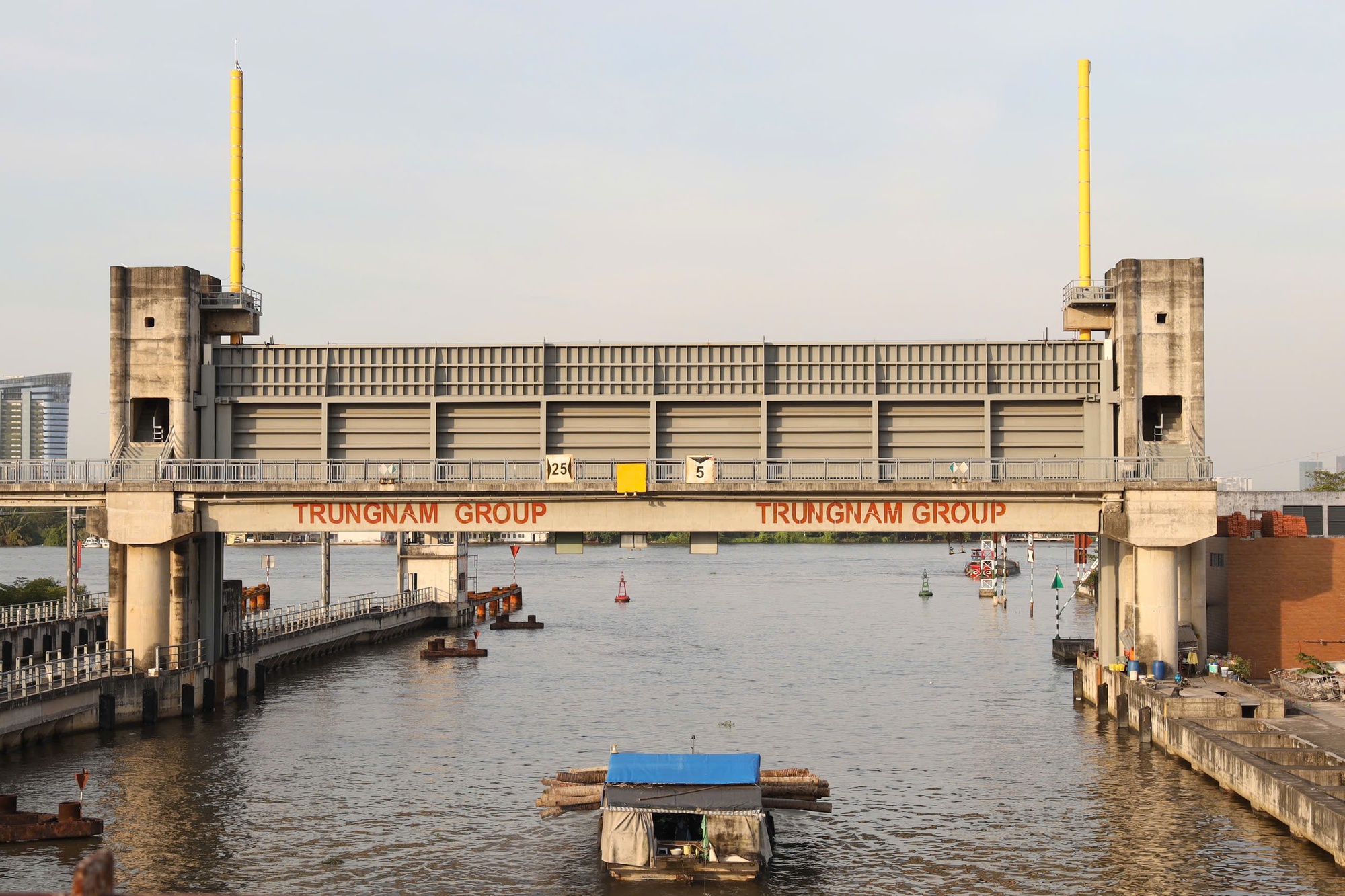
Originally slated for 2018 completion, legal and funding issues have halted progress for years despite 90% physical completion.
Climate change has exacerbated tidal flooding, particularly in low-lying areas of former District 7, while the project remains stalled.
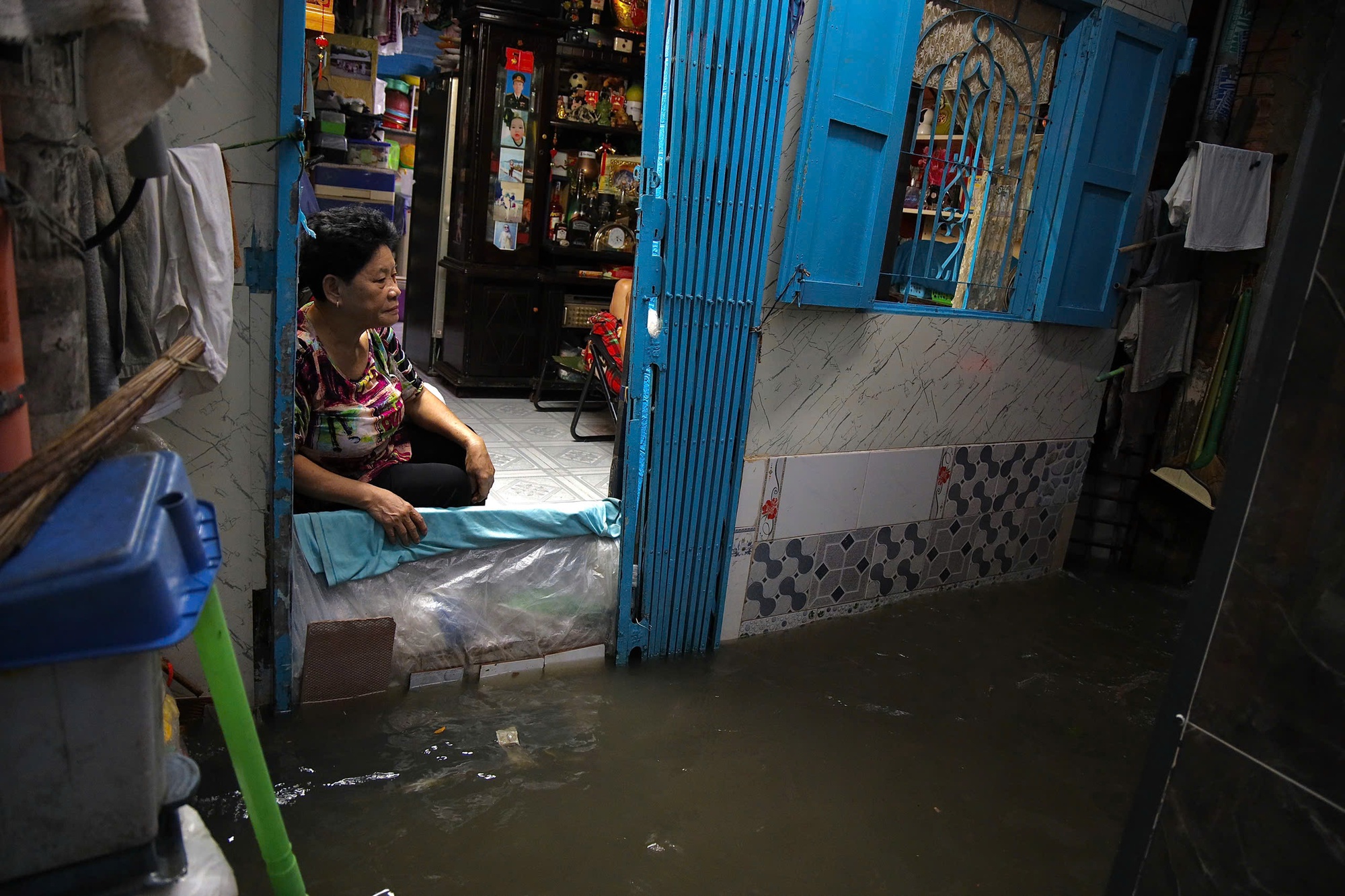
Canal-side streets regularly flood during high tides, disrupting daily life and commerce.
At the Tan Thuan site, construction has been at a standstill for years.
Ms. Ha (b. 1965), a 30-year resident of Tran Xuan Soan Street, shares that high tides have long been a constant fear for locals.
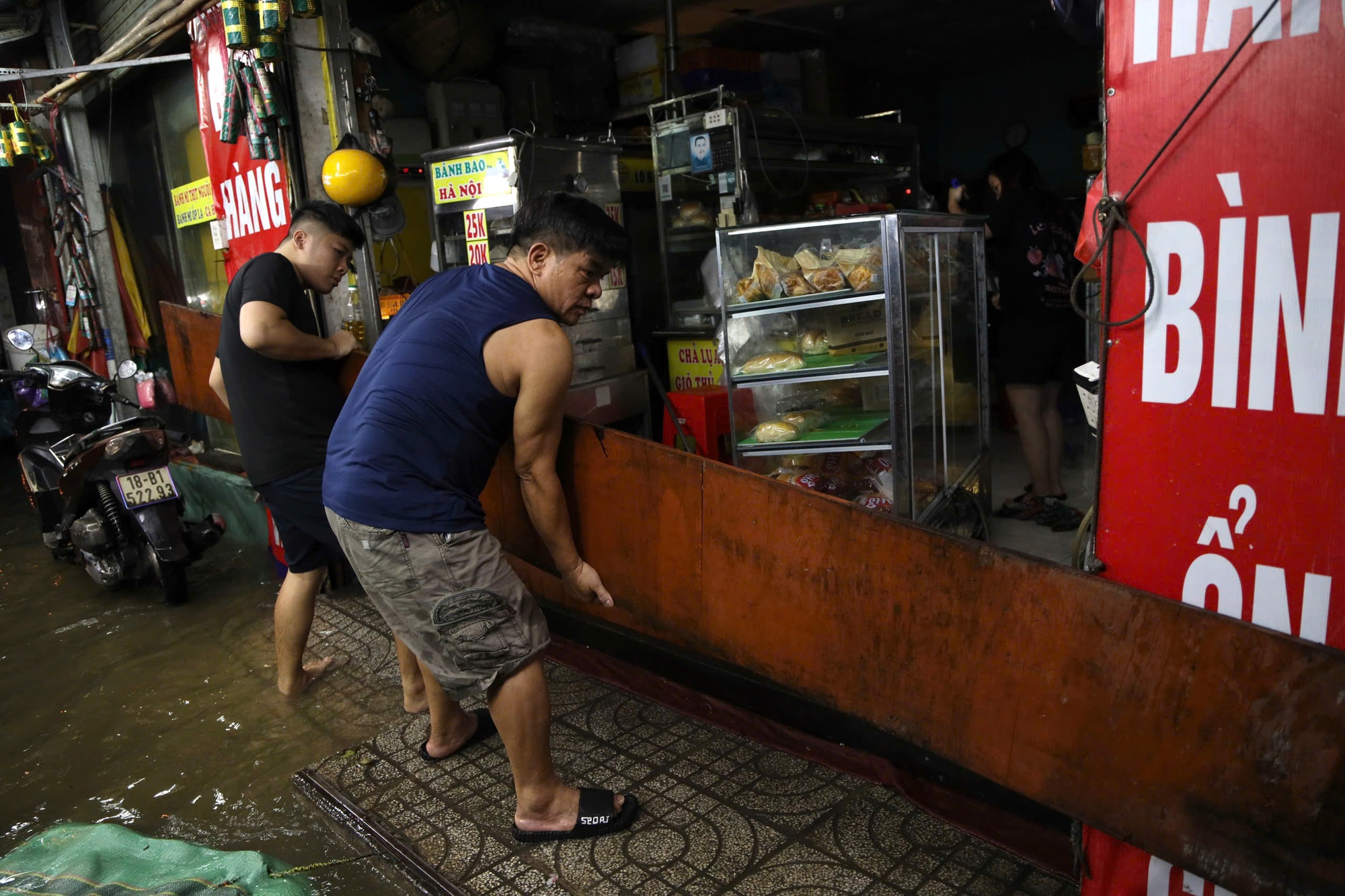
Residents use makeshift barriers to hold back floodwaters during high tides.
“Flooding starts around the full moon each month, peaking in October. But in recent years, water levels have risen higher than ever, entering homes,” Ms. Ha explains.
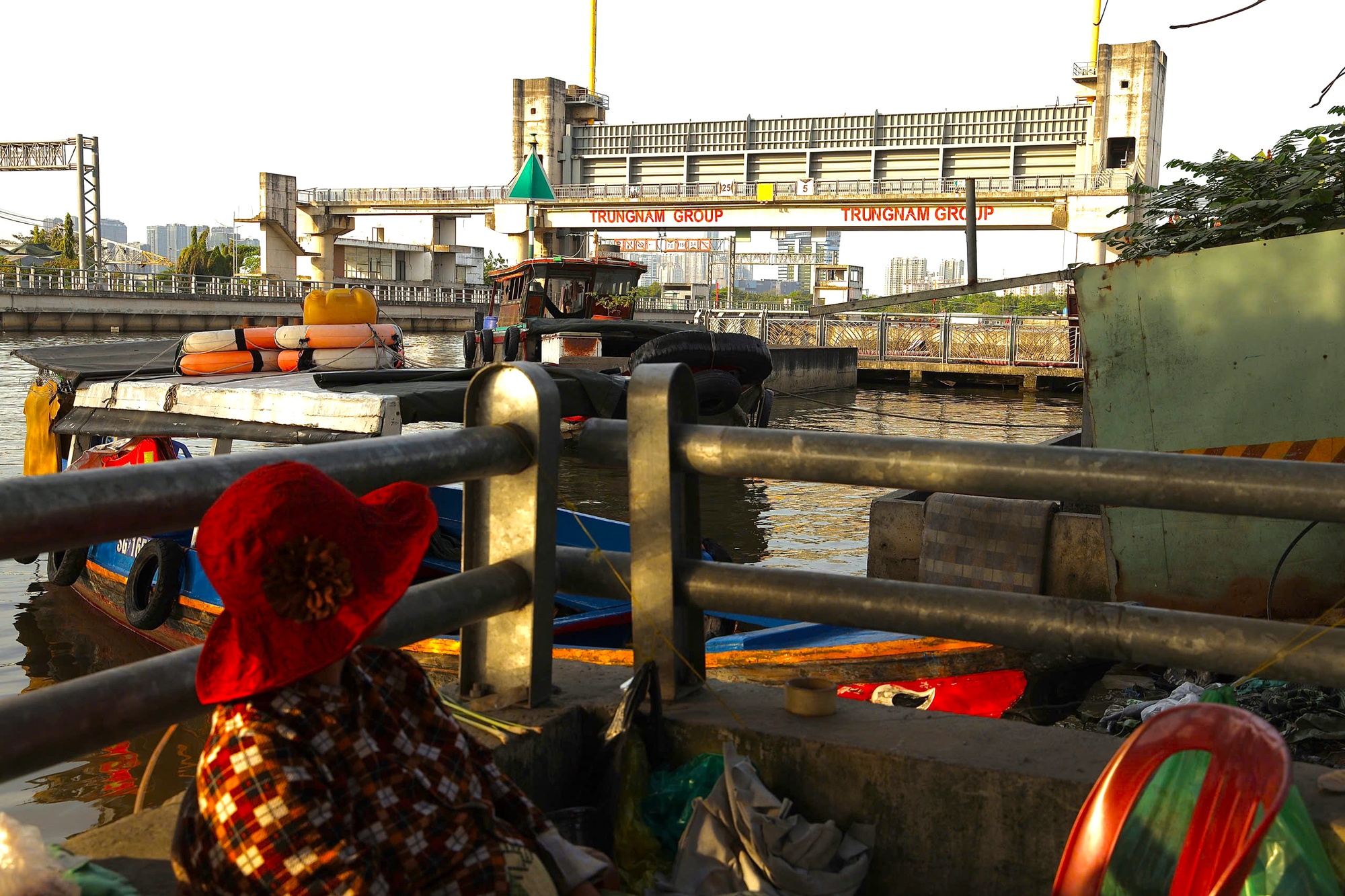
Nearly a decade of waiting for the Tan Thuan Barrier to reduce flooding on Tran Xuan Soan Street.
She notes that not only are water levels higher, but drainage times are slower, severely impacting business and mobility.
After last year’s severe tides, local authorities reinforced embankments with sandbags, providing temporary relief. However, residents yearn for a permanent solution.
“We desperately need the Tan Thuan Barrier completed. It’s heartbreaking to see a decade of construction left unfinished. We just want the flooding to end,” Ms. Ha laments.
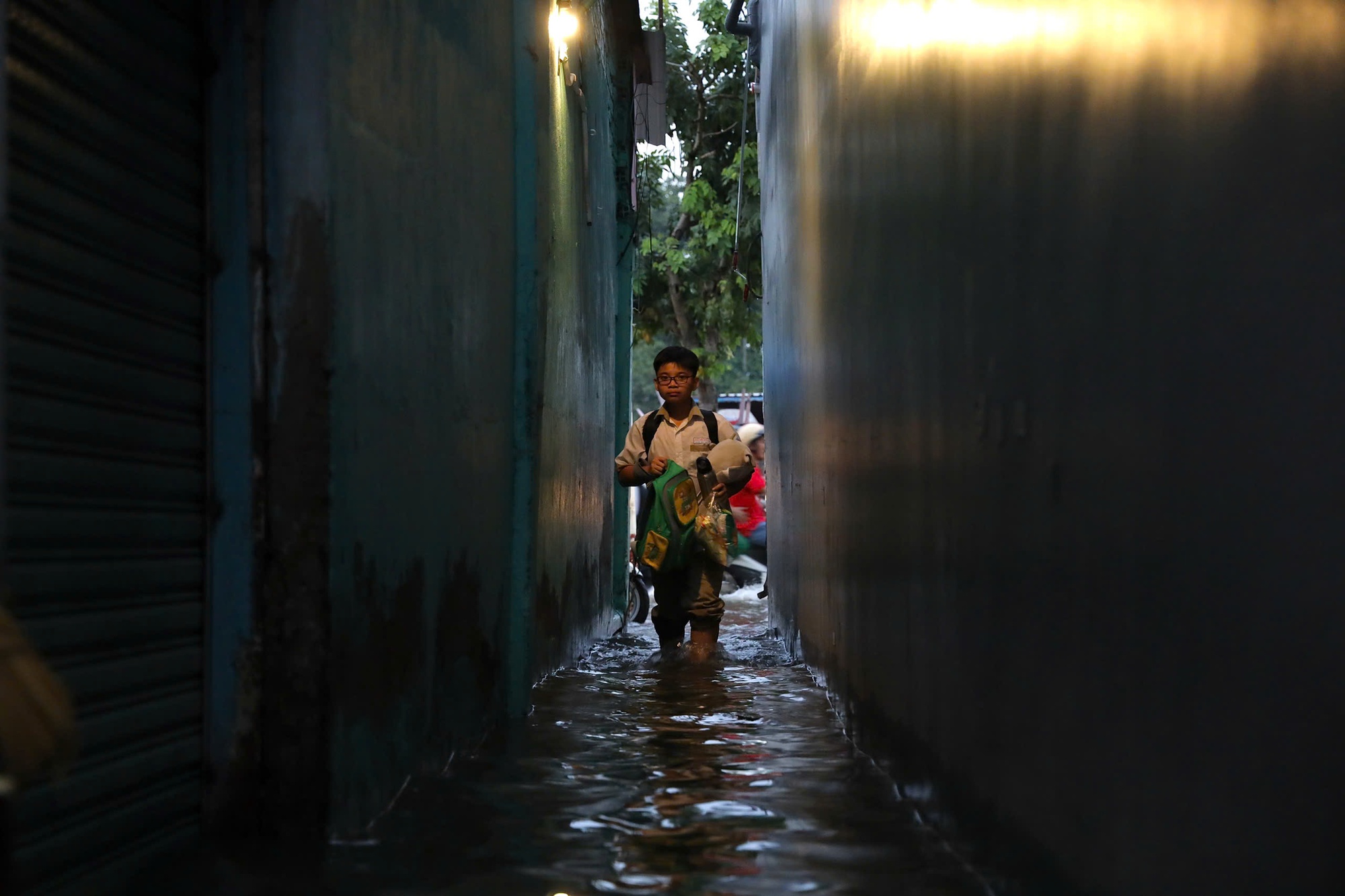
Ho Chi Minh City recorded its highest tide of 1.88 meters in November 2025.
According to HCMC authorities, over 90% of the project has been completed. The remaining work is expected to finish in 2026.
According to HCMC authorities, over 90% of the project has been completed. The remaining work is expected to finish in 2026.
Following a recent meeting with HCMC authorities, Deputy Prime Minister Nguyen Hoa Binh directed urgent payment to investors per Resolution 212/NQ-CP (July 21, 2025), ensuring balanced state-investor interests, and reporting progress to the Politburo.
Record-Breaking Revenue: Ho Chi Minh City and Hanoi Generate Nearly 5 Trillion VND in Just 4 Days

Unparalleled growth defines Hanoi’s trajectory, with a staggering 254% surge compared to the same period last year.
Unveiling Vietnam’s Most Modern Coastal Highway: Vingroup’s Exclusive 1-0-2 Signature Blend
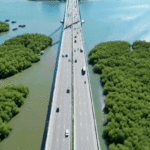
This project stands as an unparalleled masterpiece, unlike anything Vietnam has ever witnessed.
Ho Chi Minh City Plans to Construct a New 26-Story Political and Administrative Center in Thu Thiem

The Ho Chi Minh City People’s Committee has proposed a multi-functional, sustainable infrastructure design for the new Political and Administrative Center, featuring a 26-story arch-shaped structure.
Ho Chi Minh City Targets 10% Growth
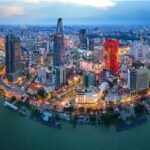
In 2026, to secure double-digit growth, Ho Chi Minh City has crafted an ambitious plan targeting growth exceeding 10%.
Unveiling Vietnam’s Top 5 Economic Powerhouses Driving Over 50% of GDP Growth in 2025
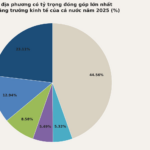
According to the General Statistics Office (Ministry of Finance), these five localities have contributed a staggering 55.4% to the nation’s overall growth.