











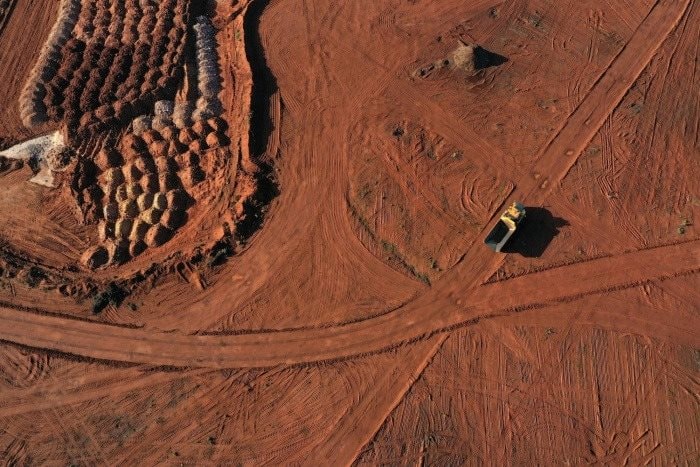
China has imposed an export ban on specific rare earth minerals to Japan, following controversial statements by Japan’s Prime Minister regarding Taiwan. This marks a significant setback in the already strained relationship between these two major trading partners.
According to a statement from the Ministry of Commerce on January 6th, China has immediately halted the export of dual-use items, including certain rare earth elements, to Japan. Dual-use items encompass technology, goods, or software with both civilian and military applications.
Tokyo has sharply criticized Beijing’s move, deeming the export ban on dual-use items for its military as unacceptable. Japan’s Chief Cabinet Secretary, Minoru Kihara, told Reuters, “Such a measure, targeting only our country and significantly deviating from international norms, is utterly unacceptable and deeply regrettable.”
Japan is nearly entirely dependent on China for certain heavy rare earth elements used in magnets for electric and hybrid vehicle motors.
The consequences could be severe: Economist Takahide Kiuchi from the Nomura Research Institute estimates that a three-month restriction on rare earth exports from China could reduce Japan’s annual GDP by 0.11% and cost Japanese businesses 660 billion yen ($4.2 billion). A year-long ban would nearly halve a percentage point of GDP.
China dominates the global rare earth industry, controlling approximately 70% of mining and holding a near-monopoly (over 90%) in processing, refining, and the production of critical magnets. This dominance stems from decades of investment and vertically integrated supply chains, enabling full control from raw ore to finished products.
Who Are Vietnam’s Top Buyers of Petroleum Products?
As a leading Asian nation, this country stands as Vietnam’s largest customer, driving significant trade and economic growth between the two nations.
Breaking: Mass Closure of Porsche, Volkswagen Dealerships in China, Cars Vanished Overnight, Parent Company Confirms Staff on ‘Leave’ – What’s Unfolding?

This case promises to be a challenging one to resolve.
Revolutionary “Lightning-Proof” Transformer: The World’s Most Powerful Invention Shaking Up the Global Clean Energy Sector

Who is the mastermind behind this “monstrous machine”?
Asia’s Largest Undersea Gold Mine Discovered

This marks the first-ever discovery of an underwater gold mine in the history of Vietnam’s neighboring country.
Asia’s Bold Move: Nation Prepares to Extract Rare Earth Metals from 6,000-Meter Deep Seabed Mud, Aiming to Challenge China’s Supply Chain Dominance
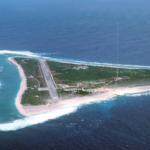
This operation is capable of reclaiming approximately 350 tons of rare earth-rich sludge daily.