











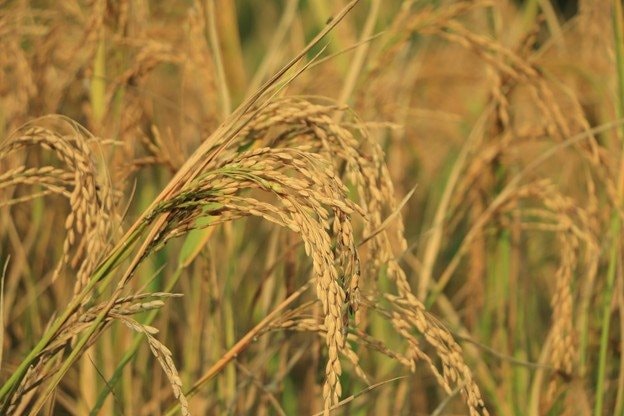
Chinese scientists have unveiled a groundbreaking agricultural innovation: a hybrid rice variety capable of self-replicating through “clone” seeds. This breakthrough preserves high-yield traits across generations without requiring re-hybridization, potentially revolutionizing global hybrid rice production amid growing food security concerns.
The research team developed a variety that reproduces asexually via seeds, bypassing fertilization. This mechanism ensures hybrid vigor—typically lost in subsequent generations—remains intact. If commercialized, it could eliminate hybrid rice’s primary drawbacks: high seed costs and farmers’ annual repurchasing requirement.
Hybrid rice has long been pivotal for boosting yields, particularly in food-insecure regions. Studies show African yields can quadruple compared to traditional varieties. Industry estimates suggest global rice production could double if all rice fields adopted hybrids.
However, seed costs remain prohibitive. In China, hybrid seeds cost up to $28/kg, hundreds of times more than conventional seeds. Worse, offspring lose hybrid vigor, forcing farmers to rebuy seeds annually, inflating production costs.

Led by Wang Kejian of China’s National Rice Research Institute, the team addressed this challenge. Their bioRxiv preprint (“Overcoming Hybrid Rice Limitations: >99% Asexual Reproduction with Near-Normal Seed Set Rates”) reports achieving 99% asexual reproduction efficiency.
The researchers identified a key gene named Huaxu (inspired by Chinese mythology, symbolizing “birth without a father”). When introduced into rice ovules, embryos develop without fertilization. Combined with “apomictic gamete” technology, this creates genetically stable hybrid seeds.
Their Fix8 variety achieves 99.7% cloning efficiency with 50–74% seed set rates. Notably, some lines match conventional hybrid seed set rates, resolving prior trade-offs between cloning efficiency and yield.
Wang notes this is the first time asexual reproduction has been commercially viable in hybrid rice. Widespread adoption could slash seed prices from $2.8–14/500g to just $0.28–0.70, comparable to conventional seeds.
As the world’s hybrid rice leader, China’s breakthrough promises a new era for global rice production, especially in food-stressed regions. Source: SCMP
Labor Hero Over 90 Years Old: Three Research Projects Annually, Directly Managing a Mechanical Enterprise in Lao Cai, Working from 5 AM to Night Daily
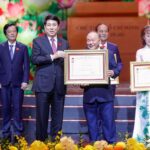
At the 11th National Emulation Congress, Mr. Vũ Hữu Lê, Director of Hong Ha Mechanical and Construction Installation Co., Ltd. (Lao Cai), was honored with the title of Labor Hero by President Lương Cường at the age of 90.
China’s ‘Super Green Rice’ Revolutionizes African Agriculture: Outpacing Vietnam’s Viral Strain in Cuba
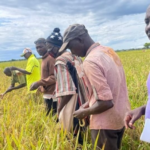
This rice variety boasts numerous advantages, including water efficiency, exceptional drought tolerance, and reduced reliance on chemical pesticides and fertilizers.
India’s Rice Export Revival Shocks Market: Vietnam, Thailand on Alert as Unprecedented Low Prices Resurface
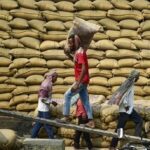
This nation is set to import 50,000 metric tons of rice from India at a price of approximately $355 per ton.
Philippines Unveils New Rice Import Policy Effective January 1, 2026: Vietnam and Thailand Take Note
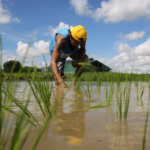
The recent announcement comes as the government prepares to resume imports following a temporary suspension.
Empowering Rural Farmers: A Vision to Help 1 Million Households Earn 1 Billion VND Annually from Agricultural Products
For 30 years, Tien Nong JSC has grown from a small enterprise into a powerhouse, achieving over 1 trillion VND in revenue. Its CEO harbors a bold vision: to empower 1 million farming households to prosper, leveraging cutting-edge science and technology.