








According to the plan for the groundbreaking ceremony of infrastructure and transportation projects in celebration of the 14th National Congress of the Communist Party of Vietnam, as submitted by the Department of Construction to the Ho Chi Minh City People’s Committee, the city is set to simultaneously launch several key projects on January 15, 2026.
Among these, four long-awaited projects will commence on this occasion: the Metro Line No. 2 (Bến Thành – Tham Lương section), Cần Giờ Bridge, Rạch Chiếc National Sports Complex, and Phú Mỹ 2 Bridge.
Metro Bến Thành – Tham Lương with an investment of VND 57 trillion
Of the four projects totaling over VND 238 trillion, which Ho Chi Minh City plans to commence on January 15, the Metro Bến Thành – Tham Lương is the only one funded through public investment. The city finalized the groundbreaking date for this project in November 2025.
Currently, the metro line has completed all land clearance work and is finalizing related procedures before the groundbreaking ceremony.
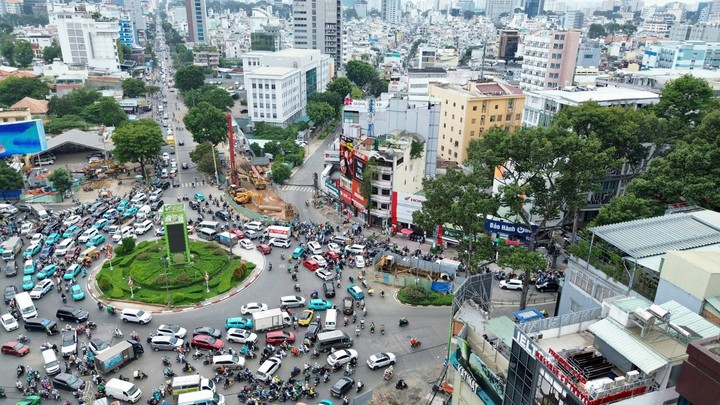
To facilitate the construction of the Metro Bến Thành – Tham Lương, traffic on Trường Chinh Street will be adjusted for one month, from January 10 to February 10.
The Ho Chi Minh City People’s Committee has also approved the route and location of the project as outlined in the mid-term report of the adjusted feasibility study.
As per the decision, the Metro Line No. 2 (Bến Thành – Tham Lương section) spans approximately 11.27 km, with a total investment of around VND 57 trillion. The project begins at Bến Thành Station, connecting seamlessly with Metro Line No. 1 at Bến Thành Station, and ends at the Tham Lương depot. It includes 11 stations, 10 of which are underground.
The line passes through 14 wards of Ho Chi Minh City: Bến Thành, Bàn Cờ, Xuân Hòa, Hòa Hưng, Vườn Lài, Nhiêu Lộc, Tân Hòa, Tân Sơn Nhất, Bảy Hiền, Tân Bình, Tân Sơn, Tây Thạnh, Tân Sơn Nhì, and Đông Hưng Thuận.
The Metro Line No. 2 (Bến Thành – Tham Lương section) is the first project to apply special mechanisms and policies under Resolution No. 188 of the National Assembly. Ho Chi Minh City has shifted the funding source from ODA to public investment using the city’s budget.
The Ho Chi Minh City People’s Committee has also approved the upgrade of the automation level to GoA4 for the Metro Bến Thành – Tham Lương, enabling fully automated operation without drivers or onboard staff.
Metro Line No. 2 is expected to begin operation by the end of 2030. Once completed, it will serve as a backbone connecting the city center with the northwestern region, meeting public transportation demands along the East-West corridor, from Bến Thành to Cách Mạng Tháng Tám, Trường Chinh, and Tham Lương.
Rạch Chiếc National Sports Complex with an investment of over VND 145 trillion
This project is being developed under a public-private partnership (PPP) in the build-transfer (BT) format. The proposed investor is Sun Group’s Vũng Tàu Solar Company. The Ho Chi Minh City People’s Council approved the investment policy at a special session in late 2025.
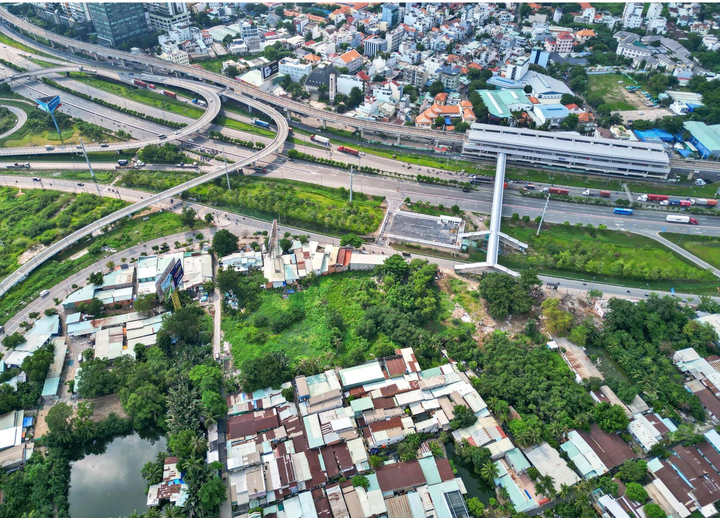
The Rạch Chiếc National Sports Complex, with a total investment of approximately VND 145.6296 trillion, will be constructed on an area of over 186 hectares and completed within 8 years.
The Rạch Chiếc National Sports Complex will be developed on an area of approximately 186.78 hectares, with a preliminary total investment of around VND 145.6296 trillion. It will be Vietnam’s first advanced sports economy ecosystem.
The project includes various functional zones, such as a cultural and sports area featuring a stadium, professional sports arenas, an aquatic sports center, a tennis center, a football complex, and a multi-purpose sports center.
Additionally, there will be a public services and urban utilities zone, including facilities for athletes, coaches, and guests; a plaza; a sports hospital; and a conference and exhibition center.
The green public space zone will feature parks, water bodies, and other infrastructure and transportation facilities.
The project is expected to take approximately 8 years to complete. Once finished, Ho Chi Minh City will have a world-class sports complex capable of hosting international sporting events and meeting public needs.
Cần Giờ Bridge with an investment of VND 13.201 trillion
The Cần Giờ Bridge project was also approved by the Ho Chi Minh City People’s Council. According to the city’s People’s Committee, this is a critically important and urgent project, as the city must rapidly invest in connecting the Cần Giờ coastal area with Long Thành Airport, completing the transportation infrastructure, and attracting investment.
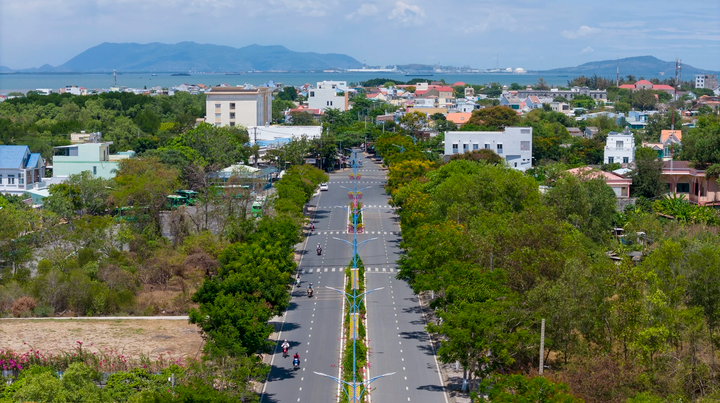
The Cần Giờ Bridge is deemed a vital project by Ho Chi Minh City, connecting the Cần Giờ coastal area with the city center and completing the transportation infrastructure.
The Cần Giờ Bridge is also being developed under a PPP model, using a BT contract, with a total investment of approximately VND 13.201 trillion, paid through land funds.
The project is divided into two components. Component 1, focusing on compensation, support, and resettlement, is valued at around VND 2.533 trillion and will be funded by the city’s budget.
Component 2, the construction of the Cần Giờ Bridge, will use a BT contract valued at approximately VND 10.668 trillion.
The bridge will be approximately 6.3 km long with 6 lanes. It plays a crucial role in connecting the city center with Cần Giờ.
Construction of the Cần Giờ Bridge is scheduled from 2026 to 2029.
Phú Mỹ 2 Bridge with an investment of VND 23.1856 trillion
The Phú Mỹ 2 Bridge, approximately 6.3 km long, will connect the southern part of Ho Chi Minh City with Nhơn Trạch (Đồng Nai) and Long Thành Airport. This project was also approved by the People’s Council and will be implemented under a PPP model using a BT contract, proposed by Masterise Group.
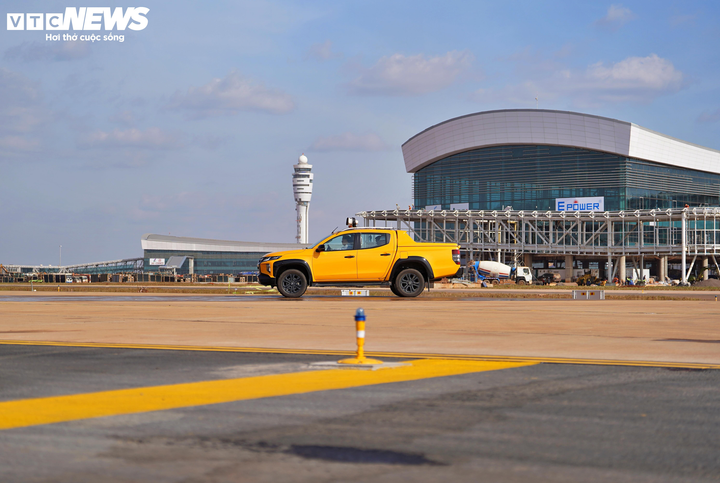
Upon completion, the Phú Mỹ 2 Bridge will establish a new transportation axis connecting southern Ho Chi Minh City with southern Đồng Nai Province and Long Thành Airport.
The preliminary total investment is approximately VND 23.1856 trillion, with payment made through a combination of land funds and the city’s budget. The land fund payment is valued at over VND 15.083 trillion, while the budget payment is approximately VND 5.8075 trillion.
The bridge will feature 8 lanes, starting at the intersection with Nguyễn Hữu Thọ Street (Ho Chi Minh City) and ending at the intersection with Liên Cảng Street (Đồng Nai Province). The approach roads on both ends will also have a minimum of 8 lanes, along with other technical infrastructure.
The Phú Mỹ 2 Bridge will create a new transportation axis connecting southern Ho Chi Minh City with southern Đồng Nai Province and Long Thành Airport, forming a new link between central Ho Chi Minh City, Tân Sơn Nhất Airport, and Long Thành Airport. It will also alleviate traffic pressure on the existing Phú Mỹ Bridge, National Highway 1, National Highway 51, and the Long Thành – Dầu Giây Expressway.
Construction of the Phú Mỹ 2 Bridge is scheduled from 2026 to 2029.