
















This situation requires Ho Chi Minh City to exercise caution, ensuring both the protection of citizens’ rights during compensation and the reduction of land use fees.
The Department of Agriculture and Environment of Ho Chi Minh City is collaborating with other departments to develop adjustment factors for the land price table, a task considered highly challenging.
More Complex Than Creating the Land Price Table
Mr. Đào Quang Dương, Head of the Land Economy Department at the Department of Agriculture and Environment of Ho Chi Minh City, stated that according to the 2024 Land Law, there are 12 cases where the land price table is applied. However, Resolution No. 254/2025 of the National Assembly on resolving obstacles in the implementation of the law specifies only 5 cases where this table is applicable. Consequently, the remaining 7 cases will be determined using the formula: Land Price Table multiplied by (x) Land Price Adjustment Factor.
Currently, the Department of Agriculture and Environment is working with relevant units to submit a project to the Ho Chi Minh City People’s Committee for the development of the land price adjustment factor. Once approved, the department will select a consulting contractor to determine the factor for over 11,000 roads, ensuring its issuance no later than July 1st.
Mr. Dương emphasized that determining the adjustment factor is a complex task, even more challenging than creating the land price table. The reason is that while the land price table can be calculated based on average common values, the adjustment factor directly and significantly impacts the rights and obligations of land users, requiring a high degree of accuracy.
“This process demands a comprehensive and cautious evaluation. The ultimate goal is to safeguard the rights of citizens, especially given the substantial demand for land use conversion and the city’s upcoming implementation of hundreds of projects requiring compensation and land clearance,” Mr. Dương stressed.
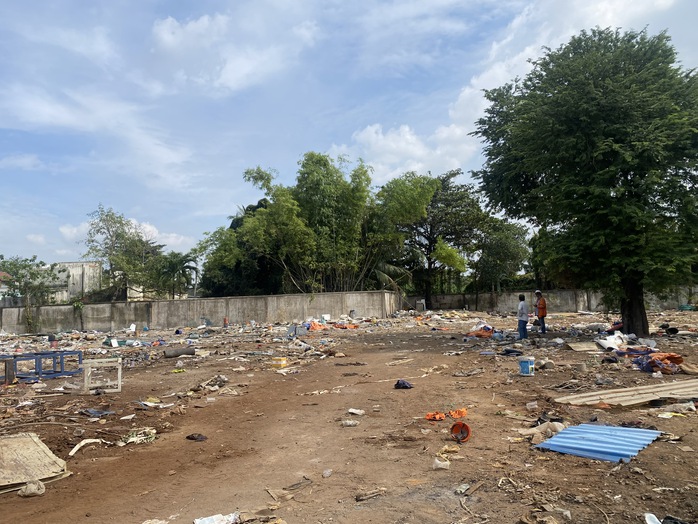
Residents handing over land for the construction of Ring Road 2, in Phước Long Ward, Ho Chi Minh City
Flexible Use of Comparative Methods
The conversion of land use from agricultural to residential is attracting significant public attention. Although Resolution 254/2025 (effective from January 1, 2026) has reduced the financial burden for cases converting garden and pond land within the same residential plot (paying 30% – 100% of the price difference depending on the limit), residents converting purely agricultural land to residential land remain concerned about the high costs.
The reason is that this group must pay land use fees equal to the price difference between agricultural and residential land. Therefore, when applying the land price table multiplied by the adjustment factor (factor K), the amount to be paid is expected to be significantly affected.
Mr. Đào Quang Dương acknowledged that developing the adjustment factor is a difficult task requiring utmost caution. The key issue lies in the conflict of interests: on the same road, factor K is used both to calculate compensation for land clearance (where residents hope for higher prices) and to calculate land use fees when converting land use (where residents hope for lower prices). State management agencies must find a reasonable balance.
Regarding the development approach, Mr. Dương mentioned three basic factors: market price fluctuations, construction planning (usually for projects), and factors influencing land prices (location, frontage, infrastructure, etc.).
“Although the management agency integrates all three types, in practical application for residents, the market price fluctuation factor remains the primary determinant,” Mr. Dương emphasized.
According to Mr. Dương, the adjustment factor for calculating compensation and land use conversion is expected to be 1.2 times or more, depending on the road.
A positive development is that the drafting agency for the guidelines of Resolution 254/2025 has accepted Ho Chi Minh City’s proposal. Instead of rigidly applying the K factor method, the new regulation allows for the flexible use of comparative, income, or surplus methods to determine land prices. The principle is that if the price determined by these methods is lower than the land price table, the land price table will be applied.
If this regulation is concretized, Ho Chi Minh City will resolve obstacles for approximately 100 projects (land allocated at the time of the 2003 Land Law), facilitating the calculation of land use fees to complete projects and expedite the issuance of land use right certificates and home ownership certificates to residents.
7 Cases Applying the Land Price Table Multiplied by the Adjustment Factor
Land price for calculating land use fees at the resettlement site for individuals compensated for residential land or allocated residential land in cases not eligible for residential land compensation; Calculating land use fees when the State recognizes residential land use rights for households and individuals; converting land use purposes for households and individuals; Calculating land rent when the State leases land with annual rent payments; Calculating land use fees and rent when the State recognizes land use rights through land allocation with land use fees or land lease with one-time rent payment for the entire lease period for households and individuals;
Determining the starting price for land use right auctions when the State allocates or leases land for plots or areas with technical infrastructure as per detailed construction plans; Calculating land use fees for cases of land allocation without land use right auctions for households and individuals; Calculating land use fees for the sale of state-owned houses to current tenants.
Ho Chi Minh City: Addressing 108 Cases of River and Canal Encroachments

Across the city, 108 construction projects have encroached upon and violated the protective corridors of rivers, canals, and streams through unauthorized building and land reclamation activities.
TS Trần Du Lịch: “The Strength of Resolution 260 Lies in Its Clear Decentralization and Empowerment for Ho Chi Minh City”

With Resolution 260, the Central Committee is granting Ho Chi Minh City greater authority and the imperative to develop rapidly and sustainably, truly cementing its role as the nation’s economic locomotive.
Four Mega Projects Worth Over $10 Billion Set to Break Ground in Ho Chi Minh City on January 15th

Unveiling a new era of progress, Ho Chi Minh City proudly inaugurates pivotal infrastructure projects in celebration of the 14th National Party Congress. Remarkably, 75% of these transformative initiatives are fueled by public-private partnerships (PPP), showcasing a collaborative approach to shaping the city’s future.
Evenings in Ho Chi Minh City Offices: VPBank Outshines Hotels with Late Lights, Viettel Bustles Past 8 PM, CJ Employees Clock Out on Time

As the city lights dim in most neighborhoods, the heart of Ho Chi Minh City awakens for its “second shift.” While some remain glued to their computer screens late into the night, others leave their offices to immerse themselves in the vibrant, sleepless streets. The evening hours offer a vivid glimpse into how professionals balance the pressures of work with the joys of life.
How Does Ho Chi Minh City Determine Land Price Adjustment Coefficients?

The development of Ho Chi Minh City’s land price adjustment coefficient is based on multiple factors, including market fluctuation adjustment factors, planning-based adjustment factors, and other factors influencing land prices. This process involves the comprehensive synthesis and analysis of market land price information.