With just over a month until the 2026 Lunar New Year, Vietnam’s flower-growing regions are bustling with activity. However, despite the flurry of preparation, growers are grappling with a looming sense of uncertainty as market demand remains sluggish.
In Binh Loi, Ho Chi Minh City’s largest yellow apricot hub, Le Huu Thien, Deputy Director of the Binh Loi Yellow Apricot Cooperative, reveals a stark reality: supply far outstrips demand. The area under cultivation has expanded from 500 to 600 hectares, while new competitors like Tay Ninh (5,000 hectares) and Dong Thap (1,000 hectares) intensify the pressure.
This oversupply has led to a significant drop in both consumption and prices. Thien notes that in previous years, traders from Central and Northern Vietnam would have already secured 30% of the harvest by now. This year, however, these key buyers have virtually disappeared.
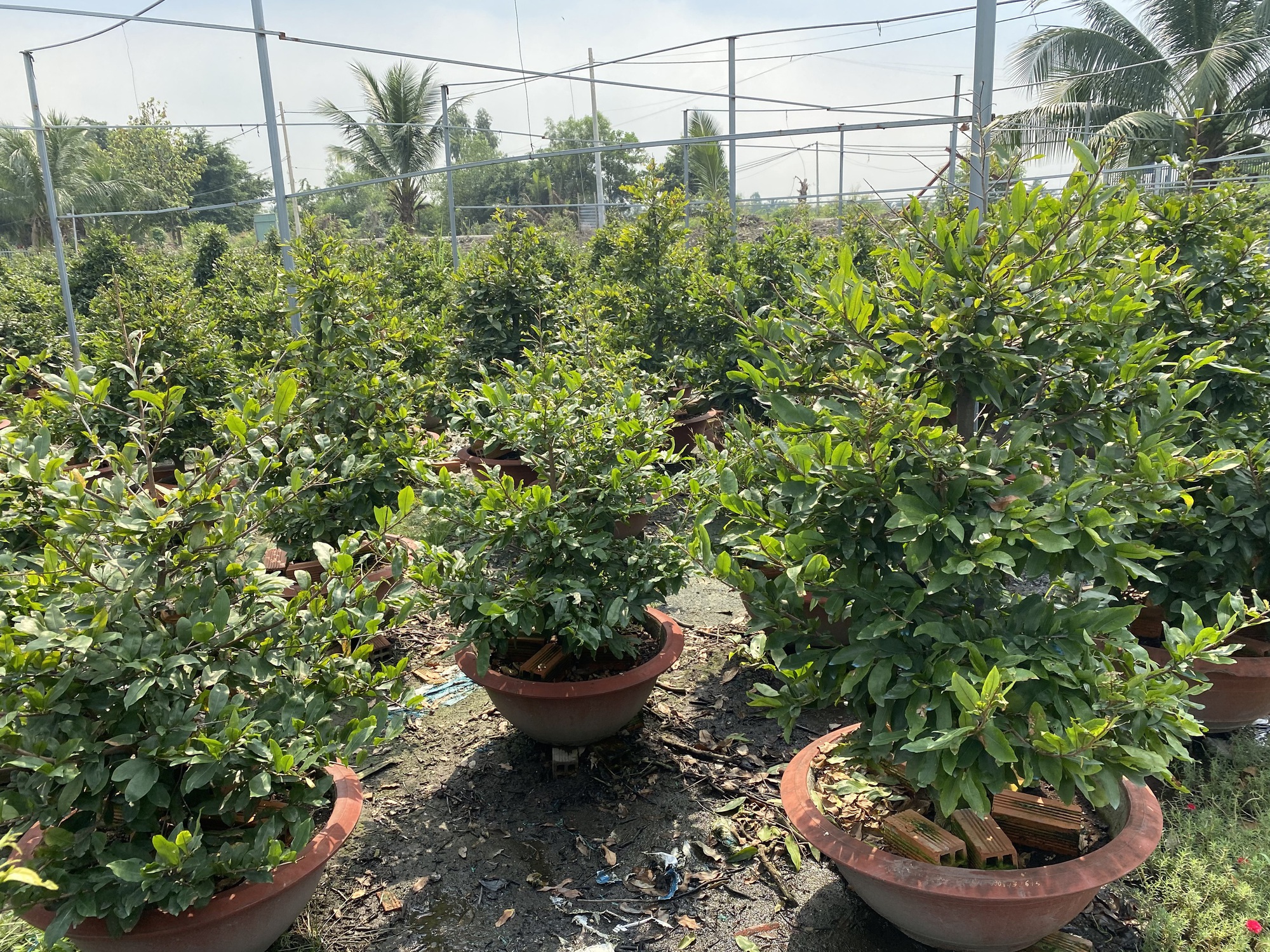
A yellow apricot garden in Binh Loi Village
The Cooperative reports that last year, the Northern and Central markets absorbed 70% of Binh Loi’s potted and ground-grown apricots. This year, traders are favoring Vinh Long’s potted apricots over Binh Loi’s traditional ground-grown varieties, leaving the Cooperative struggling to find buyers.
To stimulate demand, Binh Loi growers have slashed prices by 10-20% compared to last year. Three-year-old ground-grown apricots now range from VND 250,000 to 300,000 per tree, while four to five-year-old trees fetch VND 500,000 to 600,000. Small potted apricots have also seen a price drop of VND 200,000, now selling for VND 500,000 to 600,000 per pot.
Compounding market challenges, unfavorable weather in Ho Chi Minh City, characterized by rain, frost, and erratic temperatures, has caused early blooming in apricot trees with weak foliage. “This year’s market is bleak on all fronts: low prices, weak demand, and adverse weather,” laments Thien. “During peak years, Binh Loi sold 500,000 to 600,000 trees, but this year, even reaching 200,000 sales seems optimistic.”
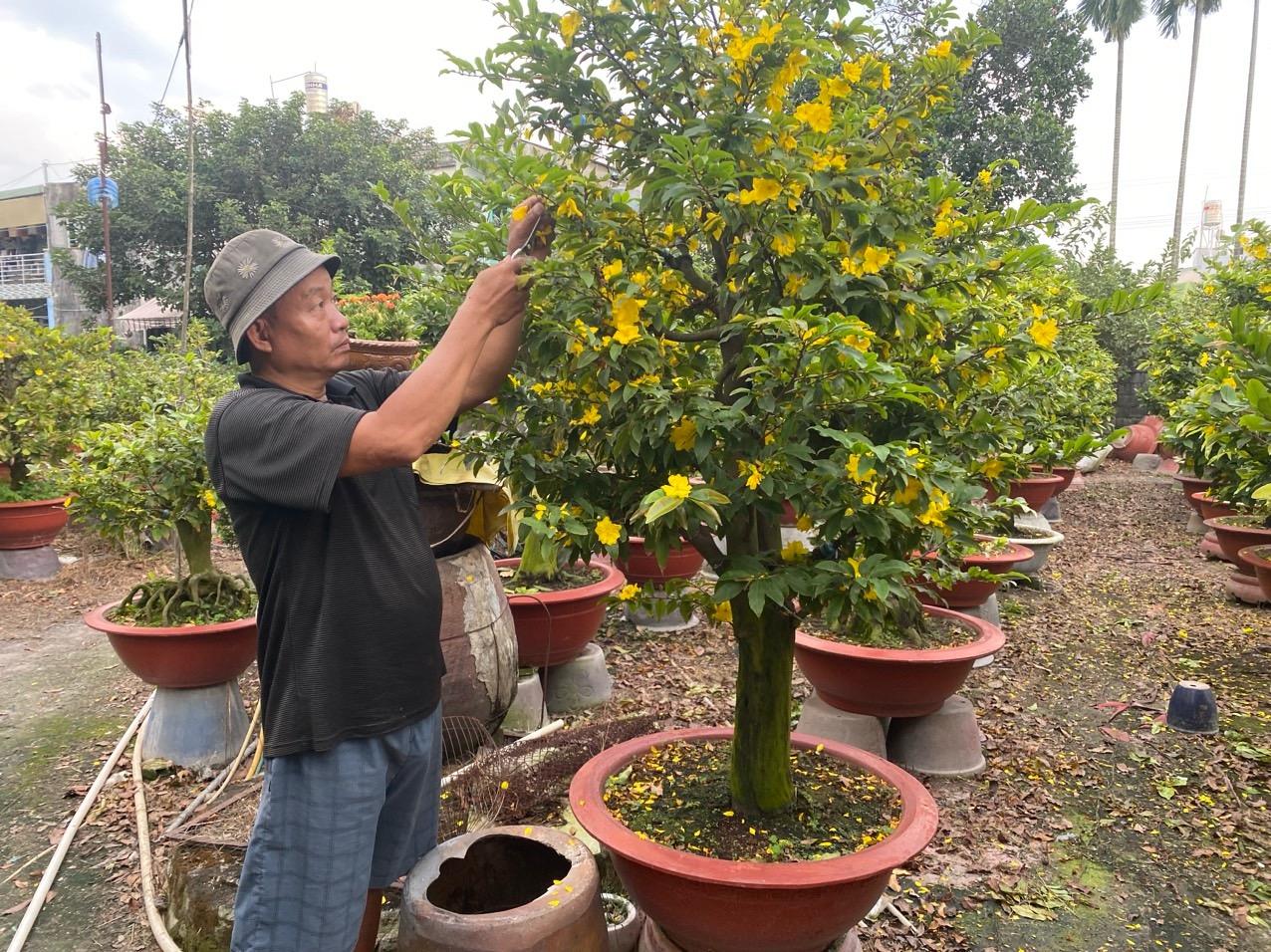
Early blooming Tet apricots in Binh Loi
Recognizing the trend of tightened consumer spending, many growers in Binh Loi and Cho Lach (Vinh Long) have shifted their focus. Instead of large, expensive trees, they are now cultivating smaller, desk-sized potted apricots priced affordably between VND 100,000 and 200,000. Mrs. Bay Viet, a Cho Lach grower, shares that she is exclusively focusing on low-cost apricots this year to ensure sales.
In contrast, flower-growing regions in the Mekong Delta specializing in cut flowers and flowering shrubs are faring better. Tran Huu Nghi, Deputy Chairman of Cho Lach Commune (Vinh Long), reports that the area has prepared approximately 2.5 million Tet flower products (chrysanthemums, apricots, paper flowers), a 5-10% increase from last year.
A positive sign is that 70% of the produce has already been secured by traders, with the remaining 30% to be sold directly at traditional markets. Prices remain stable, with chrysanthemums ranging from VND 150,000 to 200,000 per pair and marigolds at around VND 100,000 per pair. Favorable weather and proactive water storage measures further bolster the region’s prospects.
Similarly, Nguyen Thi Ngoc, a grower in Sa Dec (Dong Thap), attributes the stable flower quality to elevated cultivation methods that minimize flood damage. New varieties, such as multi-colored Stargazer lilies and two-tone “double happiness” chrysanthemums, are gaining popularity. Prices for chrysanthemum baskets range from VND 80,000 to 120,000, while saffron pots sell for VND 40,000 to 60,000.