













Speaking at the 80th anniversary celebration of the Garment 10 Corporation, Prime Minister Pham Minh Chinh highly praised the textile and garment industry’s role in economic development, especially amidst global economic fluctuations.
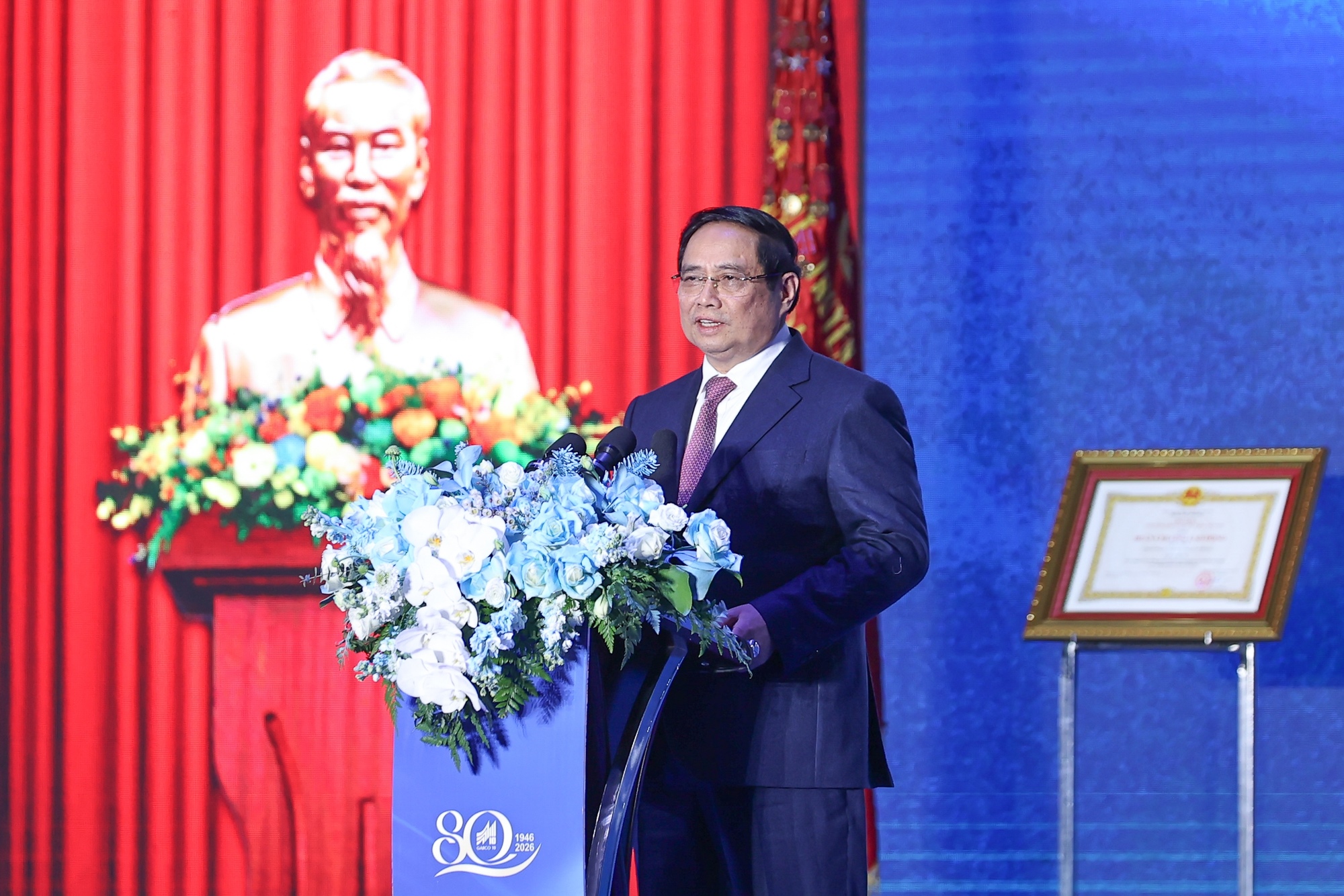
Prime Minister Pham Minh Chinh delivering his speech at the event – Photo: VGP
|
According to the Prime Minister, by 2025, Vietnam aims to achieve a GDP growth rate of 8.02%, with a GDP scale of approximately $514 billion and total import-export turnover surpassing $930 billion. The textile and garment industry continues to play a pivotal role, with estimated export turnover reaching $46 billion, positioning it among the key export sectors of the economy.
Currently, the industry comprises around 7,000 enterprises, employing over 3 million workers directly, accounting for approximately 25% of industrial labor and contributing nearly 10% to the GDP. When combined with the leather and footwear sector, the contribution to GDP rises to approximately 15%.
Call for Model Transformation and Value Enhancement
The Prime Minister emphasized that, given the rapidly changing consumer trends, increasing green barriers, and carbon taxes, the textile and garment industry must accelerate its growth model transformation. The focus should shift from processing to higher value-added stages, mastering design, branding, and deeper integration into the global value chain.
Simultaneously, green and digital transformation are no longer optional but imperative to maintain competitiveness and meet the standards of major markets like the EU and the US.
The Prime Minister also highlighted the domestic market of 100 million people as a crucial pillar during export market fluctuations. Additionally, the industry must continue to prioritize stable labor relations, enhance workforce quality, and foster a strong corporate culture to ensure long-term sustainable development.
– 8:18 PM, January 8, 2026
Halting Negotiations with Japan on Ninh Thuận 2 Nuclear Power Investment Cooperation
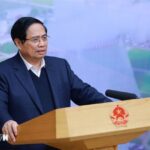
Prime Minister Pham Minh Chinh has directed the Ministry of Industry and Trade to proactively inform Japan of Vietnam’s decision to withdraw from the Ninh Thuan 2 nuclear power project. This move signifies a strategic shift in Vietnam’s energy investment priorities, marking the end of the proposed collaboration on this specific nuclear power initiative.
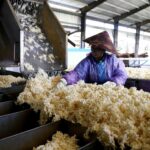
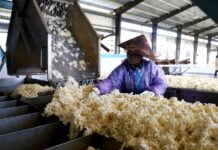
Prime Minister: The Textile Industry Must Ascend to Higher Value Tiers
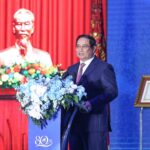
Facing mounting supply chain pressures and stringent green standards, Prime Minister Phạm Minh Chính underscores the imperative for the textile industry to enhance its value-added output and strategically capitalize on the domestic market.
Prime Minister: The Financial Sector Deserves to Be a Loyal “Guardian of the Treasury,” a Brilliant “Think Tank,” and a “Driving Force for Development,” Leading the Nation into an Era of Growth and Advancement
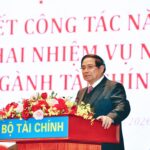
On the afternoon of January 6th, Prime Minister Pham Minh Chinh attended the 2025 financial sector year-end review conference in Hanoi. Organized by the Ministry of Finance, the event focused on summarizing achievements and outlining plans and directions for 2026.
What Does the Economic Growth ‘Picture’ Look Like Post-Province Mergers?

Following the consolidation of space and development resources, the economic growth landscape across the nation has witnessed a marked transformation. With larger scales, broader margins, and momentum driven by industry, services, public investment, and FDI, localities are poised to accelerate. Meanwhile, for the economic “front-runners,” the challenge is more complex as these “giants” must outpace their own strides.
Prime Minister Urges Swift Completion of Negotiations with Russia on Ninh Thuận 1 Nuclear Power Plant
The Prime Minister has mandated the completion of negotiations with Russia regarding investment cooperation for the construction of the Ninh Thuận 1 nuclear power plant by January 2026.