












 |
|
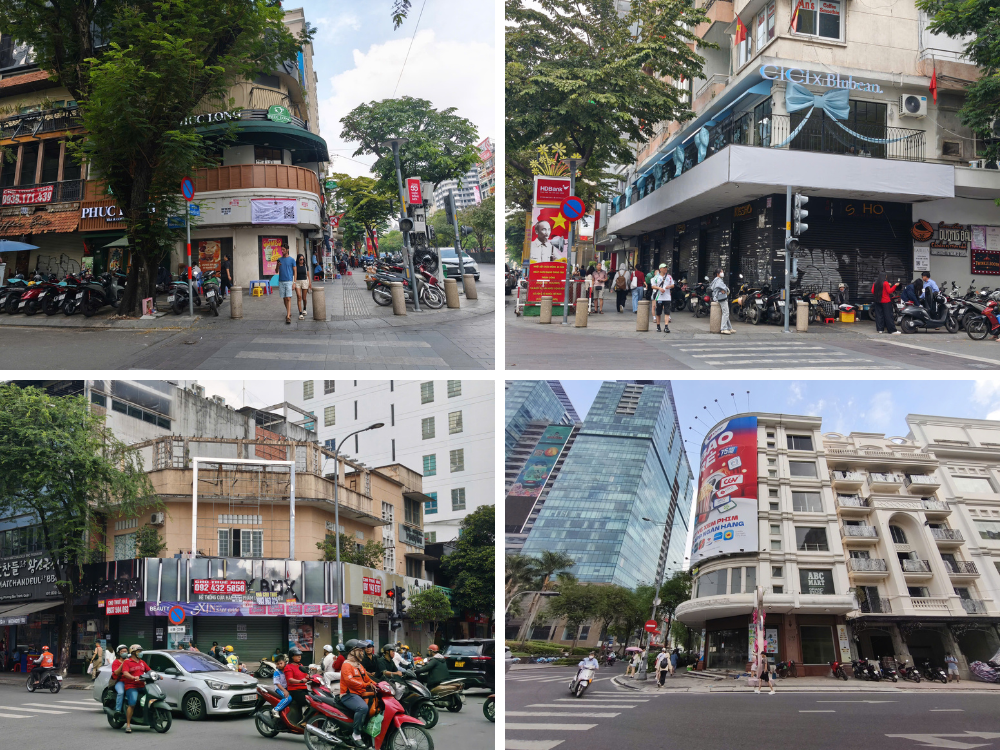
Prime storefronts on central streets like Nguyen Hue, Dong Khoi, and Ngo Duc Ke are increasingly vacant or left empty on the ground floor. Photo: Thuong Ngoc |
 |
|
Along Nguyen Trai Street, it’s common to see large vacant storefronts and corner buildings with “For Lease” signs plastered everywhere. Photo: Thuong Ngoc |
 |
|
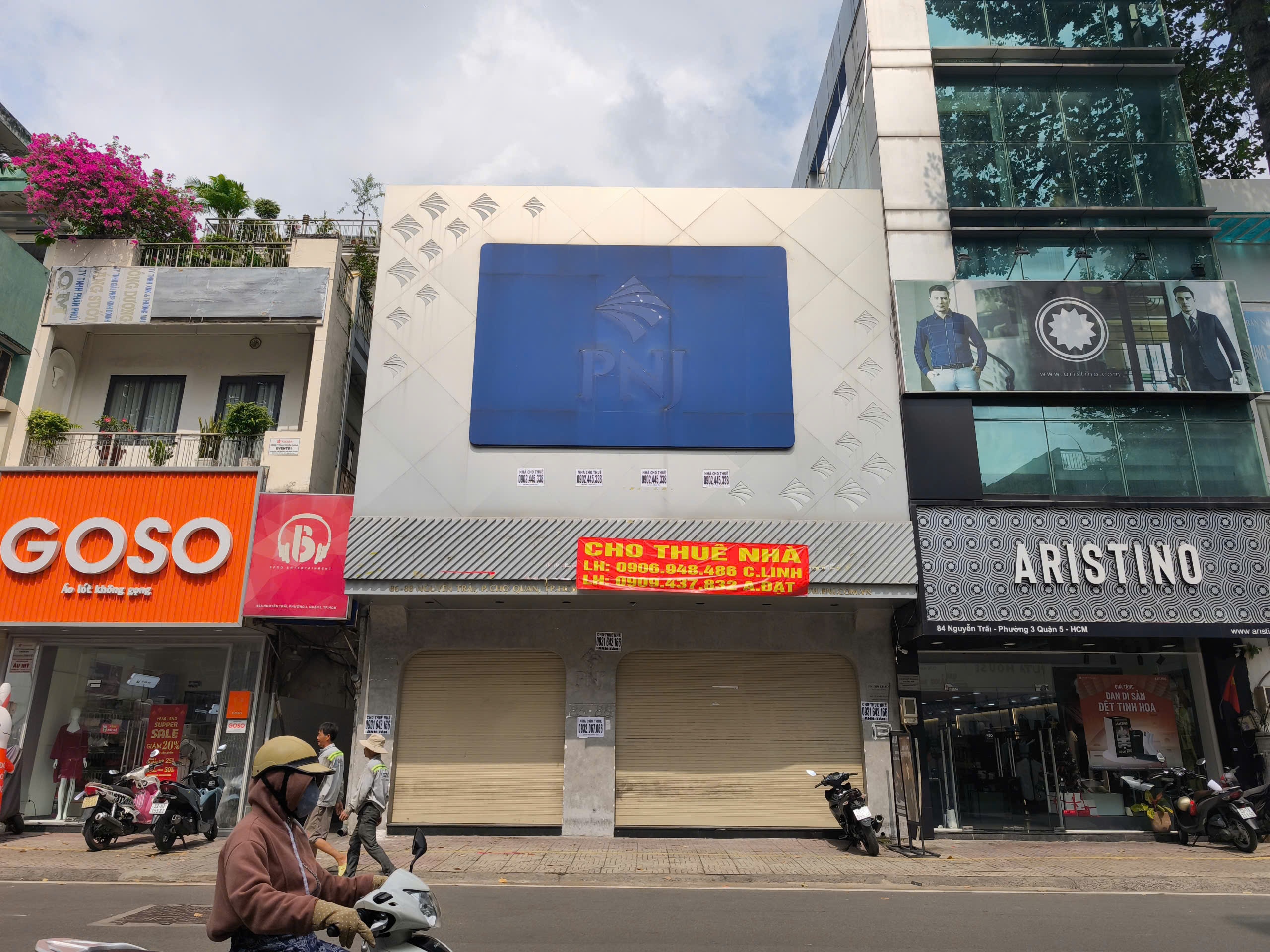
Even major jewelry brands like PNJ have abandoned bustling Nguyen Trai Street. Photo: Thuong Ngoc |
According to Nguyen Quoc Anh, Deputy General Director and Head of Sales at Batdongsan.com.vn, vacant storefronts are no longer just a temporary issue or a sign of economic hardship. This trend stems from a fundamental shift in consumer behavior. People no longer browse and buy impulsively; they increasingly shop online, watch livestreams, and read reviews before making purchases.
“As consumer habits change, businesses no longer need prime street-front locations. They can operate from apartments, private homes, or even warehouses outside the city center, reaching customers online while significantly reducing rental costs,” Quoc Anh observes.
The traditional role of street-front stores as brand visibility hubs and foot traffic magnets is fading. Currently, only food and beverage businesses and banks are relatively successful in utilizing large storefronts, but not all streets can thrive solely on these sectors. In the long run, street-front properties are reverting to their original purpose as residences rather than commercial spaces, despite lingering noise and environmental pollution issues.
 |
|
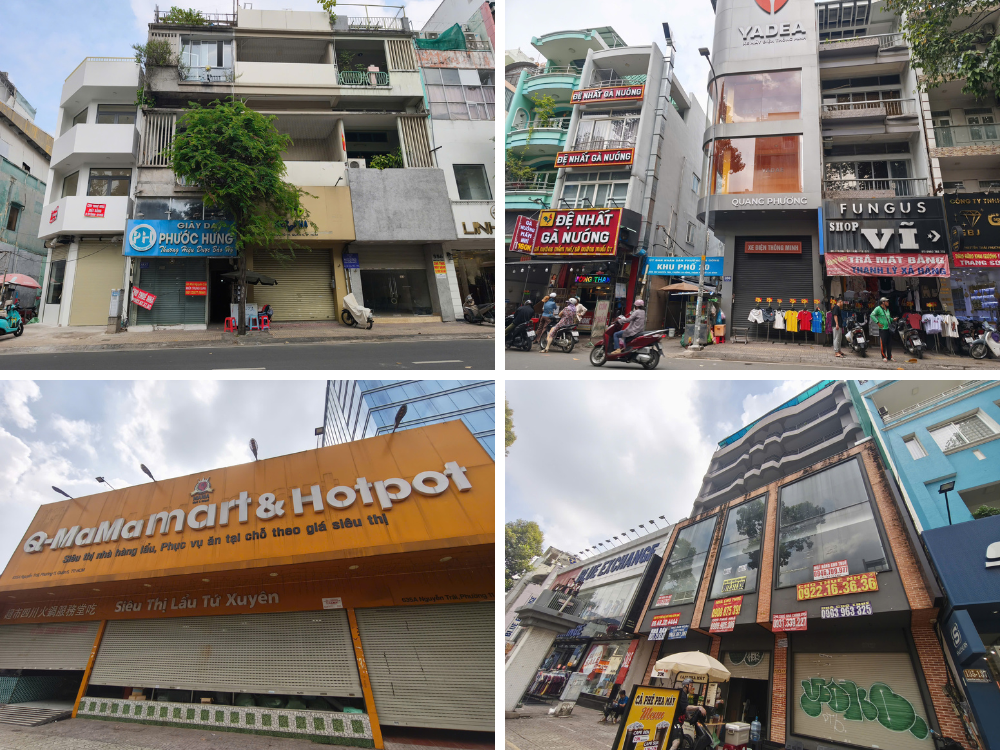
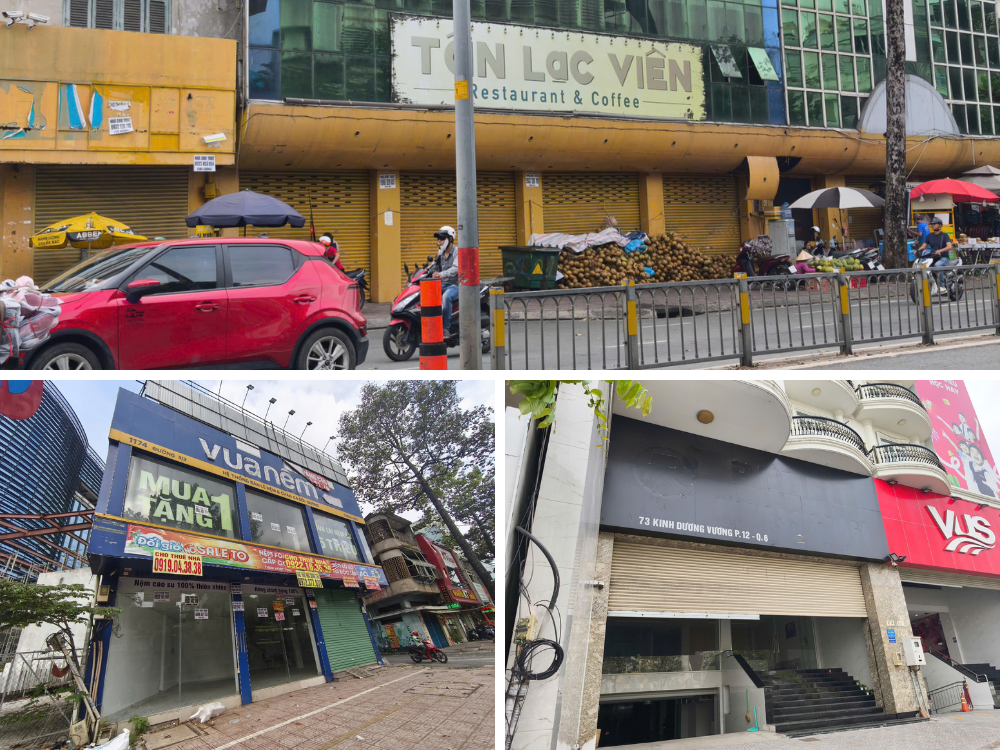
Even major thoroughfares connecting the city center to the West like 3 Thang 2 and Kinh Duong Vuong have numerous large, vacant storefronts. Photo: Thuong Ngoc |
 |
|
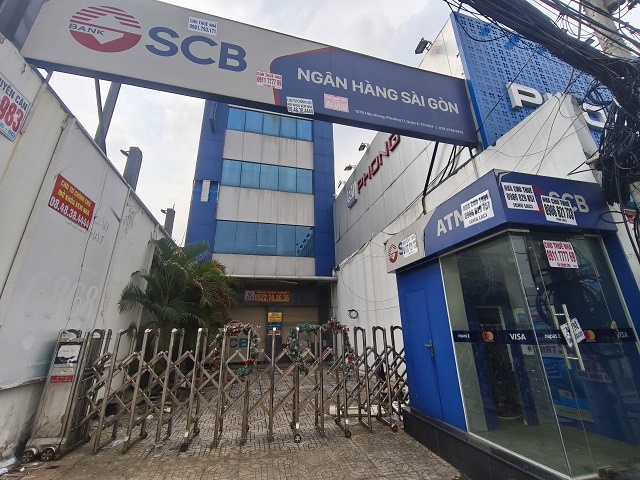
Despite its prime location facing Phu Lam Roundabout, the former Hau Giang SCB branch remains vacant. Photo: Thuong Ngoc |
 |
|
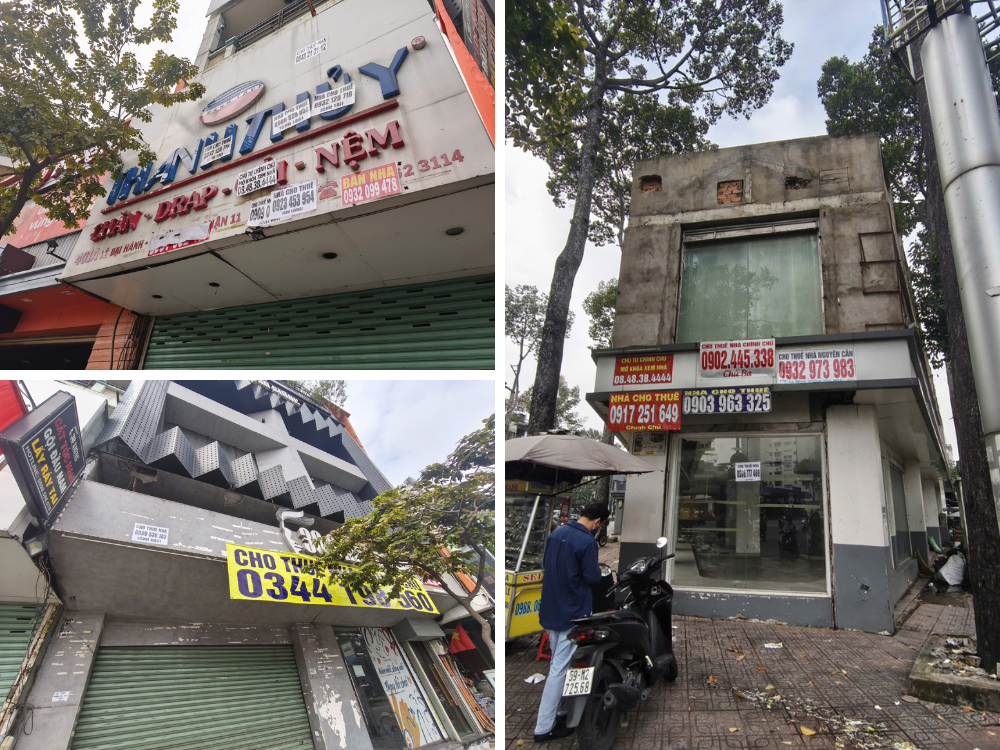
On Le Dai Hanh Street (left), intersecting 3 Thang 2, notable brands like Thanh Thuy Bedding and 30Shine Hair Salon have departed. A dual-frontage storefront on 3 Thang 2 and Lanh Binh Thang (right) lies vacant and shows signs of deterioration. Photo: Thuong Ngoc |
CBRE data for Q3 2025 shows food and beverage businesses accounted for the largest share of retail leases at 35%, followed by fashion (20%) and lifestyle (16%). However, vacancy rates in central areas rose to 6.7%, up 1.5 percentage points quarter-on-quarter and 1.3 points year-on-year. While non-central areas saw a slight decrease in vacancies to 7.1%, down 0.9 points quarterly and 0.3 points annually, widespread pressure persists.
A rare bright spot is the expansion of brands like Chagee, KKV, Popmart, Oh!Some, Polarpopo, BanTianYao, Wayjie, Xian Niu Lau, and Colorist. Facing competition from expanding Chinese brands, domestic labels like Hapas, Every Half, Highlands, Phuc Long, and Cheese Coffee are also increasing their market presence.
 |
|
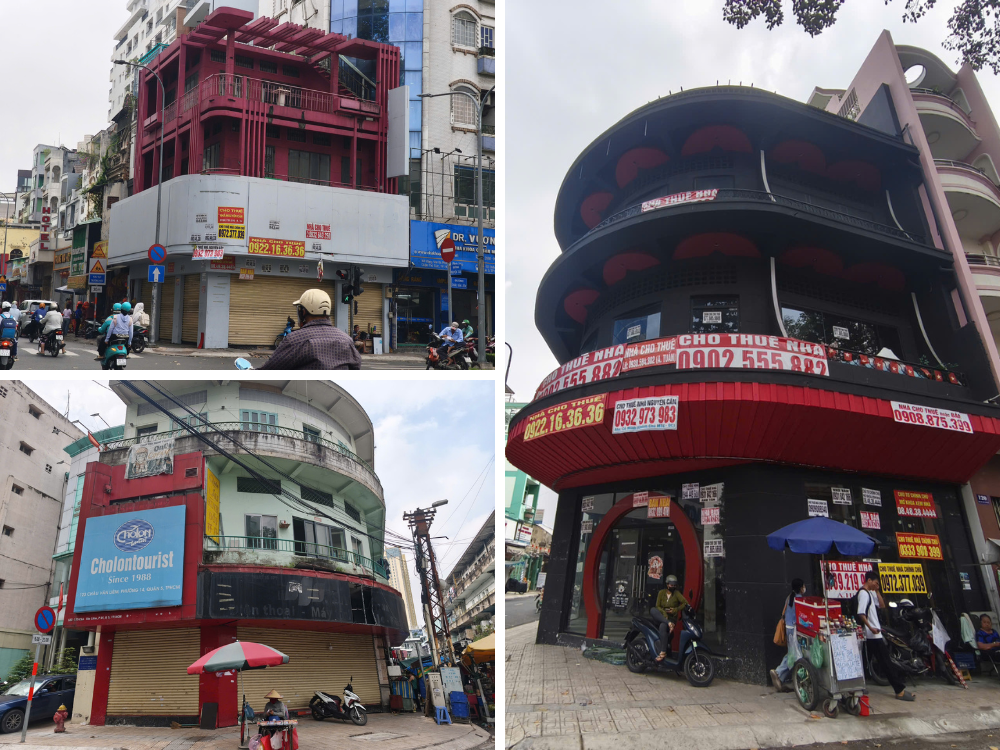
Dual-frontage corner storefronts on Chau Van Liem Street in District 5 await new tenants. Photo: Thuong Ngoc |
For small business owners like Minh Trang, who runs a tea and pastry shop in Phu Nhuan District, rent is the biggest burden. “Even low rents are 7-8 million VND per month, sometimes 10-15 million, excluding utilities and internet. With 100 million VND in revenue, rent alone eats up nearly 10%,” she says.
Online sales offer greater flexibility and eliminate the need for additional staff, further reducing costs.
 |
|
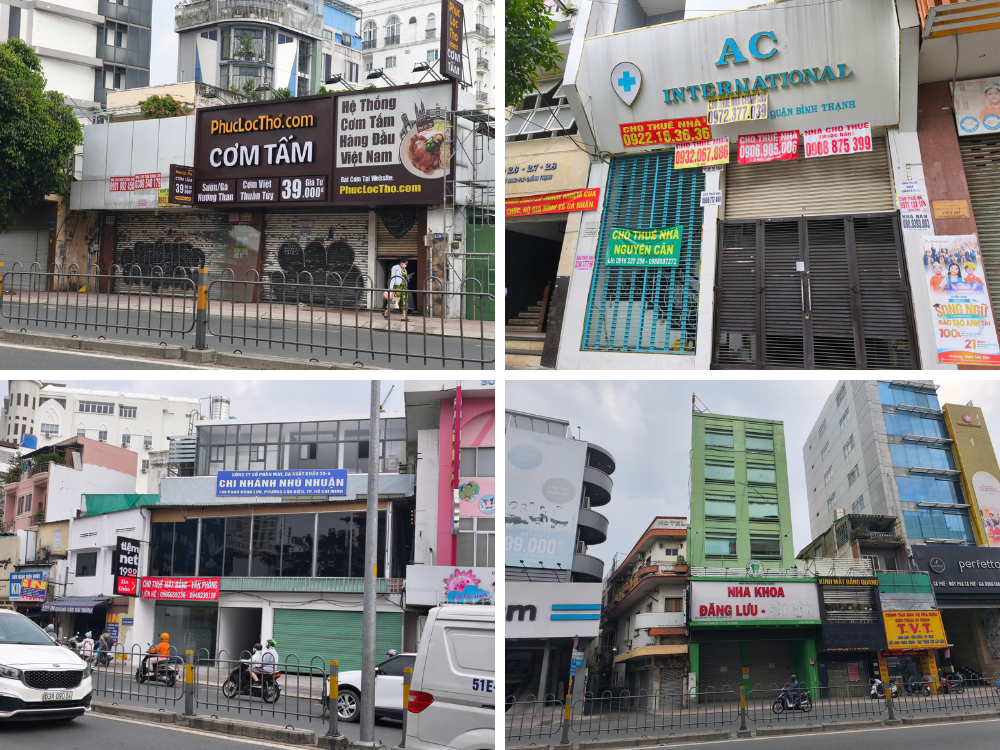
Even on bustling streets like Phan Dang Luu and entertainment hubs like Phan Xich Long, large vacant storefronts are common. Photo: Thuong Ngoc |
Trang notes that consumer spending has significantly declined this year, with a growing shift to online shopping. Online prices are often better due to promotions and livestream discounts.
“Tax policies and invoicing requirements make small traders fearful of penalties, especially when business is slow. Many choose to operate from home, where costs are lower and mistakes less costly,” Trang adds.
 |
|
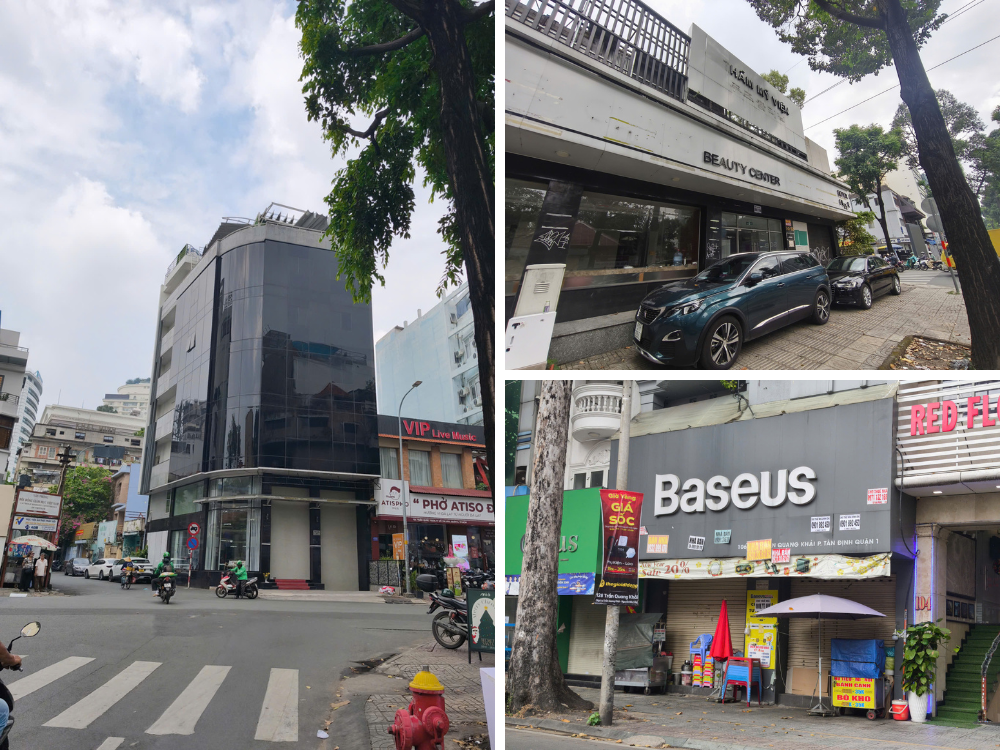
Storefronts at intersections like Dien Bien Phu – Pham Ngoc Thach and Pasteur – Tran Quoc Toan remain shuttered. Photo: Thuong Ngoc |
Despite rising vacancies, many landlords are reluctant to lower rents, fearing asset devaluation. This creates a dilemma for tenants facing high costs amid declining revenues. However, long-term rent adjustments are inevitable, as seen in markets like China.
Batdongsan.com.vn data shows that from 2015 to 2025, central Ho Chi Minh City street-front property prices rose 134%, outpacing land prices. As rents rise faster than business profits, year-end rental pressures are expected to continue.
– 10:00 06/01/2026
Prime Hanoi Street-Front Homes Struggle to Attract Tenants Amid Peak Year-End Rental Season

Many street-front houses in Hanoi remain vacant, despite the year-end season typically being a prime time for business.
Black Friday Deals Galore, Yet Shoppers Remain Unenthusiastic
Black Friday 2025 is here, and fashion retailers are pulling out all the stops with jaw-dropping discounts of up to 80% off and enticing promotions. Yet, despite these massive sales, customer engagement remains surprisingly low.
Shopee Tightens Return Policy, Sparking Debate Among Sellers and Buyers
If a buyer wishes to return an item but the product is no longer in its original condition, the seller on Shopee reserves the right to refuse the return.
Prime Commercial Spaces for Rent in Ho Chi Minh City Still Seeking Tenants

Prime real estate in Ho Chi Minh City is languishing on the market, with many properties remaining vacant for 5-6 months despite significant price reductions by landlords.
Unlock Black Friday-Level Deals Early: Ultimate 11/11 Singles’ Day Shopping Hacks

On Singles’ Day, 11/11, e-commerce platforms unleash irresistible deals with jaw-dropping discounts, sometimes even offering products for free. How can you snag these incredible bargains?